Diaris de Papua 17, Manokwary.

Ahir després de la travessa Rezha, un CS m’acollís i em du a sopar a una pizzeria! super estrany menjar pizza. Ell treballa en auditar les obres del govern per controlar que els diners es gasten en el que toca. Els polítics de Papua són tots locals per la autonomia que tenen i em diu que són increiblement corruptes, inclòs per a estendards d’indonesia.

M’alce a les 4:30 perquè el Rezha m’ha dit que a les 5 hi ha un vaixell a Jayapura.

Després de alçar-me i tot ell no em pot dur en moto els 10km fins al port, el seu amic ja s’ha endut la moto.

Plou, faig autoestop, una furgo i una moto em porten. Òbviament no hi ha vaixell, però per sort dels 3 que hi ha al port un va cap a l’est 1 m’agafa, es diu Papua Satu. És una mescla de passatgers i cargo, però principalment el negoci pareix ser passatgers a diferència de l’Alken.

Plou així que dorc un poc a un banquet que hi ha a coberta baix d’un toldo. Quan m’alce arregle les xancles per 8é cop. Ha parat de ploure i vaig per la ciutat.

Al principi res d’especial i compre galetes a un super per passar els 4 dies que m’han dit que durarà el viatge. Compre massa.

Torne lentament per la costa. Em torne a trobar en un poblat marítim, aquest millor que’l de Sorong! Impressionants carrerons laberíntics plens de tendes i vida, sobre l’aigua. Tot de fusta i amb poc o gens d’apertura al cel. Inspirador, s’ha de viure, s’ha de veure.

Veig xiquets que han creat jocs en llaunes, en gomes elàstiques, competicions de trencar bambú, porcs, molts porcs. Banderes de la independència de Papua i gent orgullosa de ser Papuan.

Centenars de fotos i videos… Tinc ganes de crear el meu món distopic basat en aquests tortuosos estrets carrers plens de vida i colors, vaig explorant idees.

Torne a la nau a les 4 (quan m’han dit) i fins a les 7 no eixim. Pregunte altre cop al vaixell enorme de containers que hi ha al costat si puc anar en ells, em diuen que el govern no els deixa, més obstacles a un anarquista 😛

Dorc a coberta després que el vaixell partís, un poc de núvols, no massa bones estrel·les.

3rd, how to get out of there, Integrated Dante road. mountain crossing of West Papua Bird Head Peninsula

Comes from the interesting bit.

– Third: how to get out of there, hardcore hitchhike

well what follows is odd at best.

From the mountains you enter in a beautiful plateau with grass covered hills and mountains that create a bowl in between. The road here is good, but the traffic  is still scarce if at all.

Later I will discover why.

In the mean time I managed to get to a town called Kenjay after my ride from the middle of the road left me in another road camp (where food was offered again).

A moto offered me to ride few towns away. A parade of scooters soon joined, piking other walkers on the way, getting to 3 and 4 riders in a moppet :). While stopping for sighting the grass bowl on the side of the lovely road a truck passed. I, being on top off the small hill for the pictures, could do nothing to stop it. But rest assured that the parade stopped the truck for me and it waited until i got my pictures.

I jumped on the cargo part, at the back.

This will get me trough the hellish ride! 😀


After the grass bowl plateau finishes the mountains start again. Before that we catch a guy waiting in a bus stop like place for a ride. So I’m in a truck-bus :D, the 2nd so far in this crossing.

Not far into the mountains we stop to fill the back of the truck with river rocks, odd, extremely odd. Not far the good paved road abruptly ends in a bridge, after that the door of hell awaits.

A muddy hellish slope  climbs the mountain. So many cars have struggled there that the road is now a 2 meters deep craved cannon. When we get there a lorry is trapped in between. Finally it gives up on ascending and goes back.

A 4 wheels waiting its turn, with some struggle, passes.

Then our turn, now I understand the propose of the rock, to add traction to the rear wheels, as the truck is not a 4 wheels.

First try after a bumpy bumpiness and… Fail.

Another 4 wheel passes.

2nd try, this time the front passenger and the other hitchhiker go to the back.

On the tricky section they start to bounce jump on the back, to add instants of traction to pass.

I try to join, I achieve tremendous success in falling over repeatedly :D.
Starts to rain.
But somehow we pass! Hell is open, and from here it comes from above more than bellow.

Pours, we ascends in bumps, I try to protect my backpack while holding to something not to roll down, and also try to pull out my raincoat, as easy as it sounds.

Clouds await, their wet interior embraces as we ascend inside them. We officially are entering heaven and it’s hellish.

Hardcore hitchhike, woooho! My excitement and frustration is at its highest, it’s so cool to feel so exultant and pitiful at the same time 😀

The poor front passenger passed from sitting comfortably at the cabin to suffer the same as us while caring for his rolling goods on the back.

Now I understand why a bunch of plastic barrels are tightly tied.

After minutes, or weeks, I’m not sure, we get to the mountain pass.


The fog becomes mist and then clears, the misty scenery becomes really beautiful, still the bumping does not help for great pictures and wonder whether my unprotected camera will still be alive.

Descend. I think that now what awaits is the brakes breaking down to complete the ride :D. But no, the descend is shorter. We are in another plateau, paved road again.


What is worse than rain pouring when you are ascending a hellish mountain pass on the back of an open truck?

Well being on the back of that same truck, pouring rain again, but going at high speed! so it integrates more water hitting on you per unit of time. Again feeling miserable and full of joy shows what a great moment to be alive :), and therefore something is clearly wrong in your mind :P. Its good to confirm that.


It’s true that according to physics when crossings the rain is better to go as fast as possible since the total amount of water will be reduced the shorter you are inside (you integrate over distance AND time) however as always cows are not spherical and that does not account for the dissipation power of your gear.

If you wear an umbrella better don’t advance too fast or you will hit the rain. With a wide wing hat go even slower. No hat, yeah then is physics bitch, it works, run!

Then with a raincoat you learn that there is only so much water that it can keep away, after that threshold it gets into you and even in you no matter what.

2 or 3 more episodes of rain and we clear. Hellish hitchhike level 1 achieved.


Well after that I was invited to a lunch-dinner, so good.

To finish the ride to Manokwary pass trough depressing Chinese owned palm oil plantations.

Now your turn!

2nd, The Interesting bit. Mountain bird head peninsula crossing, West Papua


Comes from 1st
-Second: walk up and then down, and…


You have 100km in front of you, here the wikiloc sketch, it starts at km 41 on that track. I think in 3 days it can be done all walking, for the ones ready for it, but I recommend 4 days with 3 obvious stops on the river crossings. Or skip the last day (24km) as the road is less interesting (paved at half way) and it’s easier to catch a ride. If you come the other way that might change as it shall be less challenging and you can skip altogether the track to get there.


1st Trek

After the bridge the road starts to be unpaved. The first slope of about 8km climbs from 400m to almost 1000m. It’s almost all up with maybe 2 breaks as flatter parts. The views on your back, as you ascend, are magnificent, look back and enjoy the moment!

Fresh it took me 1h and I’m not on shape at all. The road is wide and of crushed rock. I did zigzags to put less stress on my legs. So with less weight and more prepared that shall be done easily and it’s one of the most challenging passes, the are only 2 more like that. On the sides runs fresh drinkable water, nobody lives there!

Just after getting on the top of the pass I got a ride, lucky me, a four wheel pickup. I rode on top of cement sacs and under wood panels.

What follows is mountain road with many ups and downs as it traces the mountains. Striking views.

Around 20km later an abrupt descend to a river valley forced the driver to cool the brakes with water of a hoof on the road. Few kms ahead there is a bigger river and bridge, with 5 houses there (km 63 on my wikiloc track). If you came walking I suggests to stop there to pass the night.

IMG_0006

The inhabitants where fascinated that my ride piked me up walking the mountains 🙂


2nd Part

I continued with my pickup, after the river bridge there is another harsh ascend. We had to stop a couple of times to put rocks on the rear wheels mid slope so the car could muster enough power to clear the stretch.

Another descend cut by a river crossing with no bridge. There you shall wet your pants if you go walking but it’s passable.

I was stopped in settlement of 15 houses and 2 huts scattered in 4 clusters. Strangely they told me the name of 4 villages (3 houses per village?, maybe resettlement from somewhere, as there is no running water there), but the settlement got the name of Meia Selatan.

Continuing about 3km slowly down there is the interesting part of the trek and why it has to be done walking. “Kali (river) Sisu”, I’ll call it Cool Big River 🙂

That shall be your stop, there is a sizable village (with school) less than 1km before the river, and a road construction camp just before the river.

I crossed in 2 of the 3 possible ways (for fun) depending on your preferred method sleep on the village or camp.

The 1st: From the village ask the locals to show you the “jimbatan”, the hanging bridge. If the road bridge is not finish yet (it might take years…) they shall bring you to a hidden small track that crosses a terrific forest using fallen huge tree trunks as bridges on the way. After the tricky path the hanging bridge awaits. No words for that, only awesomeness.
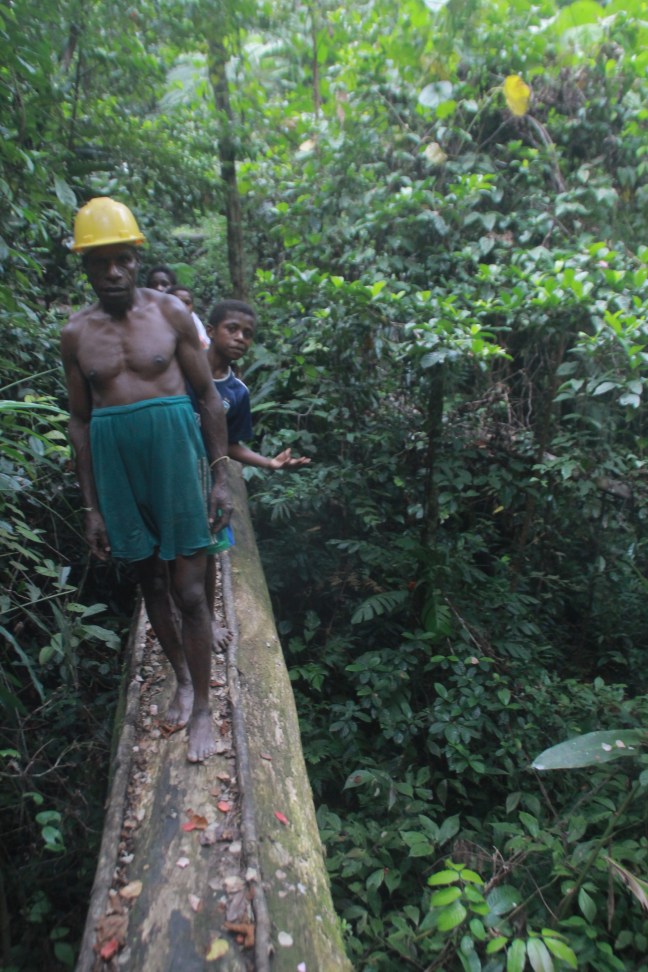
IMG_0084

The 2nd: From the camp ask how to cross, the answer came as excavator. Yeah, cross a river by excavator, exultant awesomeness.

What I did, crossed by hanging bridge, found the excavator on top of the slope, it was evening, so I crossed back with it to sleep, joined by the locals back from hunting, caring their bows and arrows and mobile phone to take pictures with me XD. And next morning excavator cross again!
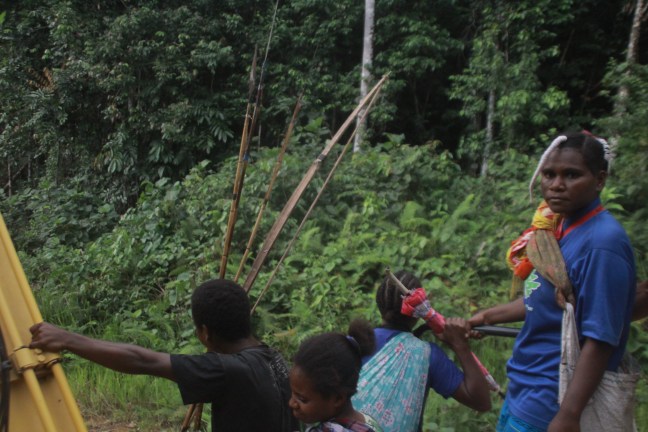
IMG_0125

The 3rd method, grab a branch and follow the current until you can get to the opposite bank. A kid did it. Cool but not electronics friendly.


3rd Part

Here is where walking is necessary. There is nothing on the other side of the river, and since no cars nor trucks can cross, there is only the 2 feet (or 2 wheels, I was told in the next village that a Russian did that way some time earlier than me 🙂

I starter walking at 8 and by 10:30 I crossed the 10 km to the next village. Good rhythm. After the first slope the terrain flattens, crossing the mountain with its ups and downs.

Terrific views again of pristine forested mountains.

The road in this section is scattered with excavators working, and becomes really muddy at times, but nothing reads impassable.

The town, Ayapoker, has a small shop where to fill your stomach and bags with food. The locals will fill your water (not much running water on the way) and maybe tell you about the crazy Russian and Barcelona guy who crossed before 😀

When I was there a young school teacher from Sulawesi spoke perfect English. Curious to found in the most remote village of this road.

The road slowly climbs all the way. 5km ahead there is another road camp where they offered to feed me. Since i lost 1h in the village to let pass a rain cloud, I pushed on.

A couple of km more a really small town they called Ayay, no place to eat there. I pressed on again. In 5km there was supposed to be next town. Well, not exactly.


Here what happens:

The road climbs to 900m and then down, the views of the valley down are really beautiful. A town in the middle by the river, with a telecom tower and a road climbing on the other side of the valley.

Promising, but the way down is a non visible really abrupt fall, with a excavator trowing rocks on top and a storm coming from the other side, mmm… bad.

Another excavator operator tells me the way down is 1 km or a way around it’s 2 (or so i understood). Not pleased to advance into an invisible way down with half a tone rocks falling form the excavator on top, I decide for the roundabout.

What I thought was a small service road 500m ago on the side of the road is a detour that goes up to 1100m and then down in… 12km, yeah not the best detour when a storm approaches, at the end of the day, and still steppy. My Walking sticks shorten a lot on this way.

When down you can see where the new shortcut is being build.

By the river a road leads to the town but I’m invited to a “hotel” hut by the main road, after crossing the river again.

Either the town (also called Ayay, apparently), or the “Hotel” Papua make a good stop..

I’m told there is no town (next one is Asiti), or houses until 25 kms, that will be false, again.


Optional 4th trek.

From “hotel” Papua I left early, 7:00, after I was forced to take a breakfast.

The road there continues to be unsealed but except for a couple of trunk bridges and a stream crossing, it shows the intention of being a sealed main road soon.

The morning is scenic, with clouds climbing on the rainforested mountain slopes and valleys. But other than that there is nothing to call home, only the gorge viewpoint that I marked on OpenSreetMaps (few metres inside the forest, before crossing the stream) you can find on the Maps.me app.
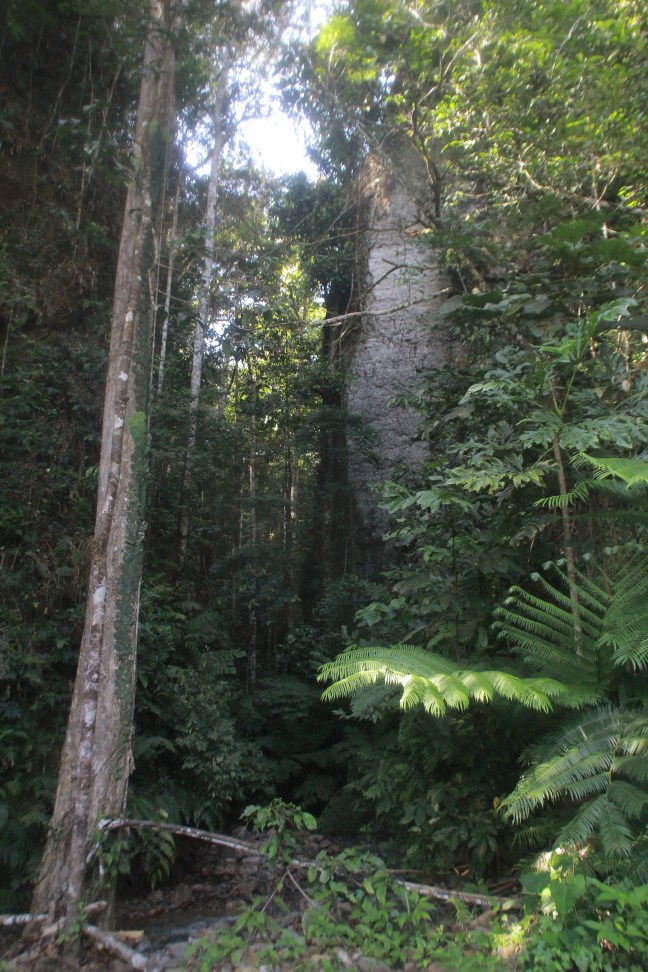
IMG_0261


The road is not challenging at all anymore and after 10km it becomes paved, maybe 1 or 2 km more there is a small settlement of 5 houses or so (that I forgot to ask the name). There I saw a car pass and I piked it, no reason to walk anymore.


What follows is the most hardcore hitchhike I’ve done, and I been in really hardcore ones already, they are child play in comparison :D.

1st How to get to the interesting bit. Mountain bird head peninsula crossing, West Papua


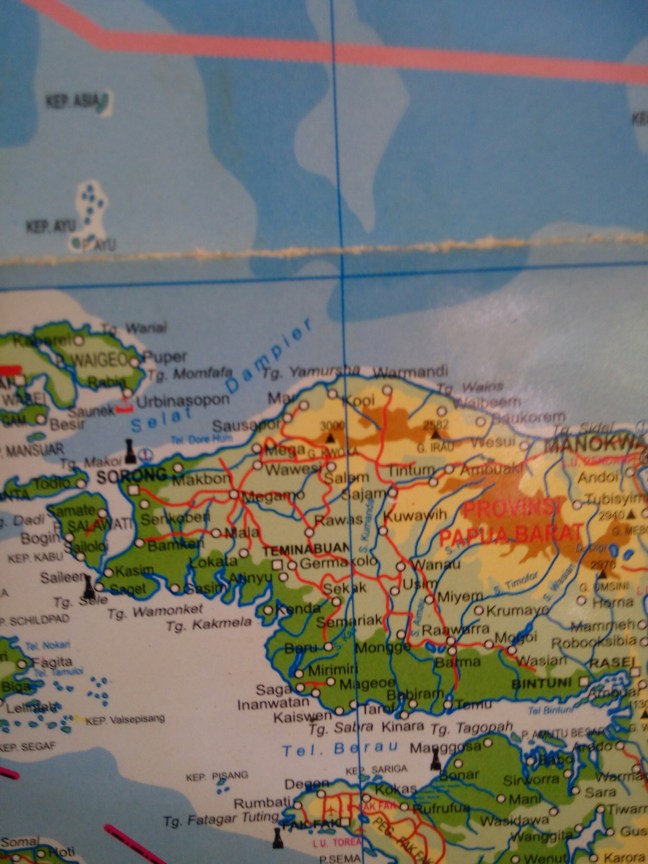
From Sorog I hitchhiked my way asking to be drooped at Ayamaru first.

Be carefully, twice I did this way (the first for some tourism, to the lakes of the region of Aitinyo, see here a bit) and twice I was driven first to Tembubian, 50km to the south.

There is a road under construction to Ayamaru junction from there , but it adds 100km…

From Ayamaru then ask to go to Susumu, where the junction of the road that goes south to Bituni, and north to Manokwary is.

I would consider this the center of the peninsula as it links the 3 big cities, but it’s just a small scattered town, no good connections yet.

From Susumu the next big town north is Ayamasi, then the last town before the mountains is Konja.

This trek shall be around 50-60km from the junction (I went back and forward so I lost count). All around this road I would suggest to make your stop before attempting the mountains. The obvious place is Konja, as from there is only a 10-20min ride to the bridge that starts everything.


You can also directly ask for Manokwary road, you will get strange looks but it might work 😀

For accommodation don’t worry, walk around and somebody will offer, or your hitch, if you hitchhiked, will be more than exited to have you over. If not ask around politely and you will find a place and probably be fed. And of course if you bring your tent or hammock it’s always easy to find a roof in case it rains. Is not cold at all.

Well if you are attempting this craze I guess you already know that 🙂

I was invited to Kumurkek to sleep, south of Ayamasi, so on Sunday that nobody drives there and I had to walk my way quite a lot until the mountains. Still I got 3 rides, one special one in which half the small town of Man rode me to the bridge to enjoy the spectacle of a Buleh (westerner) walking alone up a 3km long 30% slope carting 15kg.


The road until there is good, with its bigger or smaller potholes to remind you where you are.

After that bridge what is the welcoming of the adventure. Thank you.


Next the interesting bit.


Independent mountain crossing of West Papua bird head peninsula Sorong to Manokwari on the Mountains, integrated Dante cross.

image

I did this trek and it took me 4 days. There are 100km give or take of Mountain road, plus another hell Mountain bit later on (more on that later).

Here is the GPS track of the interesting mountain crossing bit.

And I’ve put several viewpoints in OpenStreetMap using Maps.me, when I have time I’ll add other info like towns using a better editing program. If you download the West Papua map you shall have them as reference. Anyway there are not that many options there to get lost.

First, how to get to the interesting bit.
The interesting bit is 100km, where only your 2 legs (and an excavator :D) will get you trough.

Second, the interesting bit, 100km of unpaved, rainforest mountain road. Hanging bridge, excavator river crossing, and bow and arrow hunters!

Third hellish hitchhike. Integrated Dante road (hell and Paradise all at the same time) Well is just my personal experience, you can ignore it and just Head Manokwary, it’s easy 🙂

Diaris de Papua, dia 13, arqueologia de vaixells.

image

Faig el ronso i deixe passar l’oportunitat d’iniciar autostop de bon matí, no em motivava molt després de tot.

En tot cas torne als molls per confirmar dates i vore si trobe algún vaixell nou.

Tots en els que vaig parlar ahir ara em diuen que fins d’ací 3.dies o 4 no aniran, i un que ho havia de confirmar el capità, el capità no està. El blavet que em motivava molt, moooolt xulo, ara em diu que tardran 4 dies més  en anar…

Vaig al moll gran de containers i el que m’havia dit que el dissabte anava ja no està. I mire els ferris tot dinant i el que havia d’anar demà  a la nit està  cancel·lat. Oh well, són les 3 de la vesprada, demà  faré autostop.

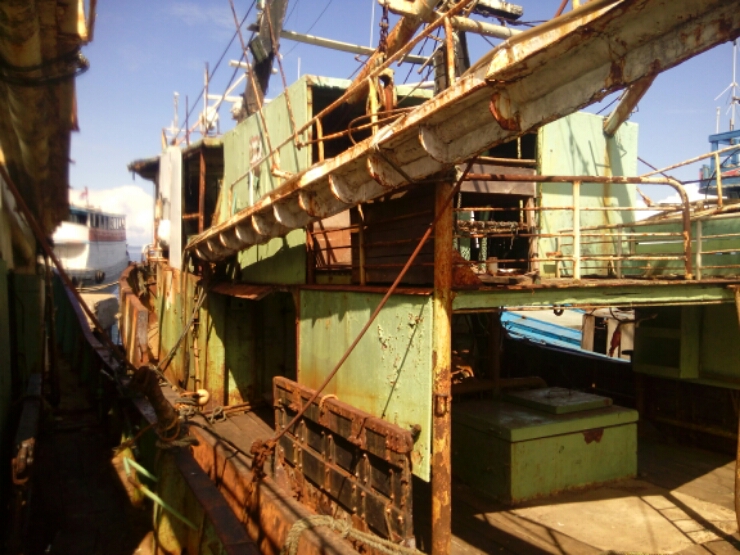
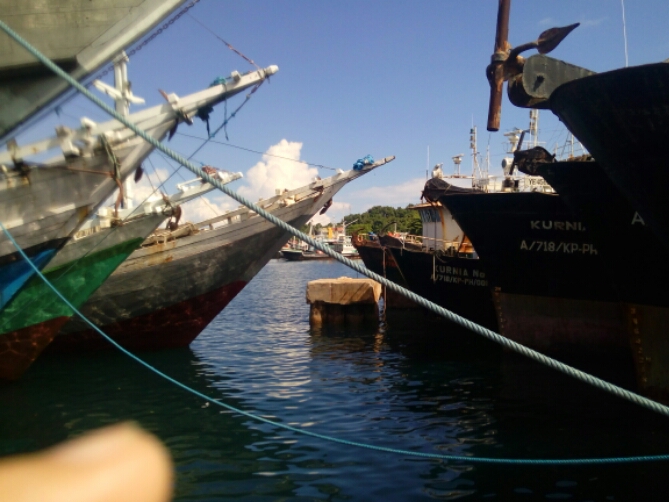
Per sort no ha estat una perdua total de dia, al moll hi ha una flota de vaixells de pesca japos abandonats. Em dedique una bona estona a explorar-los. Essent en mig de tanta ferralla complexa i oxidada, que dóna fotos molt xules, em fa admirar la bellesa de la decadència de la construcció humana. Tot i això altre cop infraestructura malbaratada. Com a mínim ací no hi ha tripulació  dia i nit pagada per esperar, com a les decenes de ferris de transport.

Diaris de Papua, dia 12 vaixells i passaport, per fí!

image

Pel matí vaig a el port de càrrega altre cop per vore si hi ha cap vaixell nou. Decidisc entrar a un moll que havia passat ahir pensant que no hi haurà cap vaixell, i va i ahi està el port de càrrega mitjana!

Per desgràcia no hi ha cap que vaja a Manokwari, on jo voldria anar, però hi ha alguns que van a Bintuni, que més o menys en ve bé. Hi ha un molt xulo, blau i blanc, deblanc fusta i finestretes quadrades de fusta, estil anglès, que dou que m’agafa. L’únic problema es que serà el disaabte… a esperar més dies.

Vaig al port de carega altre cop i un altre vaixellde carrega/passagers diu que m’agafa, també cap a Bintuni i ixen dissabte.

torne fent autostop i vaig a immigració. Allà espere 1h fins que me’l donen (arrive a les 2 i se suposa era a les 3). Mentre escric.

Vaig al moll de vaixells de passatgers i hi ha un qud va a la nit  a algún lloc que no sé de la costa entre Sorong i manokwari. Interessant super incerta opció.

Ja a casa mire sí hi ha carerera pwr la costa i no hi ha, per tant descarte l’opció del ferri incert. No vuic estar atrapat més dies. A més plou i em fa manda 😛

Prepare el recorregut per carretera pel centre, és visible al satèl·lit, però trabessa les muntanyes, cosa que vol dir mala carretera. A més no em fa gràcia perquè he de repetir un terç del recorregut que ja vaig fer el cap de setmana, cosa que va contra la 2a regla.

Vaig a dormir un poc tart, tot i així prepare els trastos per si m’anime a anar demà d’autostop.

Diaris de Papua, dia 11, the alley.

image
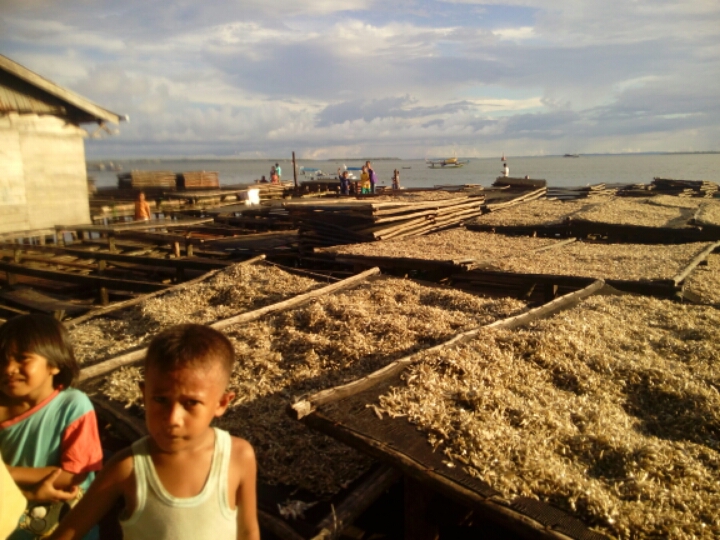
Drying of Small fish to send to Germany

El 2n dia de recerca de vaixells comtinua per on l’havia deixat, amb els poblats sobre l’aigua i els seus estrets carrerons de fusta en la seua frenètica activitat de gent anant ací  iem allà, xiquets xugant, i transport de mercaderies (mini peixets secs que em diuen que envien a alemanya) em fan somiar móns estranys.

Construisc una imatge d’un món distópic en que tota la vida dicorre al voltant d’un carreró principal que és l’espai overt més gran que hi ha. Tot està amuntegat i no hi ha directa natural al carrer ja que les cases són altes i es toquen entren si..Però tot funciona bé, com.un rellotge, amb gent anant i venint, i Xiquets xugant i explorant.

Un cop he eixit de les barriades (cap sort amb els vaixells que trobe) a un moll hi ha un vaixell hotel per a submarinistes que va a comodo el.dia següent a la nit. Està buit així que demane si em podendur, cosa que molaria molt :D, canvie l’itinerari però aniria a Timor l’est.

Malauradament el capità es preocupa de la policia i diu que demane a la companyia que pose el meu nom a la llista de gent al vaixell.

La companya com és obvi vol que pague, 6milions (400€!), oh well no luck this time.

Travessae un port en decenes de ferris, Tots estan parats sense fer res, suuuper ineficient ús d’infraestructura.

Continue fins al port de carrega (3km més enllà) i desgraciadament no hi ha cap vaixell.

Torne cap a casa un tant desmoralitzat, no hi ha port de càrrega mitjana com a bitung, on vaig trobar L’alken. Bé demà intentaré altre cop.

Torne per les muntanyetes vora la mar, i quan forçat a baixar trabesse una senda empinada prou xula, on hi ha cases, un xiquet tot emocionat crida “Buleh Bule! isini!” Blanc, Blanc, ací! Supose que sóc el primer occidental que travessa allò.

Dine i mire els ferris, a una mala el dissabte hi ha 2 ferris que van cap a l’est.

A l’avinguda unes xiques adolescents papua em demanen de fer-se fotos. Em fan decenes! i una o dos m’abrassen i acaricien massa i volen un ves..Supose que així és com les grupies es comporten en els famosos. Jo somric, passe la tempesta i continue el camí.

És estrany com els humans és completen fàcilment fora del seu paper quan estàn altament exitats per un factor extern. Estria bé fer resonancies en eixes situacions per vore com el cervell s’altera.

Passe per davant  el super i compre fruita per al Ramón, m’ha estat alimentant els desdejunis des de que he arribat!

Ja carregant les bosses, un home s’oferís a dur-me sense jo dir res. Not bad, fa calor i em queden 3km fins a casa.

A casa el Ramón ha dut menjar del seu viatge de cap de setmana i anem a menjar-lo a ca un amic.

Poc més.

Diaris de Papua, dies 9 i 10, recerca de vaixells.

image

Un cop tornat a Sorong vaig de bon matí a inmigració. Em fan la foto, em prenen les empremtes i em diuen que el meu sponsor (el.Ramón) no val.perquè no té document de Sorong… Torna a començar.

Vaig als de Conservation international a vore si ellsem poden fer d’espobsor, però tots se n’han anat a jokjakarta a un meeting de 2 setmanes…

plou i.passe la resta del.dia a casa fent recerca dels viatges, i mails i poc més.

El.Ramón torna a casa al matí següent, li havien retrassat el vol un dia.

Al dia següent.torne  immigració i criden al.Ramon, li diuen que en una fotocopia del passaport val. Al final ell ve i s’enllestís tot.

Tot i aixi em diuen que per al dijous a les 3pm estarà. El dia anterior vaig llegir que un avió militar transporta passagers fins al centre de Papua, a un lloc un tant turístic perquè alguns nadius encara van (des)vestits de la manera tradicional.
El Ramón i.qui l’ha conduït a immigració em deixen a l’aeroport, però no hi ha cap Hèrcules que vole des de sorong, només des de Jayapura.

Camine lentament cap als molls per preguntar vaixells. Creue el mercat molt xulo… Organitzat, no massa ple, no massa buit, en personalitat, agradable. Menge molt bé allà.

Als molls no trobe massa vaixells, els de pesca no hi van a cap lloc, la resta són xicotets.

No em dóna temps a vore-ls tots ja que gaudisc explorant la super fotografica població de casetes i passarel·les de fusta construïdes sobre la mar. Un tressor de fotos! Se m’acava la bateria i torne  casa a la posta de sol. Gran troballa la vida de la costa. Mescla de Papuan i indonesis.

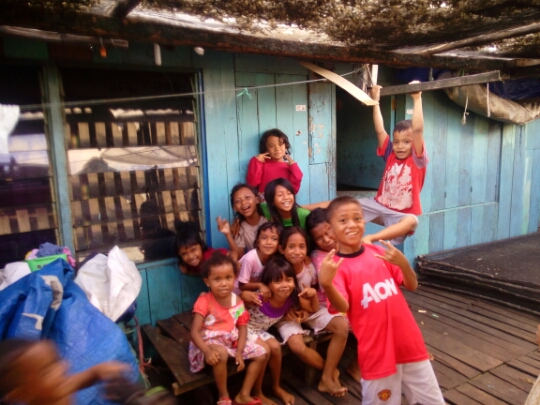
Un bon dia per a la fotografia, a mesura que m’endinsava als barris sobre la mar l’espectacle visual augmentava. I a cada carreró aconseguia un nou sèquit de xiquets plens d’energia i ganes d’estar a la foto.

En un carrer sobre l’aigua contacte en el Jefta, un de Biak, una illa a meitat distància de Jayapura, que em diu que escriu llibres en la llengua local per a ensenyar als xiquets a l’escola. Em diu que el visite allà i li dic que sí trobe el vaixell aniré.

Diaris de Papua, dia 8, 4a llei del viatger solitari

image

4th law of solo travel: join the locals in whatever they do, if you can.

Pel matí  tots s’alcen tart. Jo explore la pisifactoria, hi ha més de 12 piscines de cement, a més de les xarxes al llac artificial. Nomes es gasta la metiat de tota la infraestructura, si arriba. Deu haver estat una gran inversió per a la zona.

L’home de la pisifactoria m’havia dit d’anar amb ell a l’església hui, però al final m’envia altre cop amb el guia. Li pague la gasolina. Em du fins a la intersecció en la carretera que du a Teminabuan, on aniré hui.

Camine i veig una festa en honor a un mort, es fa al cementeri, sobre i al voltant de la tomba. La gent balla en música pop a tot ostia i beu. Curiós.

Una moto em du fins a un poble gran, on les esglésies de diumenge. Estàn cantant i fent sonar el timbal. Estic fins que comença la misa, que és  en Indonesi.

***
És cert que quan eduques a algú, siga un xiquet, un adult, una societat, el 1r que ensenyes sobre un tema és el que més  força té. Açí l’evangelització, proselitisme, ha estat portat per cristians, serà difícil canviar-ho per molt de temps.

Dones barbudes són molt freqüents, quan dic barbudes vuic dir en perilla, bigot, i una en una barba plena, no sabria dir percentatges però segurament més d’un 1% és així.

També hi ha molts alvins, no sé si arriba a l’1% però és més alt que a la resta de societats que he estat.

Seria interessant estudiar la genèrica ací.
***
Un altra moto que du bidons de peix  m’agafa i em du ja fins Temi.

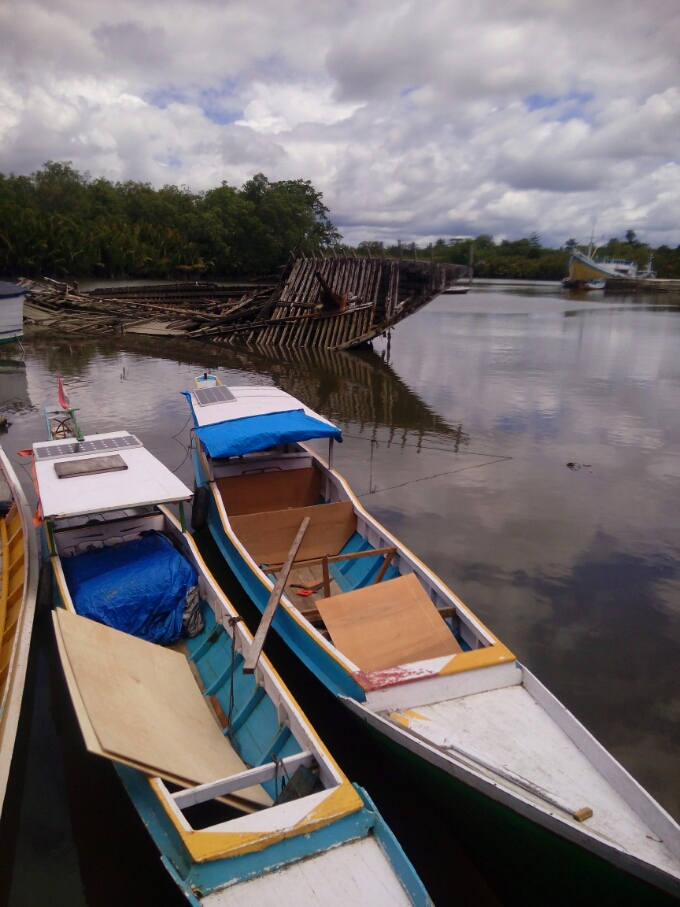
Allà explore la ciutat, on el més interessant és un carrer que transcorre vora riu, amb molts carreronets xulos que hi donen. Les vistes del rou amb tot de barquetes i restes de naufragis molen molt.

Dine allà i vaig cap a la carretera principal per tornar a sorong. Seguint carreronets em topete en una cascada on molts xiquets i adolescents  juguen. La corrent és molt forta. És molt divertit tirar-s’hi i deixar que t’arrastre 🙂

4a llei del viatger solitari: unis-te als locals en qualsevol cosa que fagen, si pots.

Continue l’autostop i.una furgo pickup plena de dimingueros wm deixa a un riu amb un parc per nadar.

Els rius per grans que siguen són d’aigues turqueses i cristalines
Supose que així es com rius sense presència humana i sense grans erosions haurien de ser.

Una pickup em du ja tot el camí cap a Sorong, però decidisc parar en un poble que sé el nom, per fer quelcom simplement, resulta ser una magnífica d’edició!

El poble es diu Maladofo i té un parell de cases comunals tipiques (res d’especial però) i els xiquets que em seguixen, com no, em mostren una casa vora carretera que és una galeria d’art.
Els quadres estàn pintats segurament per un local. El llenç són  antics sacs de plàstic :P. Algunes obres estàn molt bé, la majoria són passables però demostren skill.

La situació de ser mostrat el més vluós del poblat ç, tot i que l’autor no estiga, em recorda a el que passava a Sagunt abans que hi haguera turistes regulars. Sagunt és digne de vore però fa 100 anys poca gent s’interesava. Només algú de tant en tant visitava. Hi havia un mosaic romà  que es podia demanar la clau per visitar. Com els locals no li donaven importància no hi havia vigilància, fins que un dia va desaparèixer.

Es a dir, en presència de baix nombres es confia en el visitant ja que és  l’únic que valora el que hi ha localment (fins els 80 m’atreviria a dir que els saguntins no començaren a apreciar les restes històriques).

El món és igual a 13.000km de distància i 100 anys apart 😛

Continue l’autostop i una gran pickup em deixa anar darrere. Agradable conducció en la.posta de sol, fins que torne  ca’l Ramón.