Western Dominions

To understand the networks that can establish this project’s question, it would be interesting to reflect on how such networks were created. And for that, one has to reflect on the dominance of the planet by the Western European powers by the end of the 19th century. This dominion, as described before, started with the parallel events of the arrival in the Americas, wiping out about 90% of their pre-contact population, and conquering Malacca after the circumnavigation of Africa. These two events were achieved by two small powers, inhabiting a medium-sized peninsula at the end of the Earth (Finisterre, the end of the land, is in Galicia, north of Portugal). The peninsula lies between the Mediterranean and the Atlantic and was shared with two more kingdoms, Navarra and Aragon, which did not participate in these events. Other Atlantic-facing small powers soon joined the party, with France, the Netherlands and England taking over the lion’s share the century after, and some other colonising efforts conducted by Denmark, Scotland, and even Poland. Once Germany and Italy were created, they eagerly jumped into the “game” as colonial administrators. But beyond the administrations, emigrant European populations, mostly from the western and central portions—but in reality from all over—had huge influences all over the world. And last but not least, Russia, which still holds its colonial land-based empire, conducted overland the same land conquests that the rest of the powers were conducting over the oceans.

To see the effect that about 10 nation-states had over the world, you can go to the modern world political map and start crossing over the countries and territories that at some point fell under their control, be it nominal or real, where they had actual power in deciding much of their political and economic actions.

Colored are 8 Nominally non-colonized modern nations. Turkey is in dashed lines because it can be considered a “European” power. In black is all the parts of the world where a imperial European power or their ex-colonies, plus Japan and China, took over the administration of the land in the last 500 years. Antartica is in white, under the Antarctic Treaty.

All the “New World”—i.e. America—fell under the actual or nominal control of these states or their post-independence nations controlled by European elites.

In Africa, with the exception of present-day Ethiopia (which was occupied for 4–5 years under Fascist Italy), the entire continent was nominally under the control of the Western European nations by the end of the 19th century. The African continent’s political map now bears the scars of that colonisation in the form of the terrible borders left over by the Europeans, which still today force historically antagonistic communities to share a state, while others that were historically unified are now split by an invisible line.

Oceania was swept away by the Europeans, with the Kingdom of Hawaii—one of the last remaining independent archipelagos—losing its sovereignty and most of its population to the US by the end of the 19th century.

In Asia, Portuguese, Dutch, English, French and Russian powers took over most of the land. Only six sovereign administrations were never actually controlled by the Europeans. These were the isolated Japan, large parts of mighty China, Thailand, Afghanistan, Persia (now called Iran), and the Arabian desert now controlled by the Saudis. It is debatable whether the Asian Ottoman Empire controlled parts of Europe, or the European Ottoman Empire controlled parts of Asia, but whichever it is, it had strong European influence in its administration, which can still be seen in modern Turkey. However, unlike Russia, Ottoman rulers did not intermarry with the rest of European aristocracy, in part limiting European influences in the ruling class. Other territories not controlled by the Europeans include Mongolia, which was under Qing Chinese dynastic control and then briefly independent as a puppet state under Soviet influence. Similarly, the two Koreas were under Chinese and then Japanese dominion and colonisation, and then divided in two—with the US influencing the South, and the Soviet Union and China influencing the North. The British had a mixed dominion policy. Oman (with Muscat being a Portuguese trading colony) formerly controlled great parts of the coast of present-day Tanzania due to its lucrative slave trade; that control was destroyed by the British, who then took over most of Oman’s government and internal affairs until the 1970s. Similarly, other sovereign lands—like Bhutan, Nepal, many Indian kingdoms, and Oman—at one point or another left their external political affairs and some internal ones in the hands of the British. Finally, Japan began imitating the European powers and took colonial control over Korea and large parts of China, even creating a puppet state called Manchukuo in Manchu lands in China’s northeast.

For these seven or eight places on the map that can be painted as outside direct colonial control, each suffered, to some extent, imperial influence. Saudi Arabia was mostly empty desert land with few resources until the discovery of oil, and its existence is linked to British foreign policy—to create a Saudi force as a counter-power to the Ottoman Empire at the end of the 19th century. Iran was divided into spheres of influence by the Russians and British, and its modern borders were mostly decided by them. For Afghanistan, its borders were drawn by the British and the Russians, including the strange northeastern “corridor,” which was made the width of the most powerful cannons at the time, so that British and Russian artillery could not shoot each other over Afghan territory. Most of Afghanistan’s external political affairs were controlled by the British. Thailand suffered a similar fate; being between French and British-controlled territories, it was used as a buffer state. The British and the French drew its current borders and split the country into spheres of influence, as in Iran. China was defeated first by the British, and then by a coalition of the British, French, Russians, US, Japanese, and Germans. Though they did not take full control, the British strongly influenced China’s foreign policy for decades, and China was divided into spheres of influence. Japan won several wars against Chinese administrations and took control over large parts of the land before the end of WWII. Japan itself was forced to open its borders and commerce to foreign powers when Tokyo was bombarded by a US armada in the late 19th century, and later—after some mushroom-shaped explosions—was occupied by the US and the British. It was forced to adopt an army for self-defence only and to remain aligned with US interests.

Antarctica was claimed only by European nations, and the Antarctic Treaty, which theoretically reserves these lands for all humanity, was drawn and signed by six European nations. Currently, most of the scientific bases that exist there are European ones.

Out of the roughly 200 sovereign administrations now covering the land masses of the Earth, plus Antarctica, only about seven or eight experienced little direct control by European powers. This simple map illustrates the extent to which European powers exerted near-global influence over the planet 100 years ago. Even today, of these eight territories, only Japan, China, Saudi Arabia and Iran can be said to have—or have had—notable autonomy and influence beyond their borders. Turkey may also be included, depending on which continental perspective is used. Therefore, the world remains dominated by European nations and their administrative legacies. Alternative sovereign administrations with global influence emerge only from four or five distinct cultural backgrounds. These numbers highlight how five Western European nations, and one Eastern European one, took over most of the world.

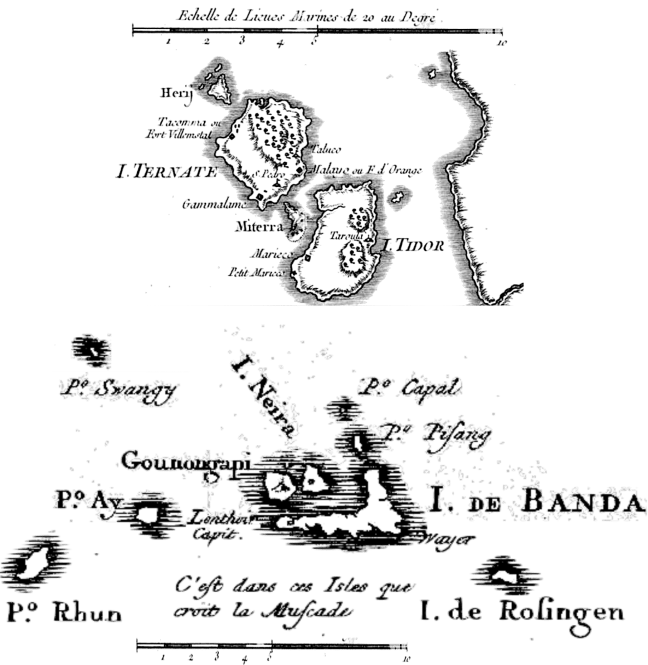
To illustrate how the Europeans went about conquering the world, let’s go back to the spice islands. The interaction between three European powers and three native sovereign powers provides three different examples of forms of dominion: by annihilation, by trade, or by playing European powers against each other. We can centre the native powers in the two islands of Tidore and Ternate, and the Banda archipelago. Similarly, we can focus on Portugal, Spain, and the Netherlands as the three European powers. As we have seen, the lucrative trade in the spice islands centred on cloves, mace, and nutmeg. Cloves are the dried flowers of a tropical tree found only in Tidore and Ternate (and some other nearby islands). Nutmeg and mace are inside the seeds of another tree, which was only present in the Banda archipelago.

As described, Tidore and Ternate are two small volcanic islands neighbouring each other at a distance of less than two kilometres. To this day, both have rival sultans. At the time of the Portuguese and Spanish arrival, each controlled its respective island and the cloves trade, plus claimed rival control of most lands east of them, all the way to western Papua. Perhaps luckily for them, the Portuguese allied with the Ternate sultanate, while the Spanish soon after allied with the Tidore one. These two sultanates had been long-term neighbouring rivals, but also intermarried, not unlike the Spanish and Portuguese aristocracies. The European powers never conquered the sultanates, although they allied with them and built forts on their territories. The Ternateans were able to expel the Portuguese after a few decades. The Tidoreans used the Spanish as convenient allies against the Ternateans.
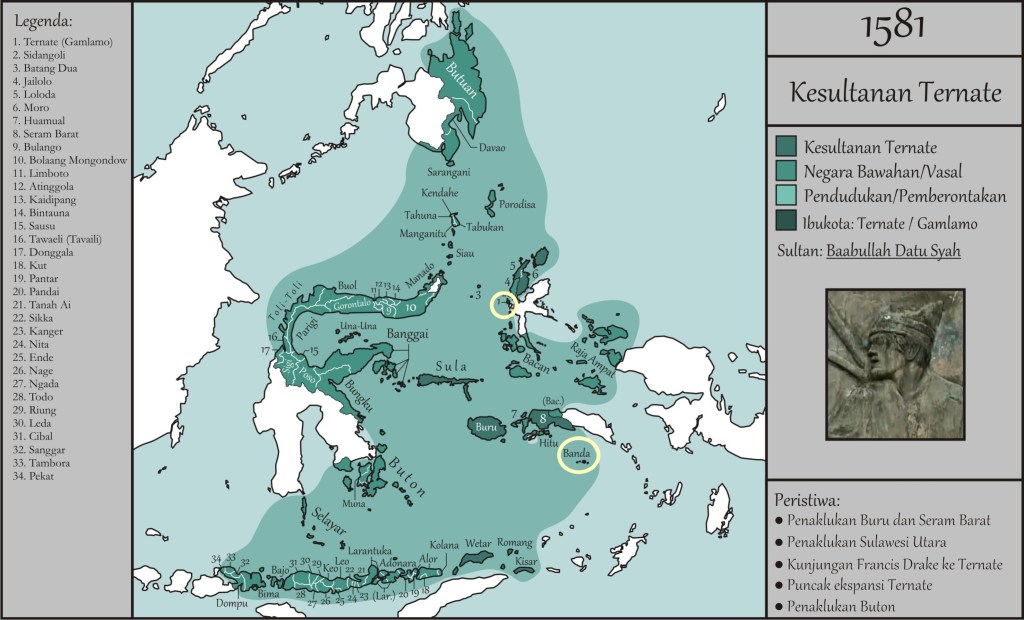
Claimed dominions of Ternate (1, upper circle) before the Dutch appeared on the area. Tidore is just slightly south to Ternate, also circled, difficult to see. The Banda archipelago is the small islands (lower circle). Credit to https://apaitukerajaan.blogspot.com/2018/07/sejarah-kesultanan-ternate.html

Things became more complicated after the Dutch East India Company (VOC, founded in 1602 and with authority to declare wars!) took over the nearby Banda islands (Ambon), home to mace and nutmeg.

Soon after, the Ternateans placed themselves under Dutch influence to fend off the Tidoreans allied with the Spanish, who controlled half the island and even captured the sultan. After the Spanish left the area, the sultan rebelled against the VOC but instead lost independence and came under VOC rule. Ternate became the capital of the Moluccas and the wider Indonesian possessions until the Dutch founded Batavia (now Jakarta) in 1619. Today, Ternate is the capital of the North Maluku province of Indonesia, with a population around 200,000. The sultanate continued until 1975 and has now been restored by the royal family in a ceremonial role.

Meanwhile, the Tidorean aristocracy descended into infighting, ditched the Spanish and allied with the Dutch. The VOC convinced the sultan to eradicate all clove trees in his realm to strengthen their monopoly. In compensation, the VOC gave generous donations to the sultan. With the obvious impoverishment that followed losing control of the spices, Tidorean rebels allied with the British, who soon conquered it. Later, the Dutch took back control of the territory—but not before the British took seeds from the clove trees and began planting them elsewhere, beginning the end of the monopoly. The Tidore sultanate lapsed in 1905 and became a regency, but was revived to counter Indonesian independence claims over West Papua. Today, it holds a ceremonial role in the Indonesian state.

Unlike Tidore and Ternate, the Banda Islands—a small archipelago of a maximum 15.000 inhabitants south of Halmahera—were run by orang kaya, or “rich people”. As said, Banda was the only source of nutmeg and mace. These were sold by Arab traders to the Venetians at exorbitant prices. The Bandanese also traded cloves, bird of paradise feathers, massoi bark medicine, and salves. The Portuguese tried to build a fort in the central island but were expelled by the locals and did not return often, buying nutmeg and mace through intermediaries. Initially, the Bandanese were left to their own affairs, but they were unprotected by any other European powers and their artillery.

By 1609, the VOC arrived. To put it mildly, the Bandanese were not exactly enthusiastic about these slightly different Europeans, who brought only wool and odd Dutch crafts in exchange for a monopoly. Like the Portuguese, the Dutch wanted to build a fort. The Bandanese responded in the best way they could—by ambushing and decapitating the VOC representatives. The VOC retaliated, levelling random villages. In the resulting peace treaty, the Bandanese finally allowed a fort.

Meanwhile, two of the islands, the westernmost ones—sadly named Ai and Run—allied with the British East India Company, who began trading with them. The VOC launched an annihilation campaign, first against Ai (Ay in the opening post map), killing all men, while women and children died fleeing or were enslaved. On Run (Rhun in the opening post map), the natives, with the help of several Englishmen, held out for over four years but ultimately lost. Again, the Dutch killed or enslaved all adult men, exiled the women and children, and chopped down every nutmeg tree to prevent English trade. Run is the famous island that was exchanged for Manhattan (New Amsterdam) in 1667. Incredibly, the British did not replant nutmeg trees elsewhere at the time. They would only do so in 1809, during the Napoleonic Wars, ending the Dutch monopoly and making the tragedy of the Bandanese even more sorrowful.

By 1821, the VOC wanted a renewed monopoly so badly that they decided to annihilate the remaining Bandanese. They assembled an invading force of thousands of Dutch and hundreds of Japanese soldiers and launched it on the islands—then home to only a few thousand people. After a failed peace treaty, the invading commander declared that “about 2,500” inhabitants died “of hunger and misery or by the sword,” and that “a good party of women and children” were taken, with not more than 300 escaping. The original natives were enslaved and forced to teach newcomers about nutmeg and mace agriculture. At the cost of genocide—and facilitated by natural plant endemism—the VOC had a monopoly for about 180 years. The British effortlessly invaded in 1796 and 1808, and this time decided to plant nutmeg trees in another former Dutch colony: modern Sri Lanka.

Sadly, Tidore, Ternate, and the Bandas illustrate the fate of many other European colonial efforts until the 20th century: bare survival by cleverly playing European powers against one another, becoming important administrative centres at the loss of complete autonomy or independence, or facing total annihilation and repopulation of blood-stained lands. Despite these different destinies, the outcome was the same: being utterly dominated by Western European administrative frameworks, as we will see in what follows.

Previous

Next

2nd, The Interesting bit. Mountain bird head peninsula crossing, West Papua


Comes from 1st
-Second: walk up and then down, and…


You have 100km in front of you, here the wikiloc sketch, it starts at km 41 on that track. I think in 3 days it can be done all walking, for the ones ready for it, but I recommend 4 days with 3 obvious stops on the river crossings. Or skip the last day (24km) as the road is less interesting (paved at half way) and it’s easier to catch a ride. If you come the other way that might change as it shall be less challenging and you can skip altogether the track to get there.


1st Trek

After the bridge the road starts to be unpaved. The first slope of about 8km climbs from 400m to almost 1000m. It’s almost all up with maybe 2 breaks as flatter parts. The views on your back, as you ascend, are magnificent, look back and enjoy the moment!

Fresh it took me 1h and I’m not on shape at all. The road is wide and of crushed rock. I did zigzags to put less stress on my legs. So with less weight and more prepared that shall be done easily and it’s one of the most challenging passes, the are only 2 more like that. On the sides runs fresh drinkable water, nobody lives there!

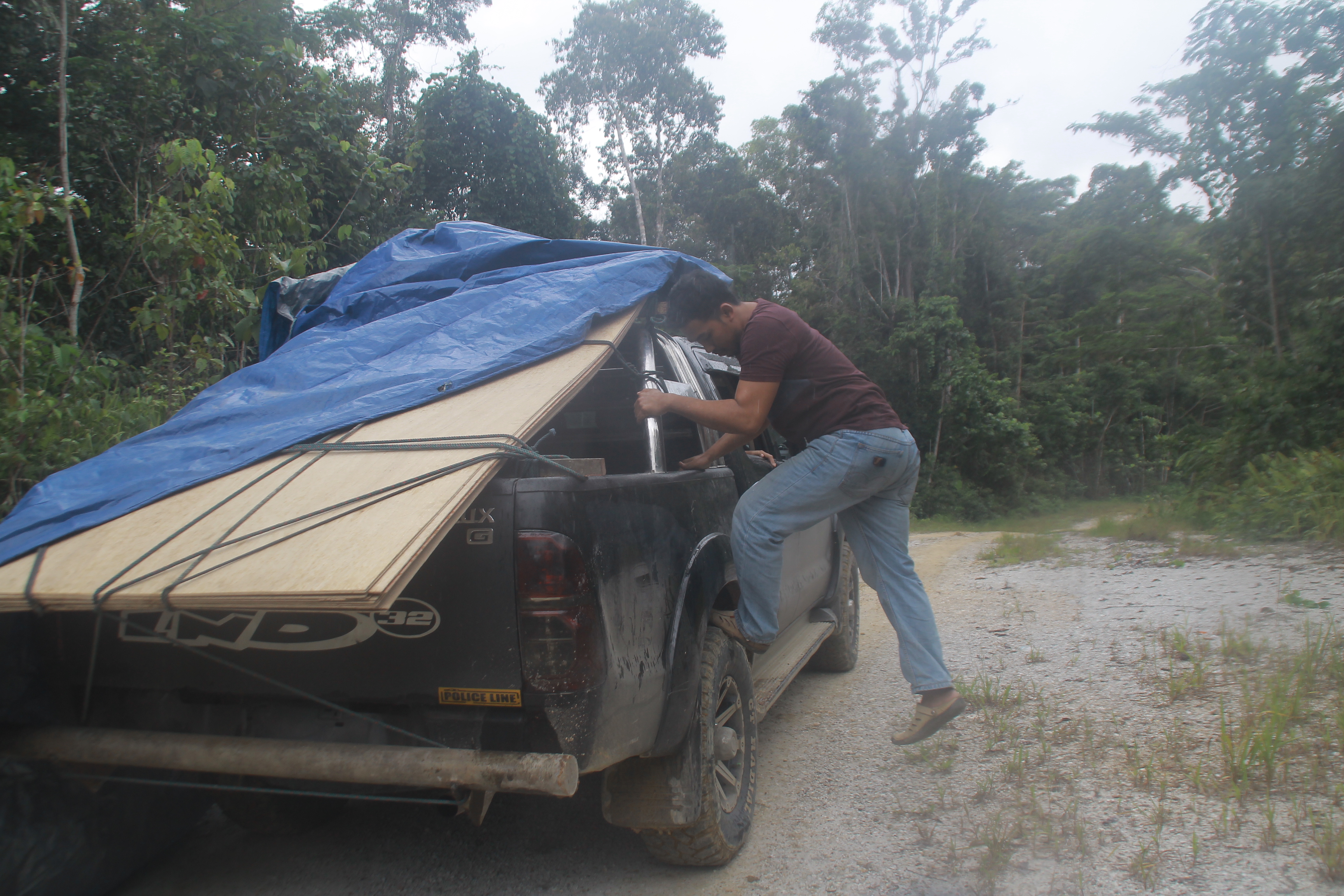
Just after getting on the top of the pass I got a ride, lucky me, a four wheel pickup. I rode on top of cement sacs and under wood panels.

What follows is mountain road with many ups and downs as it traces the mountains. Striking views.

Around 20km later an abrupt descend to a river valley forced the driver to cool the brakes with water of a hoof on the road. Few kms ahead there is a bigger river and bridge, with 5 houses there (km 63 on my wikiloc track). If you came walking I suggests to stop there to pass the night.

IMG_0006

The inhabitants where fascinated that my ride piked me up walking the mountains 🙂


2nd Part

I continued with my pickup, after the river bridge there is another harsh ascend. We had to stop a couple of times to put rocks on the rear wheels mid slope so the car could muster enough power to clear the stretch.

Another descend cut by a river crossing with no bridge. There you shall wet your pants if you go walking but it’s passable.

I was stopped in settlement of 15 houses and 2 huts scattered in 4 clusters. Strangely they told me the name of 4 villages (3 houses per village?, maybe resettlement from somewhere, as there is no running water there), but the settlement got the name of Meia Selatan.

Continuing about 3km slowly down there is the interesting part of the trek and why it has to be done walking. “Kali (river) Sisu”, I’ll call it Cool Big River 🙂

That shall be your stop, there is a sizable village (with school) less than 1km before the river, and a road construction camp just before the river.

I crossed in 2 of the 3 possible ways (for fun) depending on your preferred method sleep on the village or camp.

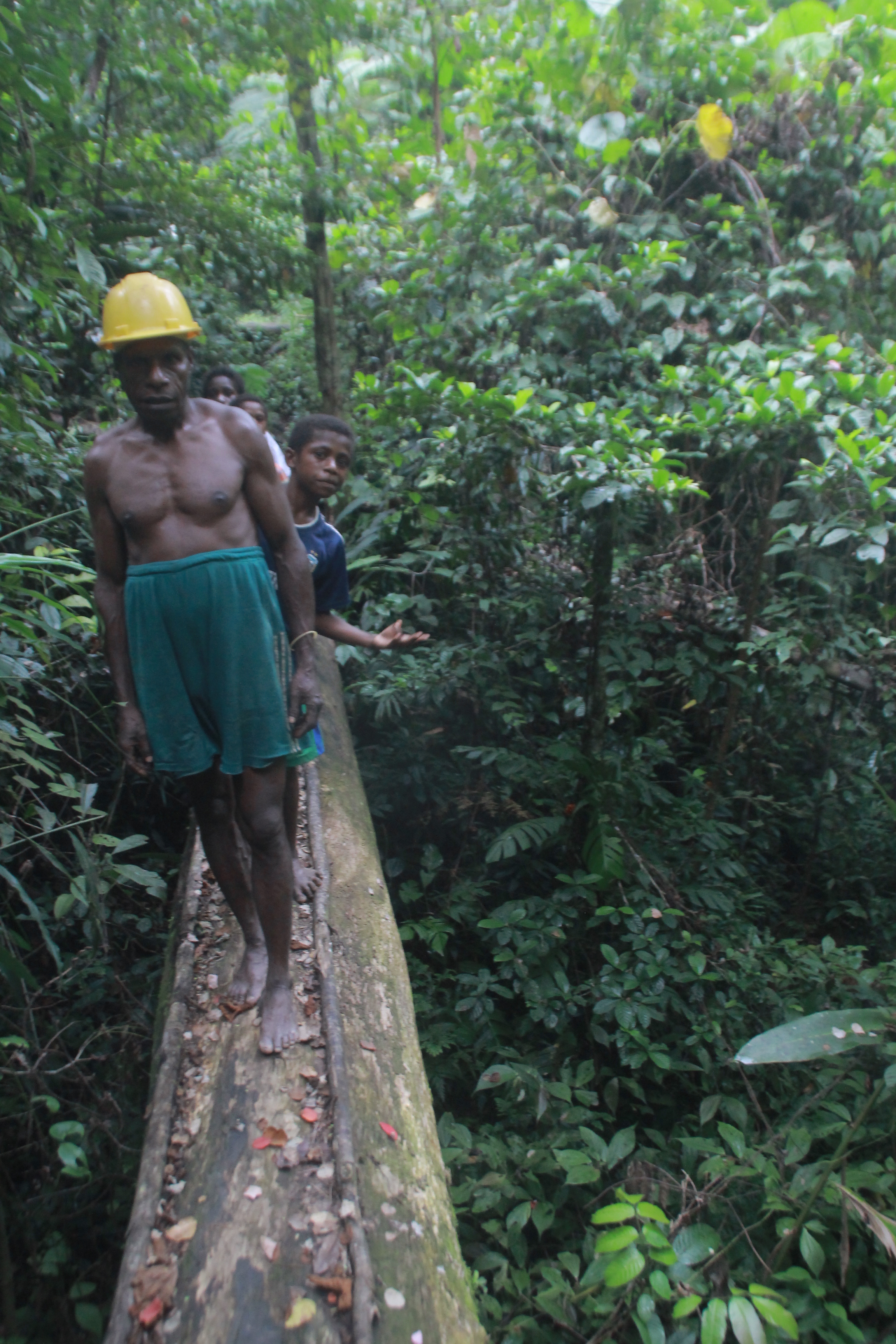
The 1st: From the village ask the locals to show you the “jimbatan”, the hanging bridge. If the road bridge is not finish yet (it might take years…) they shall bring you to a hidden small track that crosses a terrific forest using fallen huge tree trunks as bridges on the way. After the tricky path the hanging bridge awaits. No words for that, only awesomeness.

IMG_0084

The 2nd: From the camp ask how to cross, the answer came as excavator. Yeah, cross a river by excavator, exultant awesomeness.

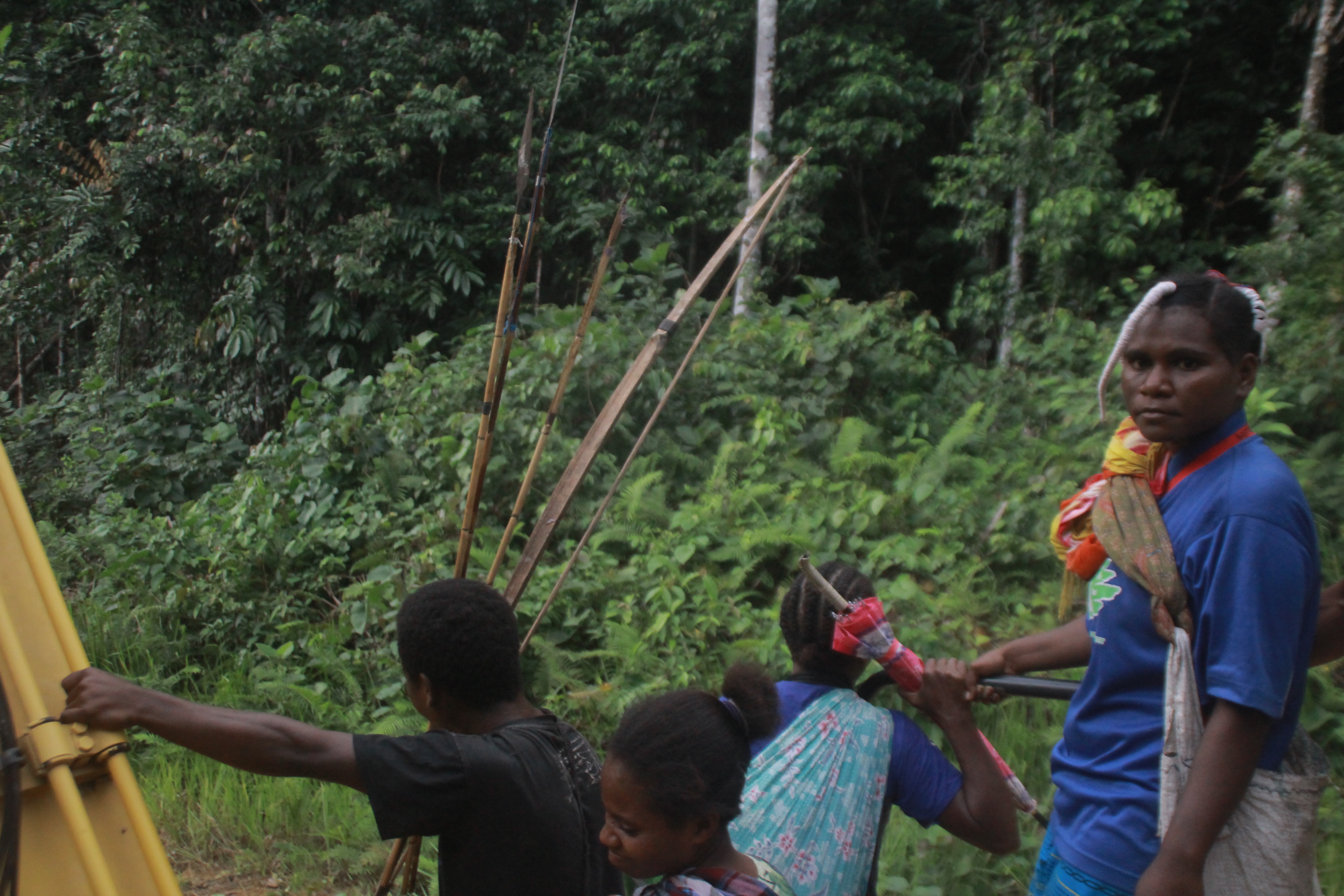
What I did, crossed by hanging bridge, found the excavator on top of the slope, it was evening, so I crossed back with it to sleep, joined by the locals back from hunting, caring their bows and arrows and mobile phone to take pictures with me XD. And next morning excavator cross again!

IMG_0125

The 3rd method, grab a branch and follow the current until you can get to the opposite bank. A kid did it. Cool but not electronics friendly.


3rd Part

Here is where walking is necessary. There is nothing on the other side of the river, and since no cars nor trucks can cross, there is only the 2 feet (or 2 wheels, I was told in the next village that a Russian did that way some time earlier than me 🙂

I starter walking at 8 and by 10:30 I crossed the 10 km to the next village. Good rhythm. After the first slope the terrain flattens, crossing the mountain with its ups and downs.

Terrific views again of pristine forested mountains.

The road in this section is scattered with excavators working, and becomes really muddy at times, but nothing reads impassable.

The town, Ayapoker, has a small shop where to fill your stomach and bags with food. The locals will fill your water (not much running water on the way) and maybe tell you about the crazy Russian and Barcelona guy who crossed before 😀

When I was there a young school teacher from Sulawesi spoke perfect English. Curious to found in the most remote village of this road.

The road slowly climbs all the way. 5km ahead there is another road camp where they offered to feed me. Since i lost 1h in the village to let pass a rain cloud, I pushed on.

A couple of km more a really small town they called Ayay, no place to eat there. I pressed on again. In 5km there was supposed to be next town. Well, not exactly.


Here what happens:

The road climbs to 900m and then down, the views of the valley down are really beautiful. A town in the middle by the river, with a telecom tower and a road climbing on the other side of the valley.

Promising, but the way down is a non visible really abrupt fall, with a excavator trowing rocks on top and a storm coming from the other side, mmm… bad.

Another excavator operator tells me the way down is 1 km or a way around it’s 2 (or so i understood). Not pleased to advance into an invisible way down with half a tone rocks falling form the excavator on top, I decide for the roundabout.

What I thought was a small service road 500m ago on the side of the road is a detour that goes up to 1100m and then down in… 12km, yeah not the best detour when a storm approaches, at the end of the day, and still steppy. My Walking sticks shorten a lot on this way.

When down you can see where the new shortcut is being build.

By the river a road leads to the town but I’m invited to a “hotel” hut by the main road, after crossing the river again.

Either the town (also called Ayay, apparently), or the “Hotel” Papua make a good stop..

I’m told there is no town (next one is Asiti), or houses until 25 kms, that will be false, again.


Optional 4th trek.

From “hotel” Papua I left early, 7:00, after I was forced to take a breakfast.

The road there continues to be unsealed but except for a couple of trunk bridges and a stream crossing, it shows the intention of being a sealed main road soon.

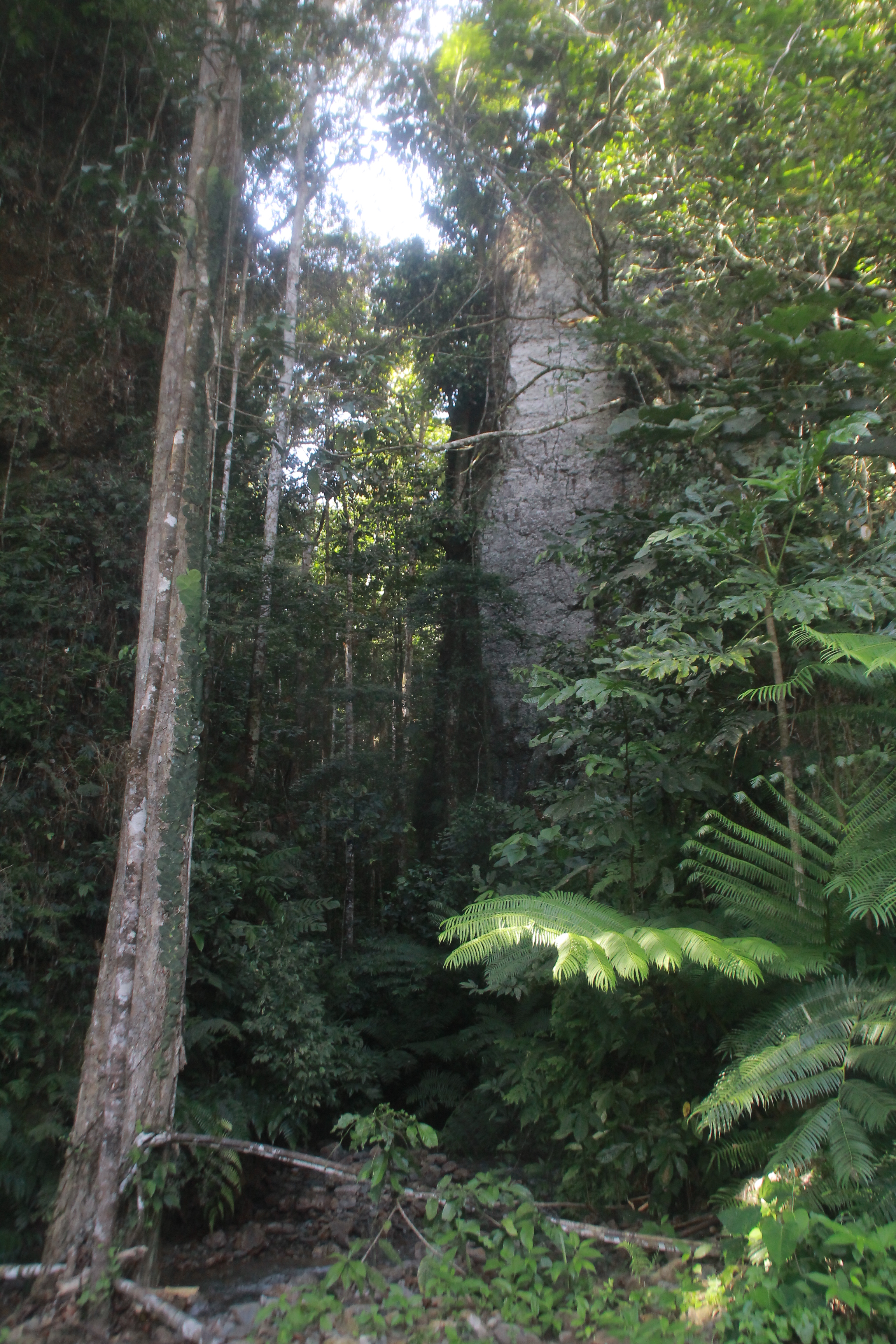
The morning is scenic, with clouds climbing on the rainforested mountain slopes and valleys. But other than that there is nothing to call home, only the gorge viewpoint that I marked on OpenSreetMaps (few metres inside the forest, before crossing the stream) you can find on the Maps.me app.

IMG_0261


The road is not challenging at all anymore and after 10km it becomes paved, maybe 1 or 2 km more there is a small settlement of 5 houses or so (that I forgot to ask the name). There I saw a car pass and I piked it, no reason to walk anymore.


What follows is the most hardcore hitchhike I’ve done, and I been in really hardcore ones already, they are child play in comparison :D.

Boat Hitchhike Sulawesi to Maluku to Papua, 8 Days in Alken Prima

image

Here I’ll  summarise my experiences of the 9 last days of my life hitchhiking  of a cargo ship crossing the dream seas of the north east of the Indonesian archipelago :D. For reference to anybody wants the info to have an amazing unique experience.

The hitchhiking itself was really easy (and lucky) one in Bitung multiple harbours. Unlike previous ports here all the harbours are open to the public. The only restriction that i found was in the big cargo container where they didn’t allow me to take pictures. Although apparently i was allowed to walk around,  the security guy was not enthusiastic…

I started with the generic cargo harbour and the third boat I asked, Alken Prima, told me that they where going to Maluku on that night (10pm) and that they had no problem in getting me in. Jackpot!

Just in case I asked ALL the harbours in Bitung. I got a couple more that told me that where going in 2, 3 days, and probably could take me, and a small one, of the likes of my first boat hitch, was going next day. But they where unsure if I would be allowed by the police. I guess with a bit of patience and trying I would have gotten into one of these, so my advice is that Bitung is a great spot to hitchhike boats!

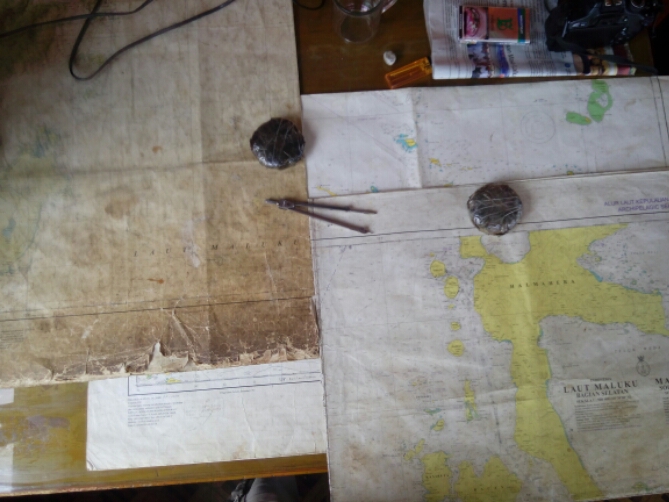
On the Alken Prima easy ride. As I later discovered the boat is a cargo ship that circles from Bitung in North Maluku, to Sorong, in west Papua, doing a more or less scheduled 2-3-4 weeks route. The ends I guess are fixed but it changes slightly in each iteration, as I saw in their nautical charts the old itineraries.

image

So if you happen to hit on Alken they can bring you all the way on direction or the other, it took me 9 days to cross from Bitung to Sorong :D, you can wait for it!

The first thing I discovered is that it is not a normal cargo ship, but one that also carries people that go to really remote small islands. That probably explains why it was so easy to carry me.

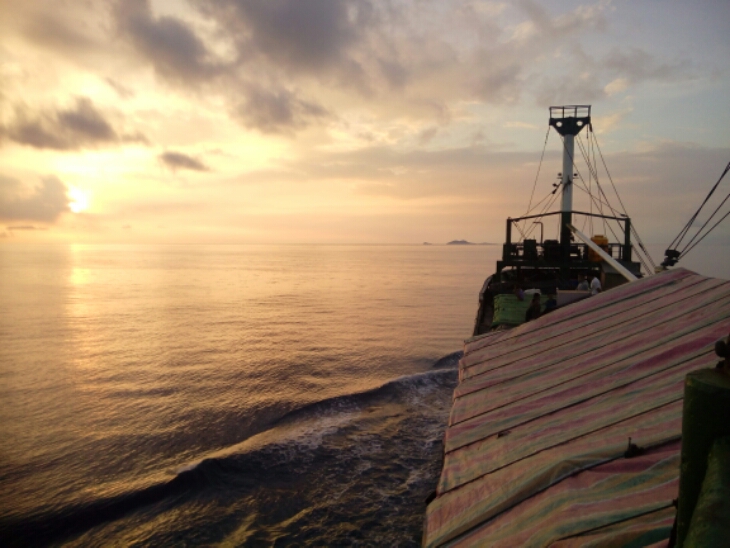
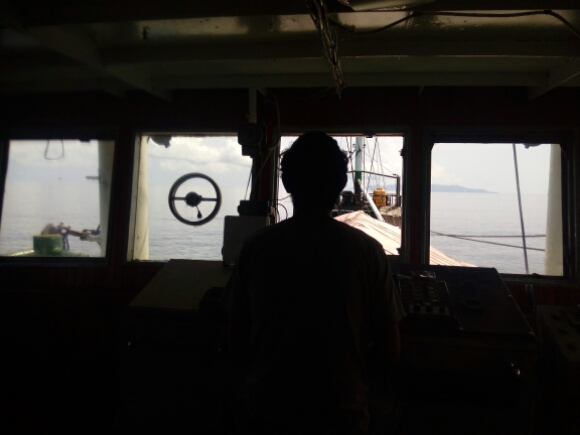
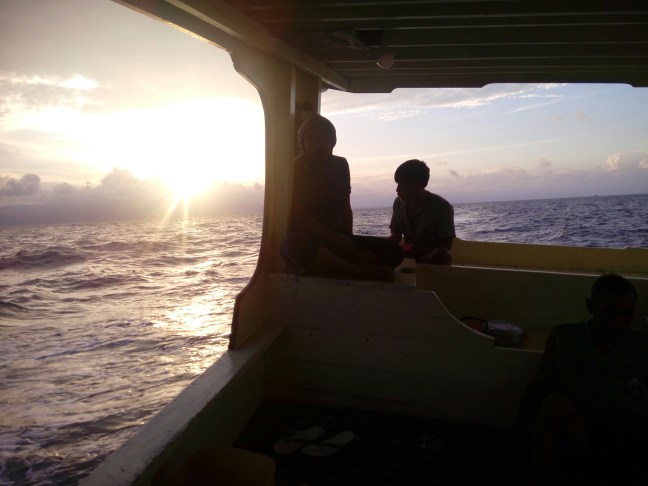
When I went at night they had build a tent over the deck where all the passengers would stay. Well  I was not passenger and I went to the commanding cabin to take pictures of the departure. Then I slept on the open section of the deck, the stars where amazing in the moonless night. Big Milkyway crossing the celestial cover.

image

I was concerned that they might think I’m  another passenger, some crew  asked me where I was going to sell me the ticket. But I said “numpang” and that was the end of it, nobody ever asked me for money in the  following days.

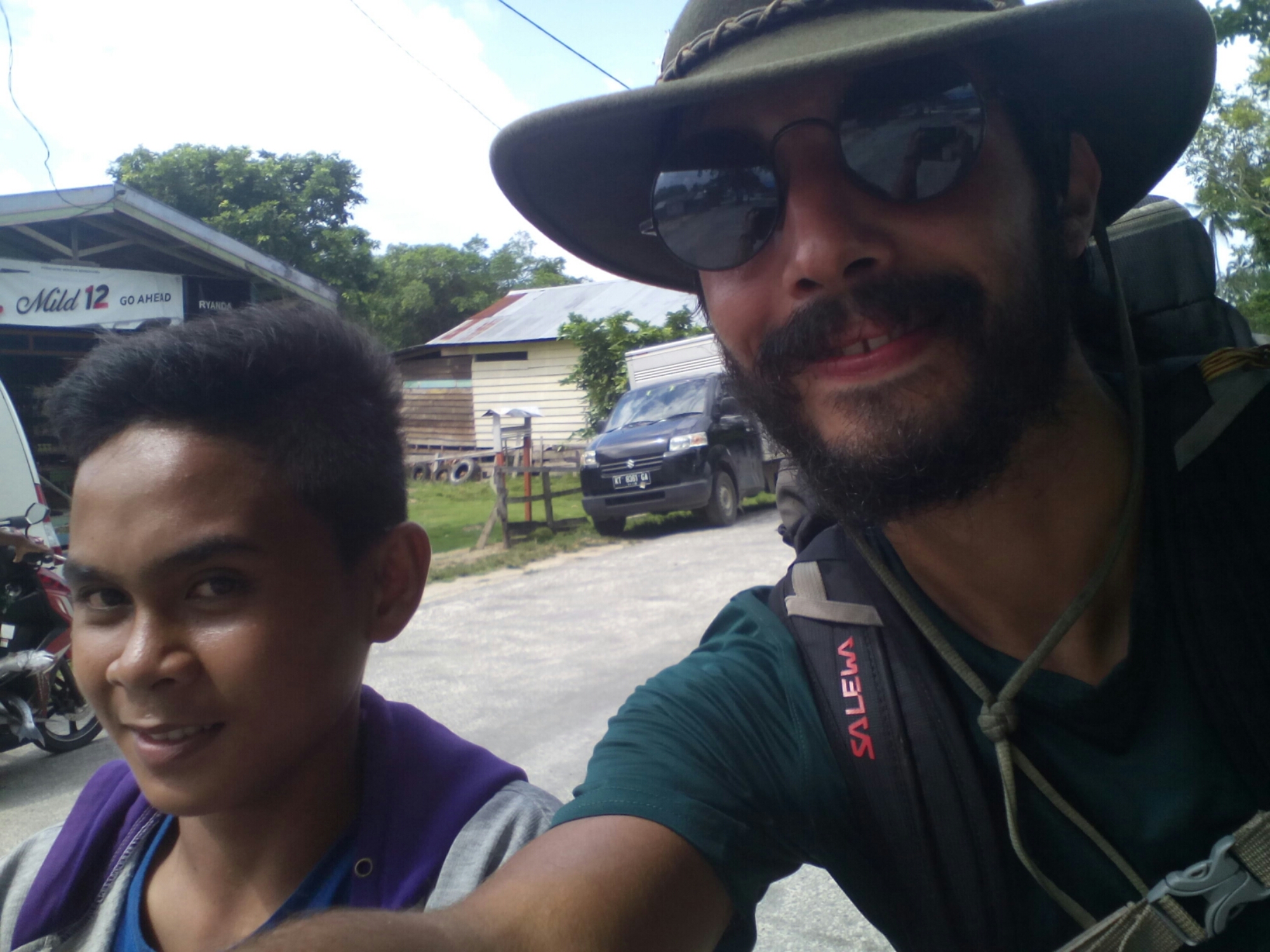
I can positively say that they where happy to have me there, I don’t  know to which point because of the exotism of the “orang buleh” (white man) or because my child like behavior made them happy.

On the fist cargo unloading  occasion (anchored in a bay, far from land), I jumped to the sea, joined some locals ashore, ate coconuts, went back swimming, boarded the ship by climbing the crane net, helped load and unload the rice and cement (“semen”) into the small boats that took the cargo, and swam again. That seemed to amaze the crew and locals quite a bit 🙂

image

Anyway play your  cards and see how the game goes.

I never asked for food, but this being Indonesia they kept insisting in feeding me. It was simple fish and rice but nutritious and I was always thankful of being feed. Still when we could land I usually ate there or bought supplies. I also shared what little snacks I had.

My plan was to work helping load and unload cargo to help the crew, but soon I realized that non of the crew roles involved loading cargo, that was left for the people at the harbours to do. So after they telling me that I shall not help and since I’m  not helping them, then I never did a long term work helping on the cargo. Only small jobs when going or coming back from my excursions, allowed because of being free from the cargo work that I self imposed 😛

Anyway I did help peeling hundreds of mini onions and garlic, from what i gained the use of a motorbike for me in one of the stops 😀

One of the things that set me apart from other passengers was sleeping. I slept for the first days on the floor of the commanding cabin.

image

Unfortunately that involved sleeping next to the speakers during European Champions league, which in Asia is transmitted live at 4am…

Finally I moved with my hammock on top of the cargo next to the passengers. Although not always there where passengers, sometimes the deck was empty.

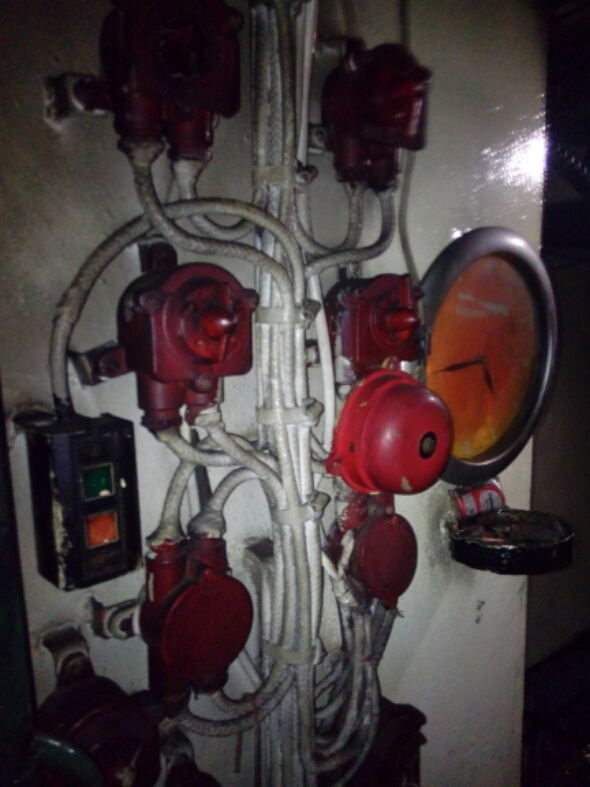
One nice thing if life on board is that you have everything that you  need, that involves also a bucket shower and a place to wash your clothes and dry them, quite convenient 😀

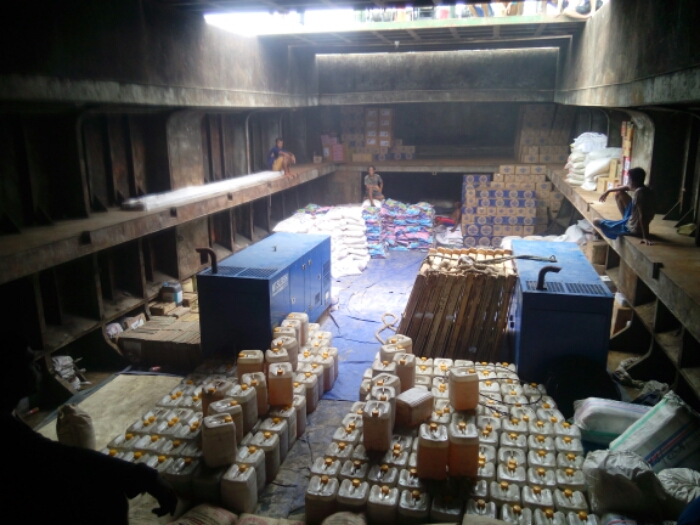
For me one of the most enjoyable experiences on board is simply living the cargo flow. It’s logistics in front of your nose! Seeing cargo being loaded, transported, and unloaded 3 islands away… Imagining the way that ware had to do to get there, how and when it was made, the way it will go, it’s use, and the links of people that are needed to get it to do what it has to do where it has to be, well it amazes me!

That amazement was for beng onboard and landing, but obviously one of the best opportunities is island jumping! To be so fortunate to land on remote, out of the path, islands and villages, well that is a priceless experience.

Seeing how people can  live in 1km long islands, how the culture and societies change stop to stop. Stopping in a 200 meter deserted islands, in stray cat islands, stray dog islands, talking about cannibals and seeing their weapons, the mixture of curly haired, blond Papuans and smooth haired dark Indonesians, with their own huge range of diversity …

Then the camaraderie of the crew, the atmosphere of feeling welcomed and happy to see you that is common in Indonesia, gets a boost if you add the feeling of being part of a  crew.

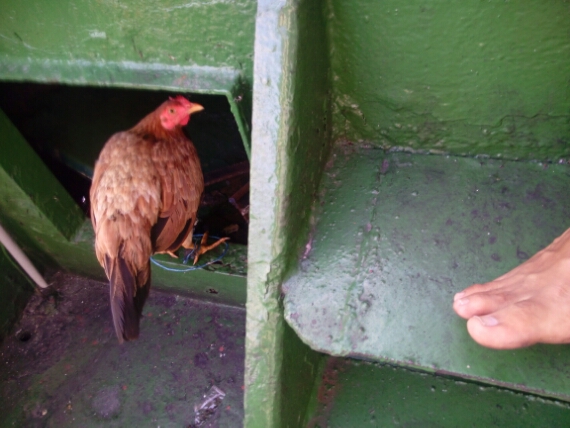
Playing games, helping on small task that you can, eating with them, swimming, discussing the nautical charts, talking about everyday life. Wondering why there is a chicken tied to a hole under the commanding cabin…

image

Finally the sea life. Sea, waves, the scenery and islands coming and going, dolphins, whales, sunrises, sunsets, stars, milkyway…

All in all, if you have the time try to hitchhike a boat! even if you are not successful just wandering on the harbours and sea front is a photography wander! Boats, old and rusty and shipwrecks, to new and shiny. From small and colorful to huge and black and white. Frenetic activity or ghost harbour. Colours, goods, cranes, cables, fish, water, sea… On addition on many cases feeling that you shall not be there yet you are (until they detain you :). Finally the odd chance of being accepted in one of that monsters, and the adventures that await!

image

Crossing Towuti and Matano lakes from Kendari to Bateleme, Southeast – south – central Sulawesi, Indonesia

Again it’s an Adventure that it was on my plans doing but I got to unfortunate misinformation with my hitchhikes and unreliable maps. Fortunately I got to the point in which I can recommend it and fill some of the information holes I had.

Still it’s not gonna be easy and it would be better if you have your own cross country motorbike.

Starting from Kendari the best is to ask to go to Wanggudu (a small empty administrative town).
From there to Padalere to take the motorbike road to Tocalimbo (or simply  Limbo). It shall be about 100km of crappie road so plan to stay overnight on the road if you started from Kendari or spend the whole day doing it.
That at leas for now will allow you to avoid 5km of hyper muddy mountain road on the provincial road. I did it and the trucks backfell.

There is not gonna be much hitchhikes as the area is mostly deserted, but that shall not put off daring adventurers 😀 (I palmed to do it and by far I’m not the craziest out there).

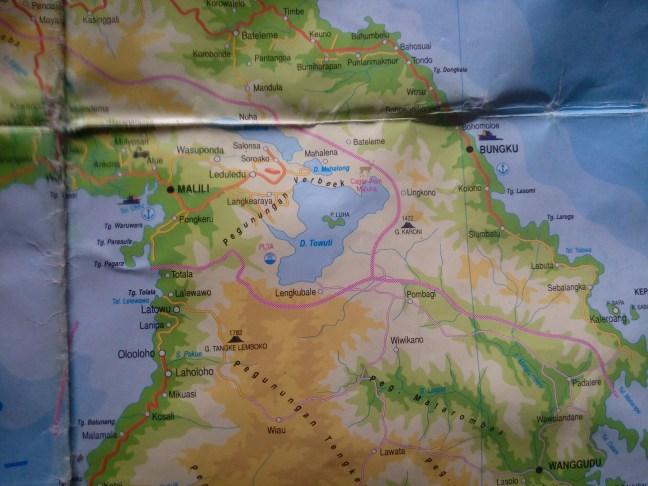
Then when you get to Limbo (so cool to say that, specially now that the church says it doesn’t exist :D) on the shores of Danau Towuti. There I thought it was the problem, where to go next! However through my alternative way I discovered where to continued from Limbo 🙂

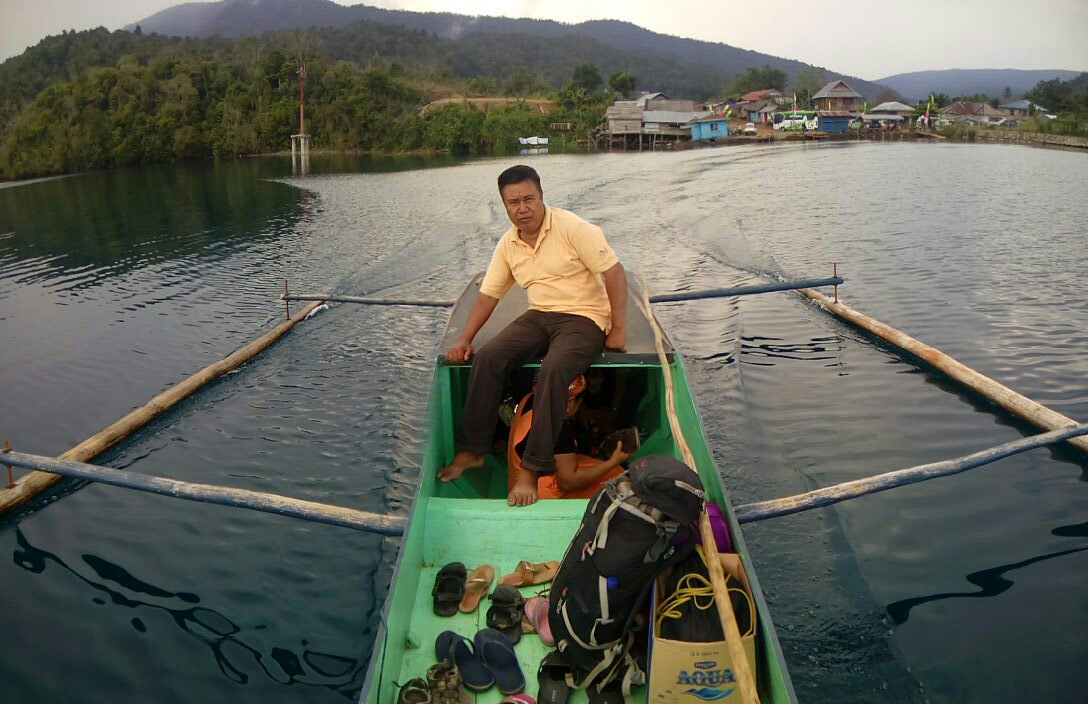
There are few boats and a personality flouting wooden ferry on the morning-noon that go from Limbo (on the southeast shore) to Kampung Baru (on the north west shore) and the other way around, so crossing the biggest lake in Indonesia with magnificent views 😀

Then from there to  Soroako (try the street food on Soroako!) and crossing Danau Matano to Nuha (or Nua) is a easy feat, that’s  the one I did in reverse. There are small 4 legged stable boats that continuously do the 20min crossing for 25.000r, they can also cross your moto (I saw one impossibly carrying 3 motos and many passengers :P).

image

From the small 8 houses settlement of Nuha to Bateleme, there are no towns, so the hitchhike is difficult. I had to walk for 1h on the mid day equatorial sun :P. The first half of the road, until crossing the province border, it’s quite potholed but easily doable, after its good road, shadowy by rubber trees close to the end.

On addition there is a road from Nuha  to Malili, around the lake, but considering that the Alpha male took the wheel of my ride at that point, but was instead copiloting until in the potholed road, then I assume the road is terrible from there on and you need experience. The beginning did look terrible.

I would say the crossing takes at least 2 days depending on the boats that you find to cross Towuti, but count on 3 days to be sure.

As always count on people super happy to see you, many pictures taken of you, remoteness, untouched scenery, cristal lakes, striking views and unknowns 😀

Good luck and Adventure!

Borneo diaries, day 25, Sulawesi diary day 1, Hitchhiking a cargo boat from Telam Suleiman (Biduk-Biduk, BidukBiduk, Biduk Biduk) to Palu, Kalimantan Borneo to Sulawesi

image

(I’ll continue with the English indulgence for the sake of internalization, I apologize from here on for my sloppy writing. Or you could learn catalan :P)

Getting into a boat is easy, you are reading a book next to the paradisiac harbour, the lady on the eating kiosk tells you that the boat that is arriving goes to Sulawesi in 2h and you can join it if you rush for your backpack 15km away :]

However getting into getting into the boat is the difficult part (as other posts show). Yes you need time, extreme flexibility and find the right place.

***

It all starts with me in peninsular Malaysia wanting to cross to Borneo. Big cargo ships are protected by walls of redtape that I couldn’t climb, although I did could climb 3 ships and ask freely before being detained by the police 🙂

After that experience, and once in Kalimantan, I decided to try instead shorter hops in smaller vessels.

My next try was in Terakan, north Kalimantan, there I could find a small cargo boat that was willing to carry me. However it could only be done by getting some government official approval. Where to get it and how without knowing Indonesian escaped my abilities.
As I was saying in a previous post seas are closing due to redtape, ironically in this case because a ferry (that I try to avoid) shrank.

Next was to try the shortest distance possible. Biduk-Biduk on a peninsula close to Toli-Toli. I was told that there are many fishing boats, and latter, cargo boats from Taulk Sulaiman. They might not have any problem into getting me in. No paperwork needed.

I go there and I find this unbelievable beach paradise that I described in the previous post, and after asking where to get the boat I go literally to the end of the road.
coordinates:
01°09′19.8″N 118°45′46.79″E

A harbour with a lone wooden dock around half a dozen of small, one flor,  vessels await.

After a complex conversation with my few Indonesian words (kapal Sulawesi, boat Sulawesi; di mana? where?; kapan?, when?) and the week days I’m told that the boats depart in one week. Too long even when having to wait in paradise. But after a bit more of discussion someone tells me that a boat might be going in 3 days, Wednesday or Thursday (it’s Monday evening). Paradise, little houses and coconut trees where to plant my hammock, small fires, waiting 2 days… that sounds like a plan!

Next day I go back to confirm things,  an angry man tells me there are no boats until 2 months… that’s bad. Other tells me something about 2pm next day, uncertain but good, anyway I feel lost in translation.

Next day I go to the harbour since the morning until my boat appears 😀

Into the boat:

image

After being told that the boat will be departing in one hour, you ride fast the bicycle to your host  house, woke them up to say bye and take the backpack.

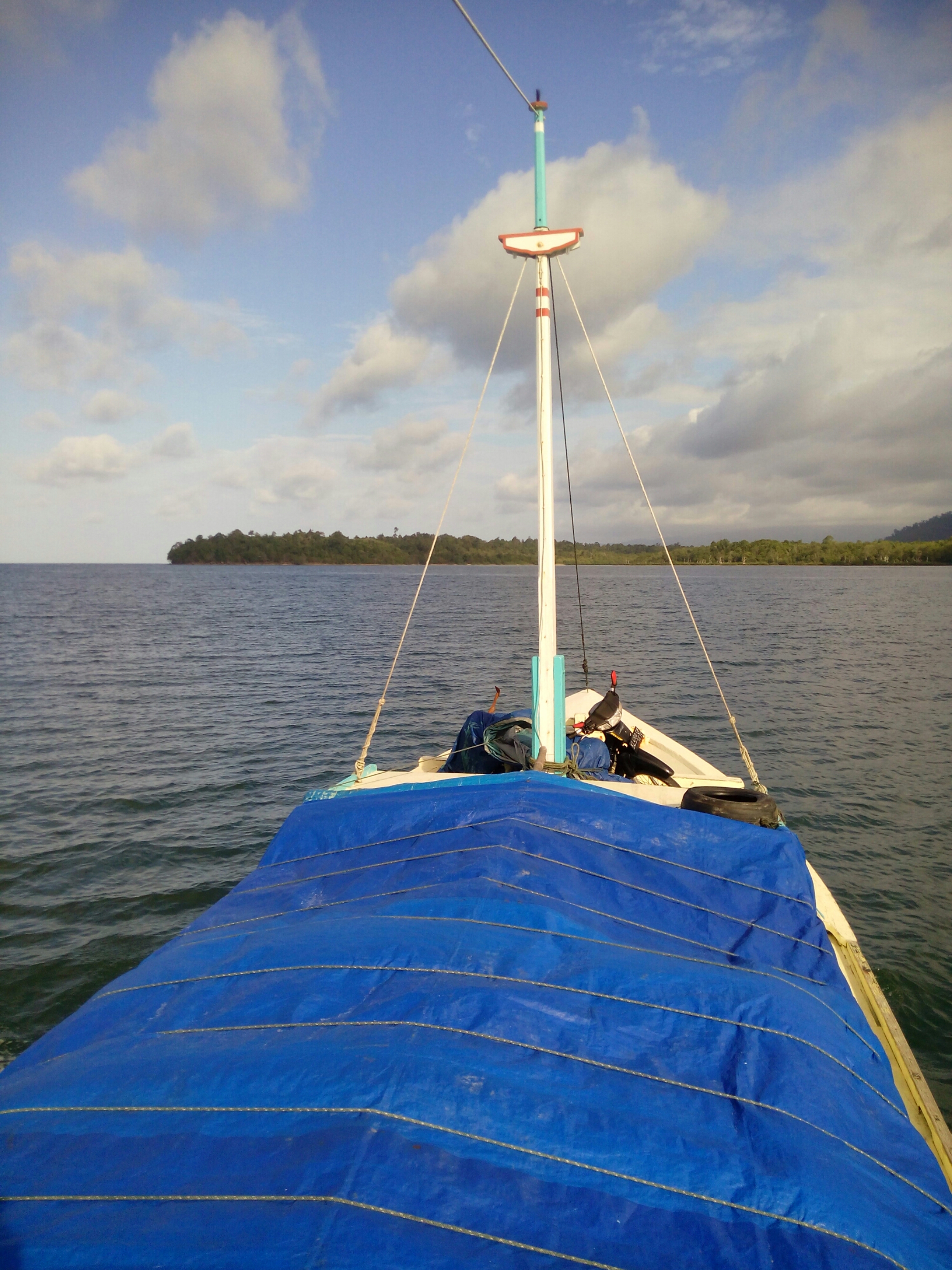
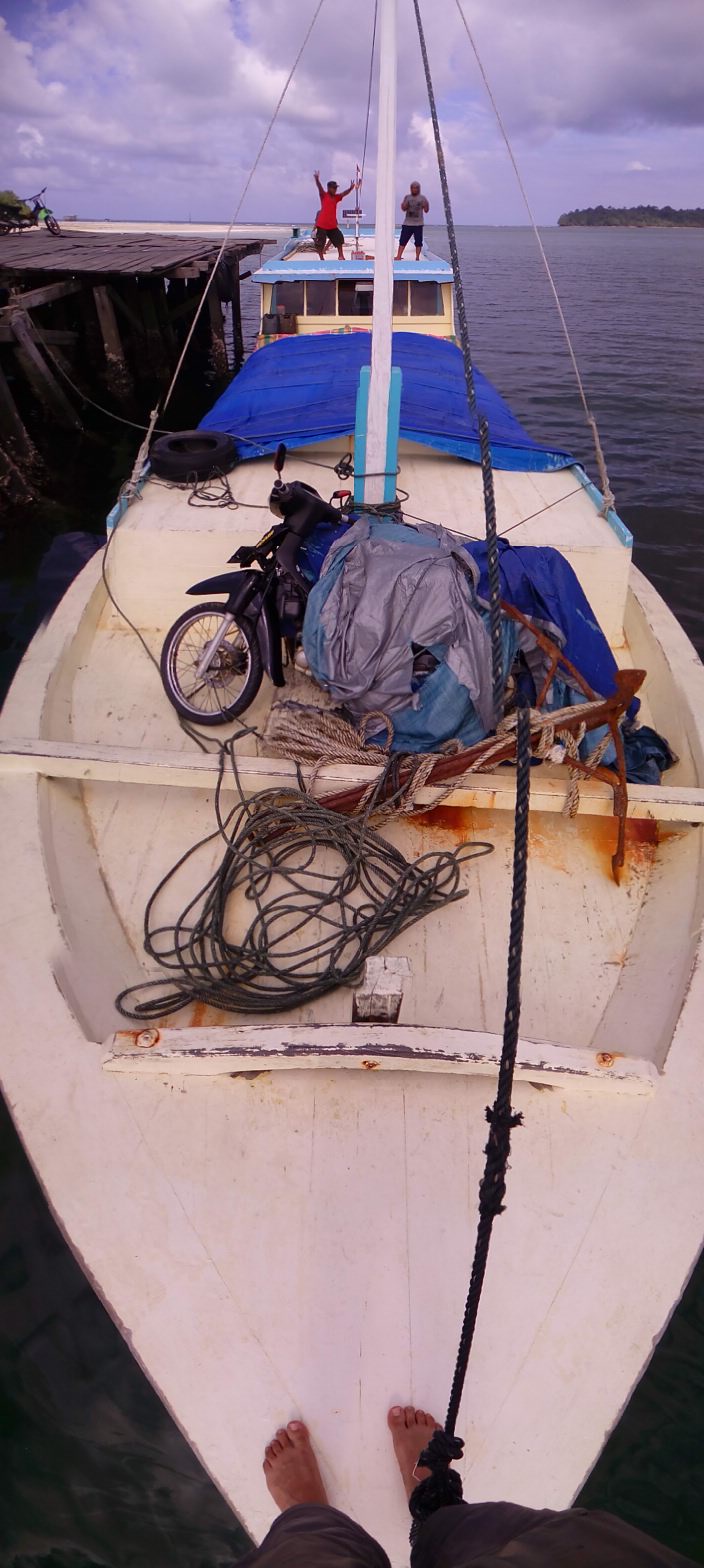
Your ride back gets a flat tire. You get the first 14 (or so) year old ride driving with one hand (but according to my experience he must have been driving anywhere from 7 to 4 years already). And you get in the boat, a small wooden cargo vessel, about 15m long, one level white and blue. That’s it!

image

The boat ride:
Someone asks my name, age, nationality and reasons for traveling, it is noted in a notebook. Another local passenger joins, that means that is common to have extra rides between islands.

image

After 1h repairing the batteries it departs. The sunset on the heavily rocketing sea is nice. Fried fish for dinner and sleep at 8pm, hard wood, shaking boat and diesel exhaust, good night!

image

Sulawesi diary, day 1, marine police.
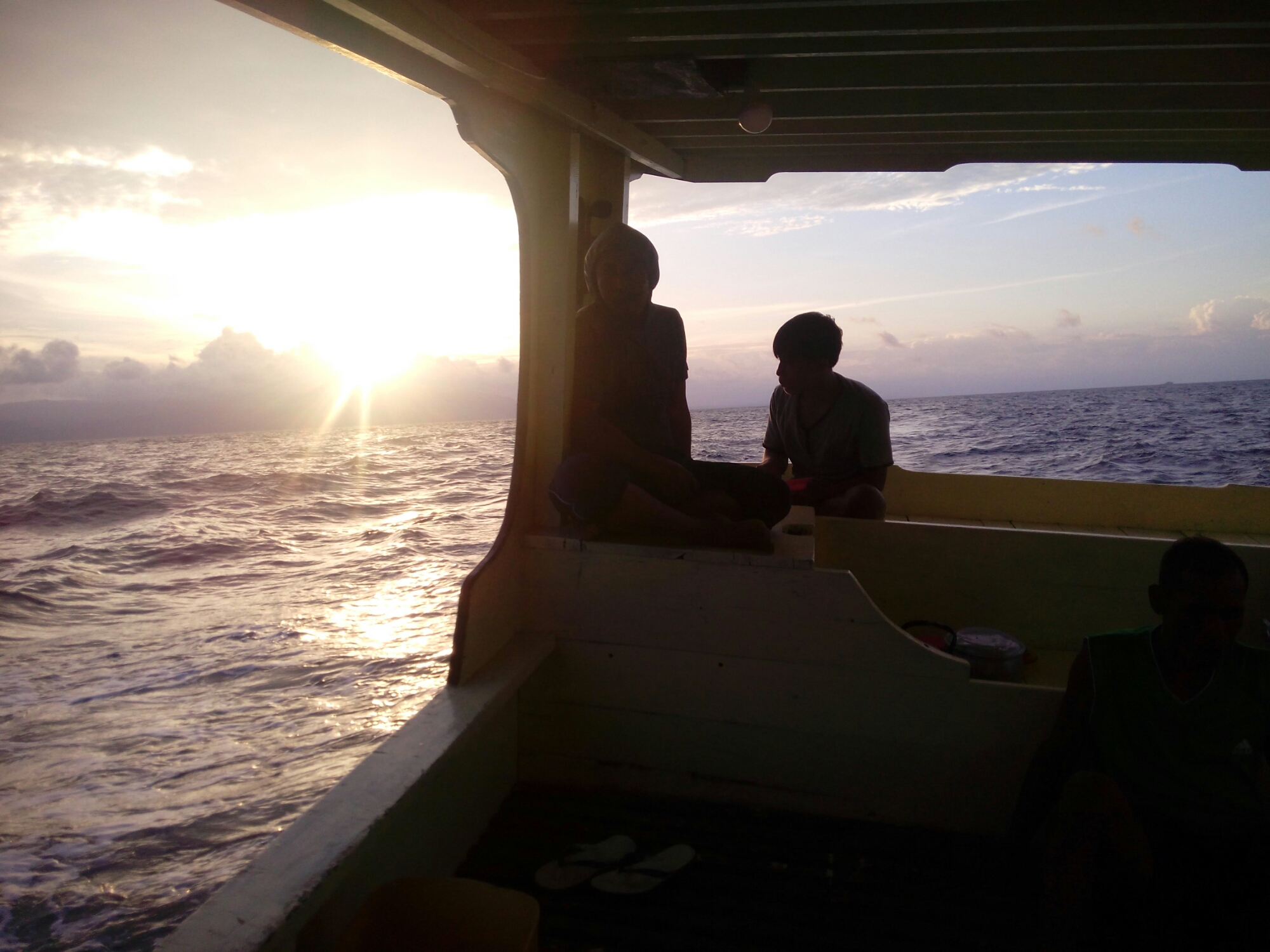
At some point close to midnight the diesel engine starts puling out much more exhaust into the vessel than what is normal. I go to the front part and enjoy the cloudy moon ride, it’s simply a fantastic scenery, no words. I get tired and since now the sea is almost flat I can easily and soundly sleep on top of the rice sacs of the front part, avoiding the flumes.

image
Cloudy sunrise, one can't have it all! but the amazingly shaped, mountainous Sulawesi is on the left side and front 😀

Marine Police
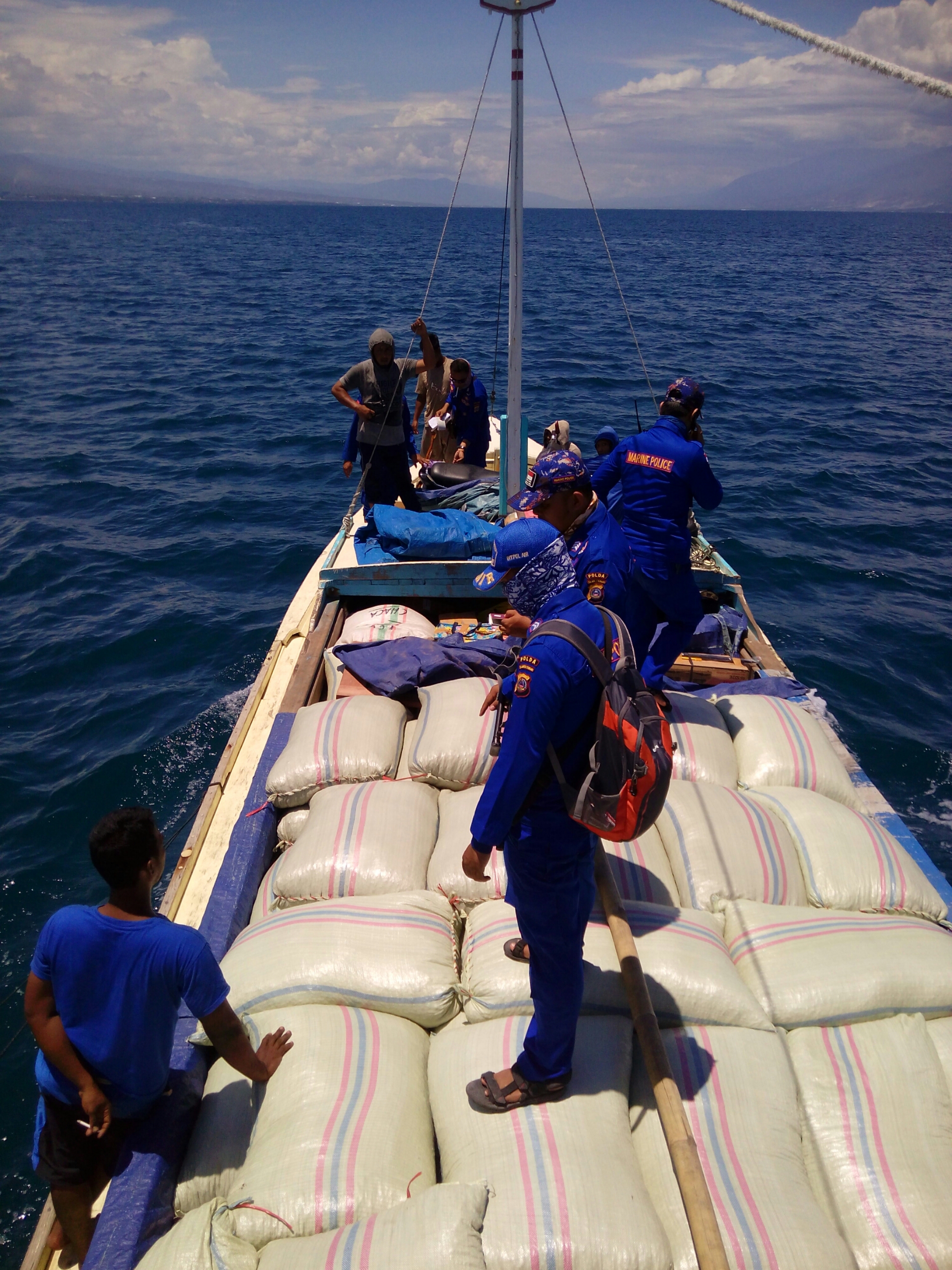
After few hours of enjoying the striking mountain sea scenery and entering, Palu bay surrounded by long mountains welcomes me. Also the marine police welcomes me and the boat, boarding us with a zodiac. After 20h in my ride and 250km I’m taken by the police :D, great! I’m received by all at the Wasi harbour like a movie star.

image

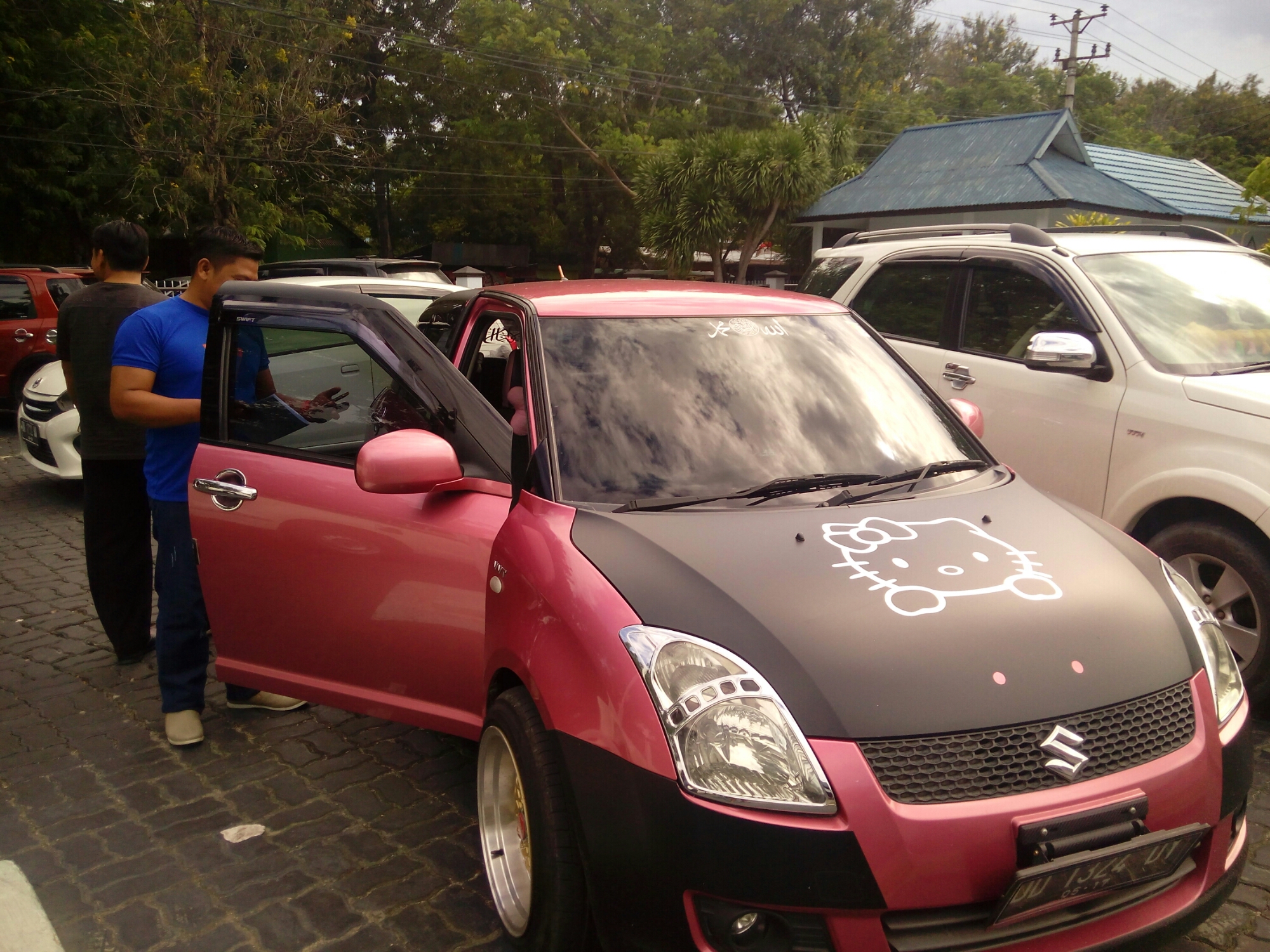
Uncertain in what to do with me, they got me to show every single item of my (small) luggage in case I carry a gun or drugs… After a looooong wait  they can’t  figure out if my documentation is in order, so they plan to send me for the immigration office in Palu town (Wani is 23km away). Then another long wait until they get a Hello Kitty car. In the  mean time I’m invited to lunch and asked several times if I can give them my things, from the bracelets to my camera…

image

Immigration
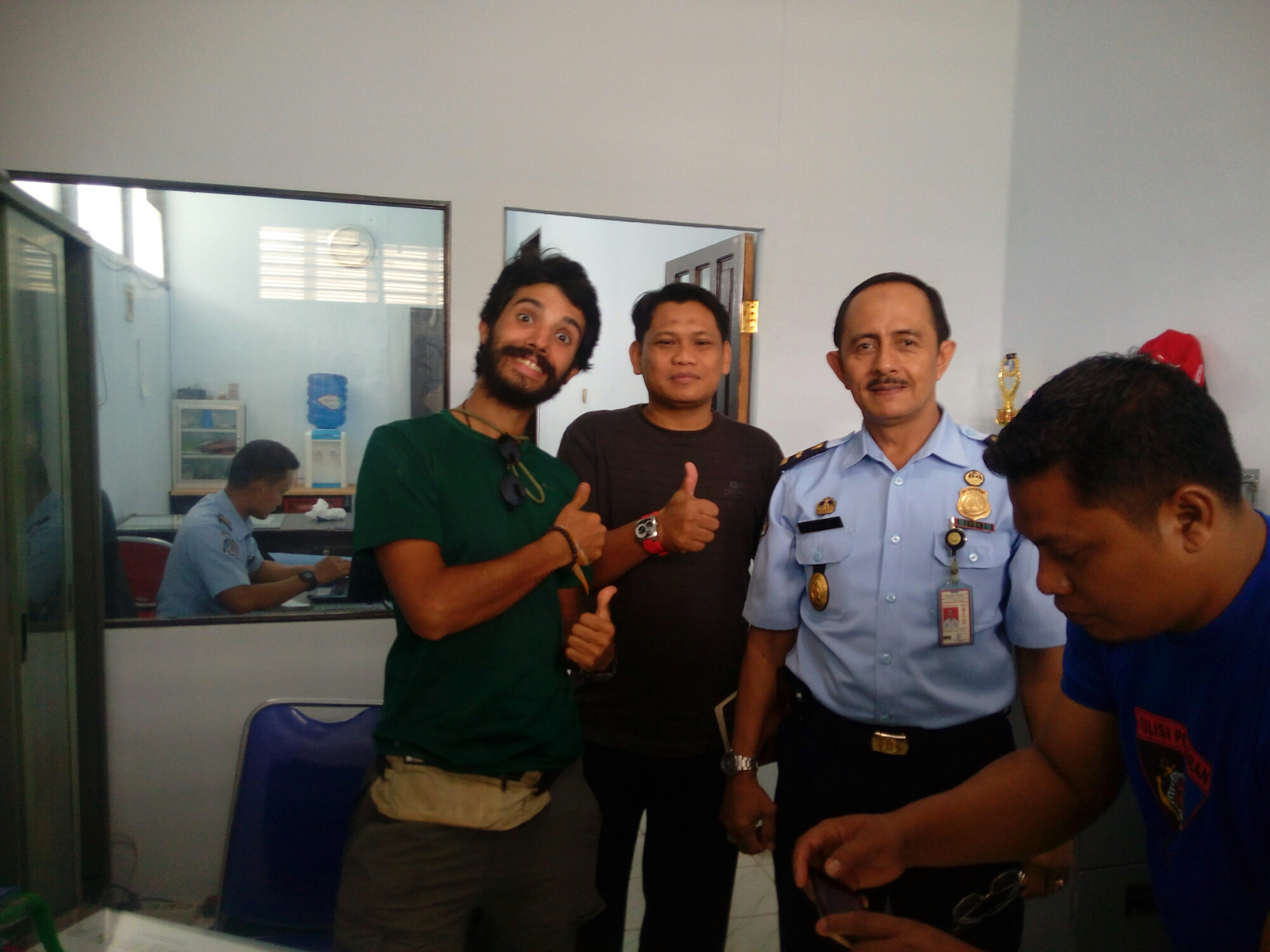
After a really slow ride I’m driven to immigration where they confirm that everything is alright, and they teach the marine police that I can travel as much as I want with my visa. So for future hitchhiker travelers they shall know! To their defence I seem to be the first foreigner in at least 15 years that has appeared like that in a cargo boat, so they where confused.

On the Immigration office they started to ask too many questions if my fundings and my out of Indonesia  tickets (both that I don’t have), and they didn’t get clear that I was hitchhiking a cargo boat, so I looked politely to the clock and after few pictures they let me out. Avoid getting into there if you can anyway!

In summary, keep trying, asking, find the right place and learn wait 😀 (although waiting in paradise is easy 😉

On a side note while being hosted in Palu by a Couchsurfer, Fadel, when another traveler, from Virginia, US, got a ride in the boat of the uncle of friend of my CS :D. The boat brings fresh vegetables from Palu in Sulawesi to Samarinda in Kalimantan, and comes back. So contact the couchsurfing community in Palu (or another port city) and ask for help!

image