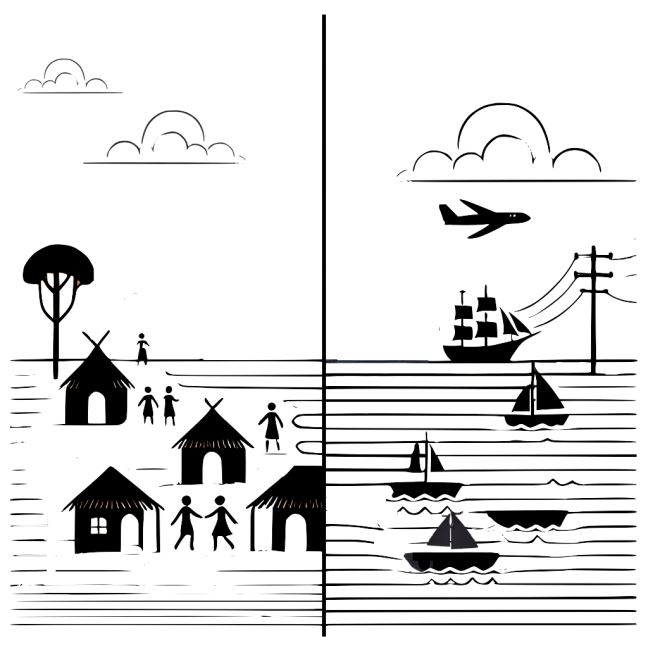
From the neighbours to the oceans

Olía a orines de mico. 'Así huelen todos los europeos, sobre todo en verano', nos dijo mi padre. 'Es el olor de la civilización'.
She smelled as money piss, that the smell of all Europeans, specially in summer" our father told us "that is the smell of civilization"
Gabriel García Márquez, Doce Cuentos Peregrinos


With the previous examples of failed connections, we can see the limits of the system presented earlier—just linking neighbours allows goods to flow only as far as they can be afforded.

The key point we will focus on now—and simplifying immensely complex human relations—is cost versus affordability: who is able to establish and maintain long-distance links that are worth the effort, over long periods of time?

To answer that, we will skip through 320,000 years of history, from the “first hints of exchange” to the onset of globalisation. I will place the beginning of our current globalisation trend at the breakdown of the ocean navigation barrier, accomplished by Western Europeans in the 15th and 16th centuries. In between these two time points—separated by more than 300,000 years—there is the accumulation of regional innovations, the constitution and entrenchment of increasingly diverse networks and hierarchies, which expanded and intensified the use of resources and energy. These “merely” 300,000 years have been widely studied elsewhere, and the reader may be familiar with the traditional “linear” narrative: from hunter-gatherers to agriculturalists, to city-states, to kingdoms, to empires, to nation-states. This image has been widely discredited, as the previous section shows, with many failures and non-linear trends. It has also been demonstrated repeatedly that no group is inherently more “advanced” than another. What people do exceptionally well is adapt to their environments—and the simpler the environment, the more efficient they tend to become. However, across these 300,000 years, there is an unmistakable increase in the scale of connectivity. This reflects episodes of creation and stabilisation of ever more distant networks, as seen in the previous section. These serendipitous mechanisms anchor larger-scale connections and reinforce otherwise fragile or unaffordable links.

So, if you will pardon me for glossing over 300,000 years of history, in the next section I will focus on the integration of all these networks into one worldwide system of connectivity—an unprecedented moment in human history—which leads us to the main question of these writings.

We all know the story of how European societies reached the shores of the Americas, changing the map of the world forever—quite literally, by creating modern mappae mundi and placing Europe at the centre. What you might be less familiar with is why that happened—why did Columbus sail west at that particular time?

Starting with cost versus affordability, we first needed something of high cost—in this case, we can focus on the spice trade. Specifically, the costliest spices were cloves and nutmeg (plus mace—the red aril of the nutmeg seed). Unlike silk, pepper, cinnamon, and ginger (other highly valued goods that travelled long distances), in the 15th century, nutmeg and cloves could only be found in two very small archipelagos the reader may be unfamiliar with. These are Tidore and Ternate for cloves, and the Banda Islands for nutmeg and mace. Today, they are part of Indonesia, in the Maluku Islands area. These spices were highly aromatic and highly valued in European markets, where they arrived in refined forms such as oleoresins, butter, essential oils, and powders. For Europeans, it was impossible to know the exact origin of these spices—some even thought they were of mineral origin. They did indeed come from faraway lands, often erroneously attributed to India, which was a genuine source of cinnamon and pepper. These species had a high cost relative to their volume and therefore represented a strong incentive to bridge the distance between Western Europe and India. In fact, these very spices were the reason Western Europeans—starting with Portugal and Castile—eventually bridged that 14,000-kilometre gap.

But why were these spices so costly, and why did people at the opposite end of the Eurasian continent want them so badly? Nutmeg and cloves had many uses. You may be familiar with their use in recipes—they did enhance the taste of food—but even today, with their lower price, ever-present in European cuisine, unlike other ingredients like tomatoes or potatoes, not present before the European expansion over the world. Another major use of these species was in perfumes. By the 15th century, European hygienic practices had changed significantly. In the 14th century, public baths were common throughout Europe, as it is quite typical for human beings across cultures to enjoy being clean and having clean people around them. However, the Black Death waves of the 14th century caused many bathhouses to close. Though some reopened, European aristocracy had, by then, begun adopting new fashions—such as undergarments and tight-fitting tailoring—which, in turn, created new ways to “trap the body’s evacuations in a layer above the skin”. At the same time, certain strands of the Catholic Church increasingly viewed bathing, nudity, and hygiene as contrary to chastity.

In the Iberian Peninsula, the Christian aristocracy—especially in the north—was gradually reclaiming land from Muslim rulers. Bathing and hygiene were (and still are) highly valued cultural practices in the Muslim world, and often also served as forms of social interaction. Therefore, part of the Christian Iberian aristocracy cemented its identity by rejecting cultural practices closely associated with their Muslim subjects, neighbours, and slaves. All of this led parts of European and Iberian elites to adopt habits that amplified body odour: less bathing, less washing, and tighter clothing. In warmer climates, this likely made body odours more intense. Consequently, rare, expensive, highly perfumed spices could help mask these natural human emissions—while also signalling wealth and status. This helps explain why the Iberian aristocracy, in particular, was motivated to fund direct expeditions to distant lands.

Ironically, Europeans not only brought diseases to the Americas, but also carried American diseases back to the continent. The most infamous of these was syphilis. Once syphilis began ravaging Europe, bathhouses once again closed—this time because baths were associated with libertine behaviour, and syphilis was primarily sexually transmitted. Additionally, beliefs grew that disease could be carried through water, and that open pores (caused by bathing) allowed sickness to enter the body. Within a few decades, bathing had largely disappeared from European daily life. Few households had running water, so opportunities to bathe were almost non-existent. Coupled with aristocratic customs and religious identity-making, this gave rise to figures like Louis XIV, who famously claimed to have bathed only twice in his life.

This cultural environment turned humble botanical species like nutmeg and cloves into commodities capable of financing multi-year expeditions—risky ventures where many ships and sailors might be lost. In the case of the Magellan expedition, only one of five ships completed the circumnavigation—without Magellan himself—but it returned so full of spices (including pepper) that it paid off the entire venture and paved the way for Spanish colonisation of the Philippines. From the association with perfume and the abandonment of bathing, we derive the enduring stereotype that Europeans don’t smell especially pleasant—particularly in summer. That this has anything to do with “civilisation” is now a running joke used by formerly colonised peoples to poke fun at their colonisers—whose domination was often justified on the basis of “cleanliness”.

Let’s now focus on the affordability of finding an alternative route to the spice lands—ultimately disrupting existing sea and overland trade networks by bypassing dozens of intermediaries. The process of making that circumvention possible was itself the result of 300,000 years of innovation, technological development, and skill acquisition. Crucially, as with the Austronesians and Vikings, it was the development of highly reliable navigational skills that enabled this. By the 15th century, Mediterranean and Atlantic ships were sturdy and autonomous enough, and the Iberian Peninsula had become a melting pot of maritime knowledge, making it affordable to attempt reaching India via new routes that bypassed the Levant.

Columbus believed his own (incorrect) computation of the Earth’s diameter—around a third smaller than it actually is—and convinced the Castilian crown to fund his westward voyage to reach “India”. His proposed route was reckless and misguided. But, as previously mentioned, there were hints that land existed across the Atlantic—not so far away. For instance, the Portuguese were aware of pau-brasil (or firewood) drifting from the west. Columbus, Castile, and luck all converged when they stumbled upon the Americas.

For the Portuguese, finding an alternative route to the spice islands was far less reckless. It took them over a century to circumnavigate Africa, learning gradually and establishing trading posts and outposts along the eastern African coast. Each expedition went a little further. By 1488, they reached the Cape of Storms (later the Cape of Good Hope), and in 1497, Vasco da Gama became the first European to reach India by sea—just five years after Columbus’s voyage.

At that point, for the first time in history, humans had the means to connect all the major landmasses in a way that was both affordable and repeatable. Just 20 years later (1519–1522), the first circumnavigation of the world was completed. For the first time, a human could potentially reach the shores of almost any land within a few years.

In the 15th century, the world changed dramatically due to the technologies and navigational expertise accumulated in the Western world over millennia—coupled with the high cost and demand for spices in Iberia. Within a few decades, the world transitioned from having vast disconnected landmasses to a planet where the first movers—Western Europeans—gained the upper hand. These few kingdoms, and later much of Europe, changed the existing order, wiping out tens of millions of people and cultures in the process, and subjugating nearly every major power on the planet.

That change forever transformed both ends of the lands reached by the Iberians. In the Americas, in less than half a century, a few thousand Europeans—mainly Castilians—overthrew two massive empires ruling tens of millions. In the East, in present-day Malaysia, the Portuguese seized Malacca in 1511 with just 18 ships—then the commercial hub of East Asia. It was the furthest territorial conquest in human history up to that time. To grasp its magnitude: imagine a fleet of advanced vehicles from Malaysia travelling 20,000 km to conquer Rotterdam—Europe’s major transport hub—and controlling it for centuries thereafter. This event had immense geopolitical implications, shifting the balance across Eurasia and reshaping global self-understanding until the present day.

Control of far-flung lands, trade routes, and global connectivity was taken over by small elites from a few North Atlantic coasts. These elites, supported by large home populations, had more resilience than earlier seafarers like the Vikings or Austronesians. Those earlier explorers made equally bold journeys and had the skills and knowledge—but little margin for failure and limited rewards. In contrast, the North Atlantic nations had the means, knowledge, and desire. They could afford the long-distance connection, and more importantly, its coercive and commercial control.

Pandemics, repression, and colonisation enabled long-term European settlement. As Eduardo Galeano famously wrote: “They came with the Bible and we had the land; we blinked, and now we have the Bible and they have the land.”

Previous

Next
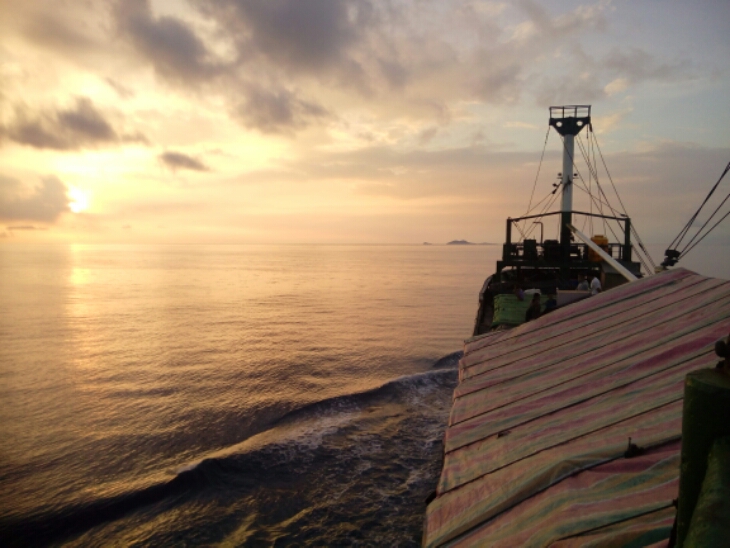
Boat Hitchhike Sulawesi to Maluku to Papua, 8 Days in Alken Prima

image

Here I’ll  summarise my experiences of the 9 last days of my life hitchhiking  of a cargo ship crossing the dream seas of the north east of the Indonesian archipelago :D. For reference to anybody wants the info to have an amazing unique experience.

The hitchhiking itself was really easy (and lucky) one in Bitung multiple harbours. Unlike previous ports here all the harbours are open to the public. The only restriction that i found was in the big cargo container where they didn’t allow me to take pictures. Although apparently i was allowed to walk around,  the security guy was not enthusiastic…

I started with the generic cargo harbour and the third boat I asked, Alken Prima, told me that they where going to Maluku on that night (10pm) and that they had no problem in getting me in. Jackpot!

Just in case I asked ALL the harbours in Bitung. I got a couple more that told me that where going in 2, 3 days, and probably could take me, and a small one, of the likes of my first boat hitch, was going next day. But they where unsure if I would be allowed by the police. I guess with a bit of patience and trying I would have gotten into one of these, so my advice is that Bitung is a great spot to hitchhike boats!

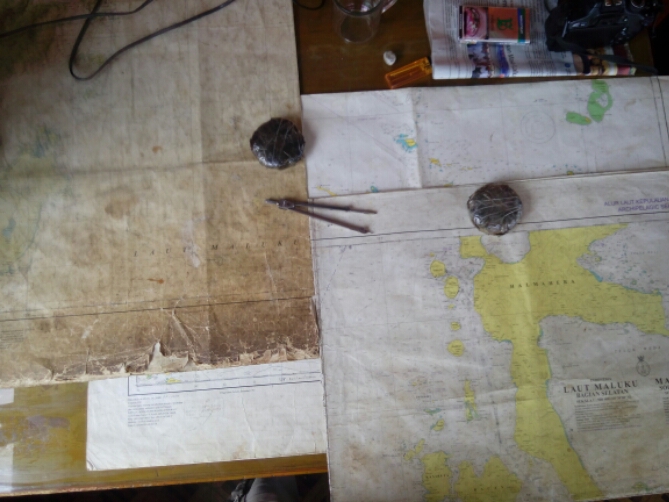
On the Alken Prima easy ride. As I later discovered the boat is a cargo ship that circles from Bitung in North Maluku, to Sorong, in west Papua, doing a more or less scheduled 2-3-4 weeks route. The ends I guess are fixed but it changes slightly in each iteration, as I saw in their nautical charts the old itineraries.

image

So if you happen to hit on Alken they can bring you all the way on direction or the other, it took me 9 days to cross from Bitung to Sorong :D, you can wait for it!

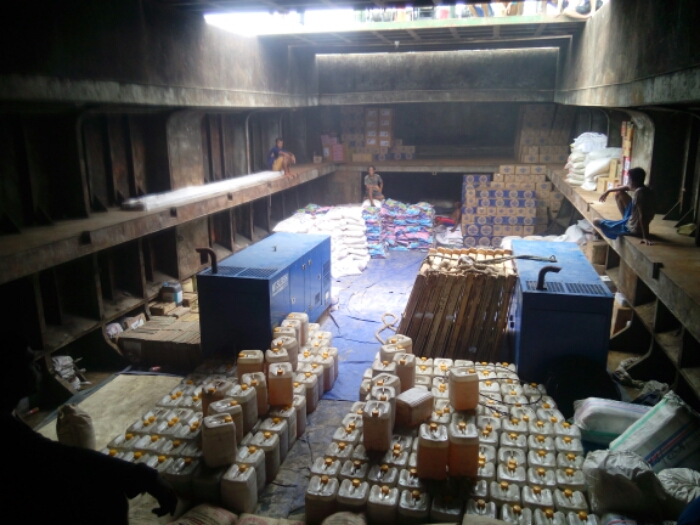
The first thing I discovered is that it is not a normal cargo ship, but one that also carries people that go to really remote small islands. That probably explains why it was so easy to carry me.

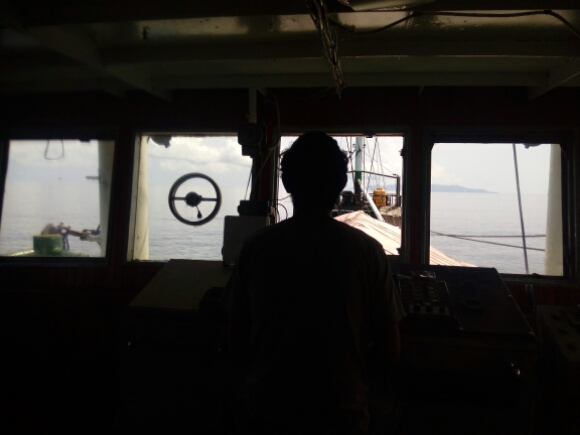
When I went at night they had build a tent over the deck where all the passengers would stay. Well  I was not passenger and I went to the commanding cabin to take pictures of the departure. Then I slept on the open section of the deck, the stars where amazing in the moonless night. Big Milkyway crossing the celestial cover.

image

I was concerned that they might think I’m  another passenger, some crew  asked me where I was going to sell me the ticket. But I said “numpang” and that was the end of it, nobody ever asked me for money in the  following days.

I can positively say that they where happy to have me there, I don’t  know to which point because of the exotism of the “orang buleh” (white man) or because my child like behavior made them happy.

On the fist cargo unloading  occasion (anchored in a bay, far from land), I jumped to the sea, joined some locals ashore, ate coconuts, went back swimming, boarded the ship by climbing the crane net, helped load and unload the rice and cement (“semen”) into the small boats that took the cargo, and swam again. That seemed to amaze the crew and locals quite a bit 🙂

image

Anyway play your  cards and see how the game goes.

I never asked for food, but this being Indonesia they kept insisting in feeding me. It was simple fish and rice but nutritious and I was always thankful of being feed. Still when we could land I usually ate there or bought supplies. I also shared what little snacks I had.

My plan was to work helping load and unload cargo to help the crew, but soon I realized that non of the crew roles involved loading cargo, that was left for the people at the harbours to do. So after they telling me that I shall not help and since I’m  not helping them, then I never did a long term work helping on the cargo. Only small jobs when going or coming back from my excursions, allowed because of being free from the cargo work that I self imposed 😛

Anyway I did help peeling hundreds of mini onions and garlic, from what i gained the use of a motorbike for me in one of the stops 😀

One of the things that set me apart from other passengers was sleeping. I slept for the first days on the floor of the commanding cabin.

image

Unfortunately that involved sleeping next to the speakers during European Champions league, which in Asia is transmitted live at 4am…

Finally I moved with my hammock on top of the cargo next to the passengers. Although not always there where passengers, sometimes the deck was empty.

One nice thing if life on board is that you have everything that you  need, that involves also a bucket shower and a place to wash your clothes and dry them, quite convenient 😀

For me one of the most enjoyable experiences on board is simply living the cargo flow. It’s logistics in front of your nose! Seeing cargo being loaded, transported, and unloaded 3 islands away… Imagining the way that ware had to do to get there, how and when it was made, the way it will go, it’s use, and the links of people that are needed to get it to do what it has to do where it has to be, well it amazes me!

That amazement was for beng onboard and landing, but obviously one of the best opportunities is island jumping! To be so fortunate to land on remote, out of the path, islands and villages, well that is a priceless experience.

Seeing how people can  live in 1km long islands, how the culture and societies change stop to stop. Stopping in a 200 meter deserted islands, in stray cat islands, stray dog islands, talking about cannibals and seeing their weapons, the mixture of curly haired, blond Papuans and smooth haired dark Indonesians, with their own huge range of diversity …

Then the camaraderie of the crew, the atmosphere of feeling welcomed and happy to see you that is common in Indonesia, gets a boost if you add the feeling of being part of a  crew.

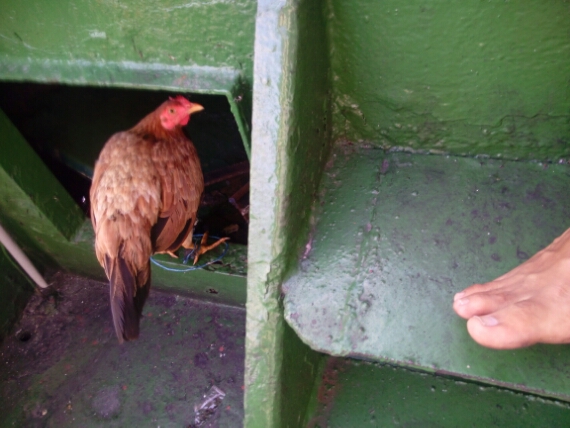
Playing games, helping on small task that you can, eating with them, swimming, discussing the nautical charts, talking about everyday life. Wondering why there is a chicken tied to a hole under the commanding cabin…

image

Finally the sea life. Sea, waves, the scenery and islands coming and going, dolphins, whales, sunrises, sunsets, stars, milkyway…

All in all, if you have the time try to hitchhike a boat! even if you are not successful just wandering on the harbours and sea front is a photography wander! Boats, old and rusty and shipwrecks, to new and shiny. From small and colorful to huge and black and white. Frenetic activity or ghost harbour. Colours, goods, cranes, cables, fish, water, sea… On addition on many cases feeling that you shall not be there yet you are (until they detain you :). Finally the odd chance of being accepted in one of that monsters, and the adventures that await!

image

Diari de bitacora, Alken Prima 8, Gebe ghost island

Sobre les 12 de la nit arriben al port de gebe, molt més pronte del que m’esprava, això desfà el meu son sota les estrel·les i em moc altre cop a l’hamaca, on 2 forts roncadors em rodejen.

M’alce sobre les 6 gràcies als forts pitits del que descobrisc serà un vaixell de passatgers (i no un creuer turístic com creía), l’illa no es mereix turisme, com descobriré.

He vist a un home  sense nas, curiós, però  no pareix tan fora de lloc com m’esperava… Tot i això  atrau l’ull.

Eixida de sol, res especial. El poblet on em atracat menys encara. És un de nova construcció per a mines de niquel a l’illa. 

A l’altra part de l’estreta illa trobe en meitat del bosc una piscina olimpica i diverses cases de classe mitjana que han estat abandonades fa anys, probablement fetes quan la mina donava més, però que ara ningú  no manté.

Ni per  la gent ni la natura és bella la part de la illa que he vist. A més el clima deu ser estrany ja que la vegetació és baixa i poc frondosa, al contrari del que he estat trobant fins ara.

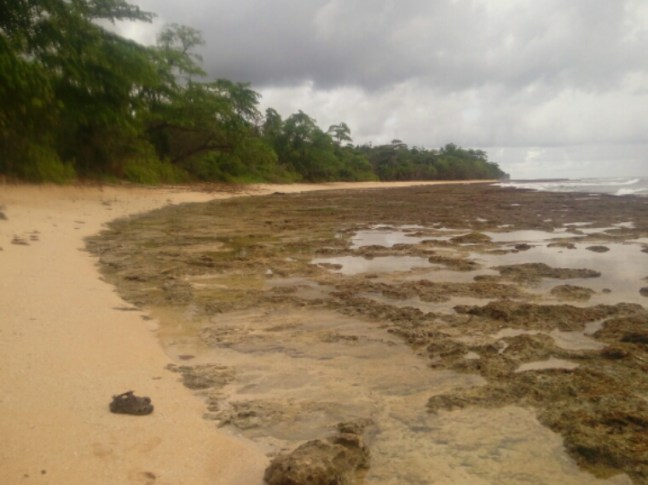
A la platja de l’altra part hi ha una antiga barrera de coral que ha creixcut tant que en marea baixa està fora de l’aigua. Per tant fa temps que ha mort, ara està plagat de les negres estrel·les de mar que és menegen ràpid. Un torrent obri camí a la barrera, divettit com un poc d’aigua dolça impedix créixer al coral durant generacions. Això  mostra com  a sobint els rius s’utilitzen com a moll, petmeten l’enyrada de vaixells.

He trobat una flip-flop, recorde que al vaixell i hiavia una desemparellada similar. L’agafe per si un cas. Serà l’altre peu i la mateixa mida, la meua, what are the chances?! (turns out its is high. Em fixe que eixa mida és la més comú a Indonèsia i la marca i color de flip-flops també és molt comú, per tant pot passar fàcilment, estadística!)

Torne al vaixell on a jude a carregar als lents treballadors locals (hi ha uns 15 però en comptes de carregar rajoles em demanen fotos, només uns 4 treballen)… Quan em pose a carregar jo ells s’hi posen a mala gana i paren pronte, acabant jo la feina. Confirme el que n’havia dit la tripulació, que van mooooolt lents, fent d’una parada de 5h una de tot el dia. Plou un poc però, cosa que no ajuda.

Jo aprofite per cossir motxilla i pantalons, i improvisar una caputxa per a la càmera, ahir perguí la caputxa. Llegir noricies i llibre.

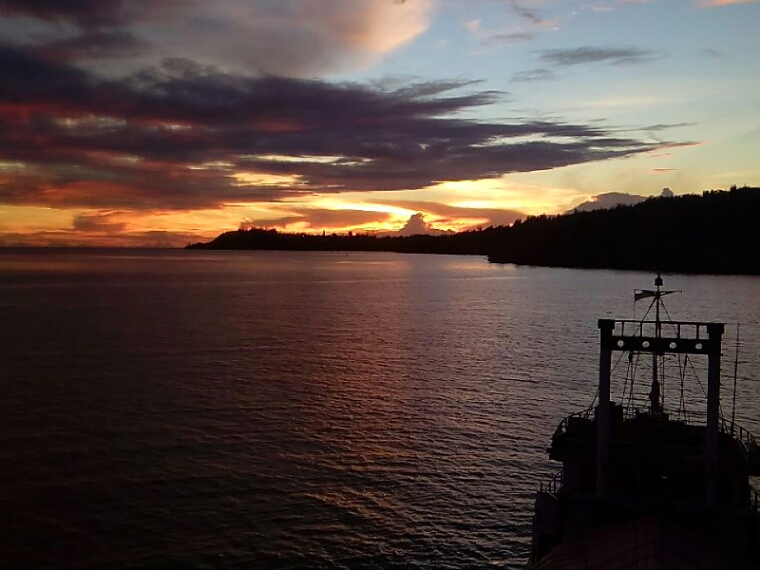
Ajude a moure caixes i veig la bonica posta a dalt del màstil major.

image

Sopar, tinc la sensació que el mejar llaugetament millora en els últims dies, no que em puga queixar per menjar gràtis, però  la diversitat és limitada.

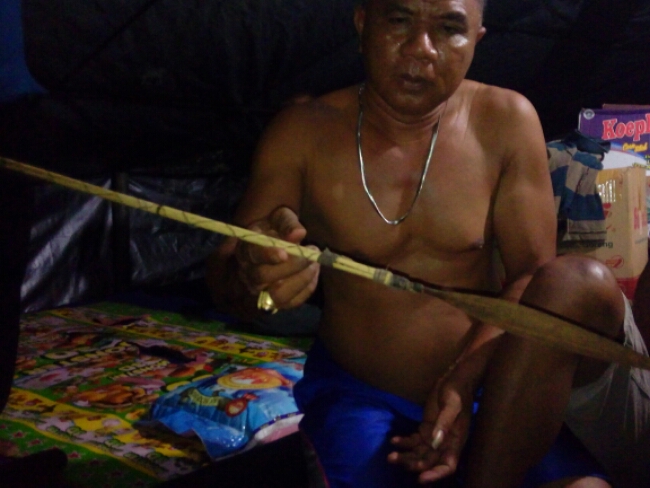
Vaig a dormir i un passatger i la tripulació m’ensenuyen unes mega fletxes que diuen que els canivals de les muntanyes de Halmahera (prop de messa) gasten per atacar als rivals. Crec què  és una curta llança, però  en realitat és una fletxes gegant!

image

Diari de bitacora, Alken prima 7, Halmahera 2, Curly hair village

image

I’m not in the world to enjoy life, i enjoy life because I’m on the world 😀

Gran dia, Petani es prou interessat… Quan de bon matí ixc cap al poble (a 2km del grau) una moto em diu de dur-me i trabessa tot fins al xicotet moll del següent poble (yeisowo?), que és un poble de papuans, tots amb el pel super arrissat, fent de fotos molt xules de xiquets, adults i ancians  😀

Torne caminant i el poble de Petani, més ric, està poblat per indonesis estàndard. Mesqutes innesesariament grans i decorades.

L’estació de policia deu estar al lloc d’algun antic edifici colonial, ja que el perimetre exterior té uns grossos però vells baixos murs a mode de valla, certamen no són arquitectura local.

Menje algo per provar cuina local, però  no és res d’especial. Torne al baixell després de les 2h que m’han dit però allà em diuen que se n’anirem prou més  tard…

En diuen també  que els camions van al poble a l’altra costa de la península, i que puc anar amb ells. Vec un poc em pose banyador i vaig montat a dalt de tot de la càrrega 🙂

A l’estret mal camí  que puja als turonets les vistes són xules, i he d’anar evitant rames i cables que atempten de decapitar-me :P.

Un cop a Gemia vaig a la mar, bonica badia en platja d’arena marró rodejada del poble i alguns cocoters,  molts xiquets jugant amb peixos i barquetes de pesca a la badia.

image

El poble no té  res d’especial, però  no és lleg tampoc  (be la mega mesquita se formigó  al centre un tant decrepita és… singular).

El camió  s’està anant i l’aborde per tornar, però encara cal descarregar 7 grans, super pesaades, finestres. Ajude en el complexe procés (sobretot  és  dificil la 1a ja que no hi ha marge) i ja tornem al grau, aquest cop al remolc buit.

Em diuen que van molt lents i que fins les 7 no se n’anirem.

Estic encara cansat d’ahir, però la mar blava turquesa transparent plena de bancs de peixos em crida.

Nade un rato, torne a bord i demane ulleres. Em deixen unes de busseig. L’esscena als pilars del moll i els bancs de peixos al voltant del baixell són corprenedors, especialment perqué la visibilitat és  bonisima.

Veig un munt de peixos bonics, que cobtinuen fent  sorolls. Nade a  través  dels bancs de peixos platejats. Peixos de peixera per tot. Crancs. 3 o 4 Peixos lleó  (eixos amb llargues espines que sobreixen com pels i franges negres, blanques, marons).

Poc més, sopar, dormir.

***
Tot el que faig es podria dir que està permés pel simple fet que faig viatge “artesanal”, i.e. poca gent ho fa i.menys encara de la manera en que jo ho faig. És  lent, difícil, poc pràctic  i ineficient. Però certament ja és  el que busque 🙂

Un viatge induatral i.e. turistes en massa, clarament no.podrien ni acostar-se al que jo faig, però al mateix temps poden visitar moltes més coses boniques en menys temps.

I use the extremely low numbers in my favour 😀

Diari de Bitacora, Alken Prima 4, Joji island

image
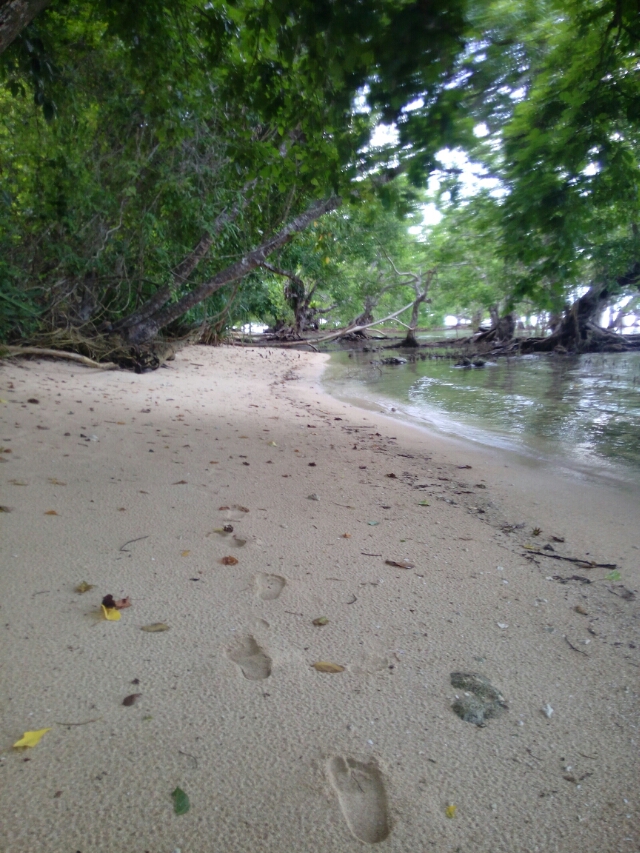
Mangroves and beach in diminute Joji island.

Dia lent en que actualitze els diaris fins que arrivem a la mini illa de Joji, 500m en front del poble de Besui.

Veig molts dofins jugant en les ones creades pel vaixell! fotos xules.

La ridicula illa de Joji serveix de moll d’aigua profunda per a la, també xicoteta, població de Bisui, al sud de Halamehra. Que tinga profunditat insiga en front s’un poble sense coneecció per carretera explica que hi parem. El passatge desembarca i jo inicie l’exploració del xicotet troç de terra, aproximadament circular, i d’uns 200m de diametre.

M’endinse en la espessa selva. Sóc super feliç de ser-hi allà, de tindre la possibilitat d’arribar a aquest inesperat unlikely lloc, com si fos una cosa que hagera de fer des de que era nano.

Continue baix la vegetació  fins que trobe un bosquet de manglars on lacals estan omplint sacs d’arena coralina. Els ajude a transportar a les barquetes insecte i a posar les barquetes a l’aigua.

Allà faig la circumferència a la duminuta illa, deu prendre uns 10-20min, ple de pardals, pexos que caminen sobre l’aigua, corals rojos, restes de 2 vaixells trencats, i vistes magnífiques. No cocoters però.

Em sente a la mar i uns mini crustacis començen a menjar als talls que tinc als peus. Fan molt de mal quan se’t mengen la carn viva i no faig bones fotos del procès. Txs, massa sang i dolor per concentrar-se.

Nade i vaig al vaixell, passem la nit allà.

Noha, de la tripulació, que aarla anglès em diu que em parec a Jesús per 6é cop, m’hauria d’afaitar 😛

Nade i torne al vaixell. Sopar i dormir.

Diari de bitacora Alken Prima 3, Ternate 2, sastre, tidore

image
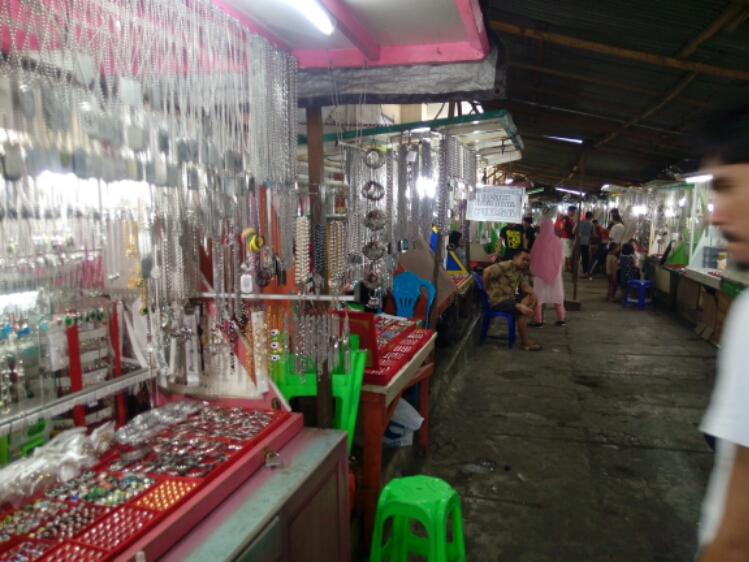
One of the jewelry streets in Ternate

Humans són sers en els quals et por’ts comunicar i poden fet accions incrementalment complexes basades en eixa comunió.

altres humans serien com altres formiges o avelles de la colònia, però la capacitat del llenguatge i comunicació permet accedir a tot una espècie per poder realitzar qualsevol projecte, acció, cosa

Bé  altre despertar amb futbol, ara a les 4 del matí, estúpida Champions.

Per sort ja no agranen la coverta i puc dormir fins les 7 :D, moooolt millor. M’alçe i em diuen que allà a les 10 se n’anem, faig una volta pel port i al tornar em diuen que a les 2 😛

Vaig a la ciutat en la mentalitat d’arreglar els pantalons (trebcats a la selva veient el pardal Maleo, i mal reparats per mi). Vaig al sastre que vaig vore al costat de l’oficina d’immigració. Avance lentament per carrerons, fent moltes fotos.

Em trobe en un carrer en una festa de naixement  d’una xiqueta i com no, festí gratis. Salude a la família i continue.

Per sort la sastre està oberta tot i ser festiu (supose que va com va lo de festiu quan si pagues impostos). Li dic que a les 2 he de pillar el vaixell i em diu que per a la 1 pase (són 11:30). Li indique que faça una reparació com la de la iaia en el camal.

Passe l’hora i mitja a prop en un estrany portxo, paradeta, lloc al carrer. És un lloc obert en una tele i lloc on estirat-se i sentat-se. Està decorat en murals, però no presebta cap propòsit obvi més que la gent pase l’estona allà… en la tele! (de fons hi ha una peli de doraimon). Desduisc que és un dels Gazeebos patrocinatd per algú per a fer publicitat, però és el primer que té tele, i l’esponsor no és obvi…
Actualitze fotos.

Torne a la sastre i ha fet una feina magnífica! a part del cosit de la iaia ha posat un troç de tela al darrere per reforçar. Com el trencat és junt a la costura queda bé i tot.

Torne lentament al vaixell, decobrint un carrer jolleria, en crer platejat (metalls basics) carrer daurat (or) i mercat de jolles on polisen les gemmes, molt pibtoresc i que no està a la guia :], descobrint.

També una papereria oberta també  en festiu on puc comprar unb mapa de les maluques :D, super feliç.

Torne al vaixell a les 2 en punt i ara és a les 5 que se n’anirem. Però ja no me’n vaig del vaixell i aprofite per lleigir sobre les espècies.

Al final allà a les 4 i pico se n’anem i parem a Tidore (l’altra illa dels clavells, rival de Ternate i només 10km de distància). Allà  aprofite la parada per nadar, uns quants selfys en els locals que naden en Go-pros.

Sopar, monte l’hamaca a la coberta, per a divertiment de la resta, sobretot quan caic un cop  per nyugar-la mal 😛

Nit plaent fins que allà a les 12 escolte una discussió i el que pareixen plors d’un adult, ridículs com sols els plors d’un adult poden ser.

No sé  que passa però estan renyint molt a un que pareix ser un adolescent o 20 i poc (mai saps l’edat dels asiàtics). Que plora com per fer llàstima.

Bé després en Tango, el 2n d’abord, m’explica que és un passager que  ha furtat de la seua cabina uns milions de rúpies i l’han pillat (no sé  com). Però  que no ho duran a la policia ja que si ho fan han de pagar… suuuper estrany, bo ce la vi. A continuar dormint.