Francas, Linguas Francas

Before entering into the infamous metric system, let us dive deeper into the basics: mutual understanding. We have been dismantling what makes the “Western dominion” narrative so appealing; therefore, we need to look deeper at the foundational building blocks of our new age —where “humanity” can ask itself deeper questions. We have seen how commerce pushes connectivity and enables some basic communication, and how global standards emerge with the examples of timekeeping and mathematical notation. These, however, feel hopelessly limited for any meaningful exchange, as analytic philosophers discovered in the 20th century.

As with our thought experiment on first encounters, to establish an exchange one needs a basic set of communication rules. We have seen that pointing and smiling are human universals. These small gestures, in our thought experiment, allowed the initial connectivity of diverse groups of humans and contain the basic building blocks needed to create connections. To build upon that and ask complex collective questions, we need more sophisticated communication strategies. Fortunately, as illustrated, humans are born with such a strategy —or the capacity for it: language.

Indeed, if one looks at the history of many well-established exchange networks between different peoples, these are often associated with the development of a mutually understandable, but initially basic, pidgin language. As outlined, human brains seem to be made for this relatively easy acquisition of a second, third, fourth, or fifth language. Therefore, we possess not only the drive to learn a language but also the capacity to acquire additional ones —probably linked to the early onset of exchange networks in anatomically modern humans.

In the case of pidgins, these are even more interesting, as a common set of communication bits and pieces is put together on the fly by a diverse group of people who do not share a common language. Pidgins are a more or less complex set of communication strategies based on the languages already spoken by the peoples who come into contact, mixing concepts from different backgrounds. They first establish a basic shared vocabulary around a limited set of objects and actions, as is the case with linguas francas for trade and exchange. How easily pidgins can be constructed, and how organically they are established, further indicates that our brain seems to be built for social communication and for creating shared standards relatively easily, transmitting increasingly complex and abstract concepts that a language captures.

Depending on the depth of contact between the peoples with different backgrounds, the basic code —initially based on a limited shared vocabulary— can evolve to borrow the grammar of one or more of the languages involved. Grammar then becomes the scaffolding on which the vocabulary is built. These are the basic ingredients of a pidgin language. Pidgin languages then become more or less complex depending on the depth of contact, interaction, and areas of life that must be discussed. The most basic form is, as described, pointing, smiling, and saying a few shared words. At the other extreme is the creation of a brand-new language to be used by the descendants of the peoples in contact. At first, nobody speaks a pidgin as their first language. However, many of the pidgins associated with strong exchange networks have grown in complexity until they adopted all the characteristics of a fully-fledged language —spoken by many as a second language and eventually as a first language. At this point, this new language is often called a “creole”.

When a simplified language of a place is used as a trading language —while borrowing many, many, many elements from other languages— this creation is often called a lingua franca. The distinctions between lingua franca, “pidgin”, and “creole” are not clear-cut, and depend on how much influence one specific language had in the creation of the exchange code. However, in all cases, a lingua franca is not an exact copy of the parent language; it often includes vocabulary borrowed from other varieties and languages and always adopts a simplified grammatical structure.

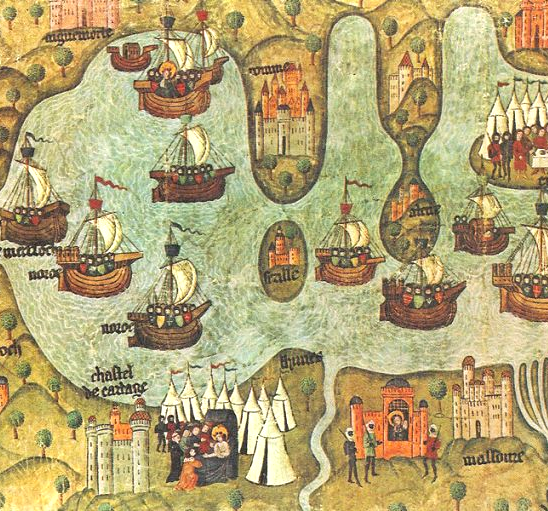
In the case of Lingua Franca itself (or “language of the Franks”), it was in fact a commercial language spoken mostly in the eastern Mediterranean and North Africa. It was brought to these regions by North Italian (Genoese, Venetian, Pisan…) and Catalan sailors. It was not called Franca because it was spoken by the Franks or French, but because during the late Byzantine Empire, “Franks” was a blanket term applied to all Western Europeans due to their prestige after Charlemagne. In fact, over time, that language —used for commerce across the ports of the Mediterranean— was largely influenced by Italian dialects, Catalan, and Occitan more than by French. That early commercial language, lasting from the 10th to the 19th century, is what gave the name to the concept of linguas francas, or a functional language providing basic understanding between many trading peoples with different socio-cultural backgrounds. In this text, franca for short is a functional term, independent of any linguistic history or language structure. That concept can also be applied to pidgins and creoles, or whole languages like Hiri Motu —which is neither creole nor pidgin, but simply a franca from southeast Papua of Austronesian origins used for trading voyages.

Returning to the impressive Malay seafarers and traders, the current Malay language, or Bahasa Indonesia, is a language that originates from Old Malay, mostly spoken in Malacca —the great trading centre that the Portuguese conquered in 1511 CE. Old Malay, also known as Bazaar Malay, Market Malay, or Low Malay, was a trading language used in bazaars and markets, as the name implies. It is considered a pidgin, influenced by contact among Malay, Chinese, Portuguese, and Dutch traders. Old Malay underwent the general simplification typical of pidgins, to the point that the grammar became extremely simple, with no verbal forms for past or future, easy vowel-based pronunciation, and a written code that reflects the spoken language.

Back in 2016, I travelled for a few months through the Malay Peninsula and the Indonesian archipelago. During these trips I could easily pick up a few hundred words which allowed me to have simple context-based conversations despite my general ineptitude with languages. I was surprised by how much understanding could be achieved without even using verbs! The language had evolved such that verbs like ‘go’ and ‘come’ became prepositions like ‘towards’ and ‘from’, allowing me to build simple sentences describing my itineraries without proper verbs. This anecdotal example illustrates how Malay evolved to enable extremely easy preliminary communication.

But Malay is not only a franca. This is exemplified by the extreme complexity and nuance in vocabulary and verbal sophistication required to address your interlocutor based on their relation to you. You need a special way of addressing someone depending on whether they are a man, woman, young, old, or of higher, equal, or lower social status. This likely reflects the language’s other origin: High Malay or Court Malay, used by cultural elites and in courts, where making explicit hierarchical relations was (and still is) crucial.

Today, the language dominates the Indonesian archipelago, the Malay Peninsula and Brunei, and is also widely spoken in Timor-Leste and Singapore. In Singapore, however, the official and de facto trading language is English —but we’ll talk about that trading hub and English later. Malay is spoken as a first language by millions of people, but it is far more common as a secondary language, with almost 300 million speakers. Most of these speakers also know at least one other local language, like Javanese — spoken by nearly 100 million people— or Bazaar Makassar, another franca used by the Bugis, who historically landed on the shores of Western Australia for centuries.

Interestingly enough, modern Malay descends from a language spoken in ancient times in east Borneo. This language also gave rise to Malagasy, spoken by most of the population of distant Madagascar. The language arrived there via Malay seafarers and later traders. Afterwards, Bantu peoples from southeast Africa arrived and mixed with the Austronesians, giving rise to modern Malagasy —the only native language on the island (though it has three main dialect families). Apparently, nobody had the need to create new languages in this 1,500 km-long island.

The Bantu peoples themselves are also the carriers of one of the World’s largest francas: Swahili. It is spoken by up to 150 million people. Originating as a coastal trading language, it spread to the interior of East Africa, connecting the coast to the Great Lakes, and became a franca across the region and a mother tongue for many urban dwellers. It arose in present-day Tanzania during trade between the island of Zanzibar, inland Bantu groups, and Arabs (particularly from Oman). The Omani Imamate and Muscat Sultanate controlled Zanzibar and the Tanzanian coast during the 18th and 19th centuries and held considerable influence through the slave and ivory trade, among others. The name “Swahili” itself comes from the Arabic word for “coast”. Arabic has contributed about 20% of Swahili vocabulary, with words also borrowed from English, Persian, Hindustani, Portuguese, and Malay —the region’s main commerce languages. Like Malay, Swahili has a simplified grammar common in francas, making it easy to learn and pronounce. These traits have made Swahili a contender for a global communication language.

Beyond commercial francas, there are languages used exclusively as cross-border platforms for intergenerational communication, but which are not native to any sizable population. These languages are like frozen structures, called upon to allow a group of people to mutually understand one another.

Classical Latin is one early example of this function. By the 4th century, Romans were already speaking a language quite different from what Augustus spoke 300 years prior. Different parts of the empire used highly dissimilar versions of Latin, and Classical Latin served to maintain a unified system. That “old Latin” was standardised for literary production and, crucially, for imperial administration. After the division of the Roman Empire, the Western Christian Church also adopted a version of Classical Latin for internal operations: Ecclesiastical Latin. Previously, early Christians used mainly Greek and Aramaic —as we willl see.

Over time, Ecclesiastical Latin became the international language of diplomacy, scholastic exchange, and philosophy in Europe, lasting for around a millennium. It was not fully standardised until the 18th century! By then, linguists were eager to fix languages as words changed meaning too quickly —as the analyitical philosopher Russell observed. Ecclesiastical Latin flowed into the emerging sciences. The main works of Copernicus, Kepler, Galileo, and Newton were written in Latin.

But this Latin was a written language —no one really spoke it. And, unlike Swahili or Malay, it was far from easy to learn. Any Latin student knows how difficult it is to memorise its multiple, complex inflections. It became a written fossil spoken by basically no one —except a few geeks. That made the other nerd in the Peano-Russell nomenglature propose a simplified version of Latin, Latino sine flexione, as the  Interlingua de Academia. Peano, being Italian, had skin in the game. For us native latin languages speakers, such as my Catalan, a simplified academic Latin would be a great advantage compared to “ahem” we know what. But more on that and created languages to be international standards later.

Today, a stripped-down Latin does survive in science —particularly taxonomy, where the classification of living things (especially plants and animals) uses Latin binomials. For instance, humans are Homo sapiens, wolves are Canis lupus, and rice is Oryza sativa. Many scientific terms —especially in astronomy, physics, and cosmology— are still derived from Latin. So, through science’s dominance as the global system for classifying the world, Latin vocabulary lives on. It has become a kind of global pseudo-language, used by experts worldwide to communicate about shared topics but just as individual words, without any structural coherence.

Latin is but one example of an imperial language transformed into a franca and liturgical language. Another —and much older— example is Aramaic. Aramaic had the advantage of the simplicity of its written form. Unlike the complex cuneiform writing on clay tablets, Aramaic used a simple 22-character alphabet, which made it easier to learn and spread. This accessibility allowed it to be adopted in administration, commerce, and daily communication in a linguistically diverse region. The Achaemenid Empire adopted it as an administrative language, standardising “Imperial Aramaic” alongside Old Persian. Bureaucracy, scribal schools, and widespread official use helped it expand far beyond its original homeland —and its legacy lasted for over a millennium.

As with Latin, Aramaic became the medium of religious texts. Many Jews returning from exile after the fall of the First Temple continued speaking it. Scribes translated the Hebrew Bible into it, and large sections of sacred texts ended up in Aramaic. Other Levantine prophet religions like the Manichaeans also adopted it. One of these, Mandaeism, still survives, and its followers still speak a version of Aramaic. Eastern Christians adopted Syriac —an Aramaic dialect— for theology, hymns, and lengthy religious debates. Aramaic became the franca of the ancient Near East: everyone could participate. Thanks to that, like Latin, the language outlived the empires that spread it.

So, with these examples, we can begin to draw some principles for how linguas francas are established, spread, and sustained across space and time. They tend to offer accessibility benefits, borrow heavily from multiple languages, are often secondary but can become primary languages (especially in cities), and most importantly, serve specific purposes: commerce, administration, religion, or technical use. Perhaps we can even distinguish between written and spoken francas: spoken ones often have simplified grammar, are easier to pronounce, and accommodate mixed/macaroni forms. (Cool word, “macaronic” — look up its history!) Written francas, on the other hand, may retain complex grammar but offer easy ways to record text. Of course, ideographic systems like Mandarin or Japanese kanji present another accessibility puzzle —one we willl explore later, as they are closely tied to another leg of francas: formal state education.

In a world that is becoming more technical, more bureaucratic, and more formally educated, there is now ample space for new linguas francas to be established, maintained, and —for the first time— reach global scale. It is in these languages that we will begin to ask ¿what does humanity want?

Previous

Next
Fragile communication

The basic structure described in the previous section allowed inland communities to have access, for example, to seashells, despite the fact they might never have seen the ocean themselves. However, one may ask: how is it that the people of Papua were still trading with stone axes in the 20th century? Even more so if the reader knows that Papua might be the oldest place on the planet where agriculture was developed, with some estimates suggesting that root vegetables were cultivated at least 10,000 years ago—slightly earlier than the domestication of grains in the Fertile Crescent.

That is actually a question Yali, an exceptional politician from Papua, asked Jared Diamond in 1972 when he was conducting fieldwork there to study ornithology, including birds such as the bowerbird. The actual question was: “Why do you white people have so much cargo and bring it to Papua, but we natives have so little of our own cargo?”—summarised as: “Why do your people have so many things compared to us?” For Yali, cargo was the generic term for all the items Westerners had brought to Papua since World War II. He was, in fact, asking about the technological gap between the Westerners travelling there and the local people.

Diamond spent 30 years developing an answer, culminating in his book Guns, Germs and Steel. In it, he presents two main theses:

First, geographically, some populations had more access to natural resources to begin with, such as plants and animals that were easy to domesticate. For instance, in Papua, the largest domesticable animal was the pig, while in Eurasia and Africa, cattle have symbolised wealth and power for generations. Papua also had no access to grain, while civilisations like the Mayas domesticated maize. Despite not having large animals, that was sufficient to develop a thriving and complex civilisation with many types of “cargo”. Additionally, domestic animals made human populations more exposed to germs, which they gradually adapted to. However, when these naturally engineered biological weapons encountered previously isolated populations, they wiped out 90 to 99% of the locals in less than a century. The pigs kept by Papuans may have spared them a similar fate to that of the Americas and the distant Pacific Islands.

The second thesis is that, due to geography, some areas of the world were better connected than others. Again, Diamond argued that it was relatively easy for trade networks to span Eurasia and Africa, with goods, ideas, domesticated foods, technologies, and ideologies spreading far in just a few generations. This was especially true for crops; species domesticated in one location often had suitable growing conditions across the climate zones from the Iberian Peninsula to Japan. This did not occur in other regions, such as the Americas, where many similar technologies had to be independently developed by both the Mesoamerican and Andean peoples. Their centres of domestication were only a few thousand kilometres apart. However, both groups had to independently domesticate crops like maize, cotton, and beans. Moreover, useful animals like the llama and crops like the potato, domesticated in the Andes, never reached the Mayas, while the writing system developed by the Mayas never made it to the Andes. According to Diamond, these gaps are due to difficult and diverse geographies. There is no easy land route connecting these American regions—dense tropical jungles, vast swamps, and rugged mountain ranges with dramatically different climates hinder the spread of domesticated species. Even today, in the 21st century, there is no road connecting these two areas. The Darién region, on the border between Panama and Colombia, remains impassable by vehicle, making it the only place on the continent without a road from north to south.

With these two main theses and strong reasoning, Diamond makes his case to answer Yali’s question. According to him, Papua did not have the species or connections that benefitted Europeans upon arrival. Europeans were simply lucky and thus came to dominate the known world. That left Papuans with a relatively limited set of food sources and restricted access to technologies developed elsewhere.

This view has been widely debated and does not fully account for the timing of major expansionist events. Still, the picture Diamond paints holds reasonably well until the 16th–17th centuries and the largest biological genocide in human history. Afterwards, the situation becomes more nuanced, as the connectivity of the world began to increase exponentially—but we will explore this in another chapter.

The limitation on access to technologies and information for the Papuans is related to our earlier examples of basic trading networks. These can only extend as far as humans can reliably reach each other at a more or less consistent pace. If mountains, oceans, and jungles must be traversed, the task may be too dangerous or uncertain to attempt. In such cases, communities at each end remain isolated. On the other hand, if obstacles are surmountable and there is a desire to connect, these networks can transform the well-being of participants. This is the case with the Eurasian and Indian Ocean trade networks. These spanned over 2,000 years, bringing silk, gunpowder, spices, and paper westward, and silver and wool eastward. Or take the so-called Columbian Exchange, where Europe plundered the immense wealth of the Americas, borrowed some botanical knowledge and cultural inspirations, and in turn colonised and Christianised native populations, erasing or warping their lands, traditions, institutions, and knowledge systems.

Returning to our earlier examples and thought experiments, these scenarios depicted only weakly connected communities. For instance, fragmented travel and exchange networks were the norm in the Papuan highlands. Although goods like axes or shells could travel freely, people could not. Residents of a group traditionally could not travel far beyond their territories or their closest trading partners. Unannounced or long-distance travel posed great risks—aggression, even death—making lone long-distance trade virtually non-existent. Commerce beyond immediate neighbours was carried out by intermediaries. Each of these intermediaries usually took a cut or incurred costs, inflating the final price of the item. This inflation could only go so far—only items of high value or buyers with considerable resources could justify the costs. This effectively limited how far an object could travel and placed natural boundaries on the kind of connection network described in the previous section. This is comparable today to drug or wildlife trafficking, where lightweight, high-value items traverse vast regulatory and law enforcement hurdles over thousands of kilometres.

Conversely, if exchange links are too weak or complex, they may collapse shortly after forming—before significant transfers of goods, ideas, or technologies can occur. This has happened countless times across different regions and eras. Think of a group of friends that never fully bonds, or a business that cannot reach its customers. Let’s consider some more striking historical examples. At least twice before Columbus, people from faraway regions reached the Americas, but failed to establish lasting presence or strong cultural exchange.

You might be thinking of one such example: the Vikings from Scandinavia in the 11th century. They arrived from sparsely populated Greenland, but their colonisation efforts in Vinland (modern-day North America) failed. Without delving too deeply into why, it’s clear they had the means to reach distant shores and found good land, but not much more. The distances were vast, the local resources were not especially valuable, the natives were not always welcoming—possibly becoming infected or hostile—and the Vikings had limited capacity for sustained support. Climate and political factors played a role, but ultimately the venture proved too costly for too little return.

The second example is even more epic and deserves wider recognition: the Polynesian crossing of the Pacific Ocean to reach the coast of South America. Sadly, we lack written records—like the Vinland Sagas—or significant archaeological evidence. But through genetic, linguistic, and species transfer evidence, we know that about 800 years ago, seafarers from the Polynesian islands reached South America. For context, that’s more than twice the distance Columbus travelled—and his crew believed land awaited. It’s also more than three times the longest Viking sea crossing to reach the Americas. The Polynesians had no clear reason to expect a continent ahead, yet they sailed into the unknown.

Imagine being in a boat no more than 30 metres long and about one metre wide, possibly connected to another boat as a catamaran. This platform allowed a few dozen people to bring animals, water, and supplies across the vast ocean. Some examples of these vessels—such as Druas in Fiji—could carry more than 200 people. Now imagine that your only known geography was a scattering of islands, and you did not know where or if more land existed. Countless such expeditions must have failed before one succeeded in making the 6,000 km journey—until finally, they found an enormous continent. Then they had to sail back, locating tiny home islands amid the ocean after weeks at sea. The adventure, mindset, skill, and ultimate success—after who knows how many failures—is one of the most remarkable, untold stories of human exploration.

This is not comparable with the Viking or Iberian voyages across the Atlantic. Those sailors knew something awaited beyond. The Vikings had seen driftwood from the west wash ashore in Greenland. Columbus, though mistaken in his estimation of the world’s size, expected land. The Portuguese, too, found driftwood in the newly colonised Cape Verde islands—Paubrasilia, or “firewood”, due to its red colour—which gave Brazil its name. All these peoples had reasons to expect land in the west.

We know Polynesians completed this journey because they brought coconuts and chickens with them—and brought back sweet potatoes, which later spread across the Pacific islands as a staple crop supporting larger populations. They also had children with local peoples, leaving genes still found today in Mesoamerican and Mapuche populations. There is even evidence of American ancestry in Polynesian populations.

This widespread gene flow shows that Polynesians not only crossed the ocean more than once but established contact across a broad swathe of the Pacific coast of the Americas. Unfortunately, the contact was not maintained over time, and no further instances of intermarriage are evident after 1300 CE. Furthermore, Polynesian navigational technology was not passed on to the local peoples. Native Americans would have greatly benefitted from such skills—especially considering the lack of transport links between North and South America even today.

We can speculate why the contact faded and the technology was not adopted—unlike sweet potatoes. In a simplified view, the connection was likely too distant and involved too few people to become meaningful. Perhaps the Marquesas Islands had only a few hundred inhabitants at the time, while the continent had millions and two sophisticated civilisations that saw little value in these distant seafarers. Whatever the case, the exchange was short-lived and limited.

More complex reasons could also explain the lack of adoption. For instance, Austronesian sailors from Makassar routinely travelled to the northeast coast of present-day Australia—around 3,000 km away—to harvest sea cucumbers for the Chinese market. This trade continued for centuries, ending only in the 20th century due to Australian colonial restrictions. Although contact endured, no lasting colonies were established, and the mixed communities that emerged never thrived. Some wives were exchanged, and a basic trade language developed, but local people only adopted simple technologies such as dugout canoes and shovel-nosed spears. More advanced knowledge may not have been shared—or perhaps locals weren’t interested.

Similar patterns emerged with Austronesian expansion to Madagascar and Taiwan. Though close to the mainland, these regions show little lasting influence on nearby East Africa or Southeast Asia. This suggests that Austronesians successfully expanded to uninhabited or sparsely populated areas (e.g. Pacific islands, Madagascar), but failed to make inroads in already densely populated regions like Asia, Africa, Papua, or the Americas.

In Australia’s case, the issue might have been resource scarcity. Northern Australia may not have offered enough to entice settlers. Local people may not have seen value in adopting agriculture or foreign technologies. Additionally, complex knowledge like seafaring is often guarded. Sailing is more than boat-building—it involves reading stars, winds, currents, and more. Mastery takes time, risk, and community effort. If local life was already sufficient, why go to the trouble?

Moreover, the fact that sea cucumber expeditions were male-dominated may have prevented the creation of Austronesian communities in Australia.

A good related example, but limited to technology and infrastructure, is the first transatlantic telegram cable. It was build in 1856 and it only worked poorly for 3 weeks until it completely failed. It took 15 years to build the successful 2nd cable. In this case a combination of affordability, technological improvement and willingness to communicate more instantly two continents made the 2nd attempt stuck. Now we have tens of thousands of underwater cables connecting all continents to transfer high speed data. But we could imagine many scenarios in which after the first failed transatlantic cable, the trend did not continue.

From the cases outlined here, we can see how many different scenarios could limit cultural and technological exchange, creating a nuanced and often unpredictable picture. Establishing sustained connections across natural and cultural boundaries is a long, fragile process—often with little success on the first attempt.

Previous

Next

Exchange network stabilisation

Transparent Anthropocene. Image Credit: Globaia. https://globaia.org/geophanies. Creative Commons License. The image includes Global Roads, Global Human Impacts on Marine Ecosystems, Global Urban Footprint, Open Flights, Open Street Map, and Submarine Cables.

Going back to your encounter with a stranger in East Africa, the stranger might point to one especially appealing shell garment that you are wearing. You might decide to gift it away to create a bond, and it might not be a high price to pay because, back home, there are plenty more. Therefore, you might give away more spares, as we have seen Columbus did with cloth. To reciprocate, the stranger might give some of the ore. And with that, you might part ways, the only thing remaining from the encounter being an exchange or gifting of goods. The other person will go back to her or his community and show off the newly acquired item. Between curiosity and desire, more members of the same group might crave more of such objects. Then they might go in the general direction where the first object was found. Or, alternatively, the initial individual will go back to gather more. The same can happen with you and your home group returning to the meeting point.

However it is, after your exchange with the stranger, a link has already been established between distant groups. And maybe, after the first initial gift-giving from you or the others, a more constant exchange can be produced. Initially, you do not know where to obtain their shells, nor do they know where to obtain your ore—only that you know how to obtain it from each other. They actually get the shells not from the source but from another group. And these from another, and so on, until getting to the coast. It might be more efficient to continue doing so than to start the long journey, hundreds of kilometres away into the unknown, to get to the sea and obtain the sea shells directly. Same with the ore, food, spices or other objects. It is more valuable to keep good relations with your neighbours, if there is something to gain, than going solo.

With that thought experiment, we see how a basic exchange network and collaboration is established. Such a network, however, does not seem to be sustainable, as once the desire and rarity of an item are gone, the need for the network might erode.

With more useful items beyond rarity, like tools, that network and cooperation might be strengthened. This has often happened with specialised tool-making communities. For example, in the hinterlands of Papua, in the Wahgi Valley, existed the Tuman quarries, with stones of sufficient quality to make high-quality stone axes. These stones were not found in many other places in the highlands of Papua, and the quarries and the axe-making process were solely controlled by the Tungei people. They were excellent stone-axe makers, an activity to which they dedicated most of their time. That produced a high-quality product that they exchanged with people all around the region. The trade was not only in other goods, but also in dedicated rituals, respect, holding them in high esteem, and providing women to the Tungei community. They had access to the stones and the means to extract them in an efficient communal way. Every few years, they quarried as a whole community in expeditions that lasted for months. They also had access to the main source, so they had a higher number of people with the knowledge and skills on how to prepare them—both giving shape to the blade and hafting the T-shaped handle. With that knowledge, they were able to trade for goods far beyond their immediate neighbourhood.

However, the main exchange of the stone axes was for marriage. In their area, most marriages were arranged through a complex exchange of goods between the original community of the women and the receiving one. Sea shells, ropes, pigs, feathers of the birds of paradise, and salt were used in the exchange. But in the case of the Tungei, the stone axes were used profusely to buy wives, which allowed them to be relatively wealthy, because they were the source of the stones. They would be the petrol producers of the highlands! More than two-thirds of the marriages of the Tungei were with women from external communities with whom they traded. Interestingly, they did not trade with faraway groups like the coastal ones, but they did receive, through many intermediaries, the shells coming from there.

This dominion of the trading network of the Tuman quarries collapsed when patrols from the colonial era, and later the Papua New Guinea state, routinely accessed the area and brought with them steel axes and plenty of seashells, which they gifted to the locals or traded in large quantities. Needless to say, steel axes were much more appreciated. They were more efficient—cutting one tree in a day instead of several days with the stone ones—lasted longer, and were sharper, allowing them to be used for more refined work. With the European arrival of trade goods, the marriage pattern of the Tungei swiftly changed, with only half of brides being from exogenous communities. This reflects economic changes resulting from the loss of the axe trade.

On the other hand, other Papuan communities like the Goroka still traded axes well after the steel axes and pearl shells had saturated their communities. That is because they had a specialised workforce that was in charge of mining and crafting the Dom Gaima “bride axes”—large ceremonial stone axes so big and elaborate that they were crafted in a non-functional way. They were used for bride price and display purposes, and so were a sign of prestige.

In conclusion, the thought experiments and examples show how trade, commerce, needs, rarity, crafting, prestige, and aesthetically attractive items, plus basic communication, allow the establishment of rudimentary networks that extended much further than the basic interactions a community would have with its neighbours. The basic desire, need, and curiosity for what lies beyond might have created the roots for collaborative action.

But beyond the seeds of networks, there is the establishment of strong bonds. There are many ways in which these can be maintained, with one basic mechanism being intergroup marriages. Once the network and the trust between neighbouring groups are created, exogenous marriages can follow. In fact, this is quite common in nature, where many social animals have one group member who, after reaching maturity, travels, mingles, and often reproduces in a new group. Curiously, in the case of our closest relatives—the chimpanzees—females tend to migrate to a new group as teenagers. For bonobos, it is also usually the case that females migrate, though it is not rare for males to do so, while females from high-ranking matriarchs remain in their natal group. This exogenous mating and breeding is quite common in humans. The difference lies in the diversity of strategies. Exogenous reproduction is not always the case, and many human groups display a whole spectrum of migration patterns: from only females, to only males, to a mix, or exclusively endogamous systems. On top of that, there are complex kinship strategies regarding whom one can marry, from clan systems spanning hundreds of kilometres to, on the contrary, first-cousin marriages. Contrary to popular belief, first-cousin marriages are among the most genetically fertile unions. So keep in mind: if you want to have many children, have a lot of unprotected intercourse with one of your first cousins—like Darwin did.

Another way of strengthening networks is that of debt or gift exchanges. Many academics point out that one way to keep social relations alive, strong, and reciprocal is to build them upon accountability in the form of an unpaid debt or the need to return gifts. That happens continuously in our daily lives—when friends or family do us a favour, we “feel indebted” to them. The debt is not precisely measured (i.e., there is no numerical value assigned) and might never be returned in the same exact form—it might even be rejected by the giver—but it can be given to somebody else, like when someone pays for your dinner and you later do the same for someone else to keep the balance of the world. A good example of this is the Toraja, in central Sulawesi. Their current culture invests massively in the funerals of their people. When a family member dies, the body is kept at home for years and considered still a member of the family, even being served meals daily. It is kept until the extended family can secure enough funds to hold a massive funeral—one anecdote told to me was of a family that kept the body for 20 years before finally holding the funeral. Once the body is placed in a permanent tomb—which can be a sarcophagus in the rock, hanging on cliffs, in caves, or in a grain storage-like structure—the person is considered to be truly dead. Despite that, they parade many of the mummies every year over Christmas, dressing them in new clothes, jewellery, even sunglasses. At the funerals, guests are given large gifts. However, these are not “debt-free” gifts. Each gift is recorded, along with which family it was given to, with the expectation that when invited to a funeral by that family, the gift-givers will be given something of equal or similar value—or they will lose face. One young person I spoke with there told me that “Torajas are indebted from the womb of their mothers”. Debt is inherited if you belong to a specific family and culture.

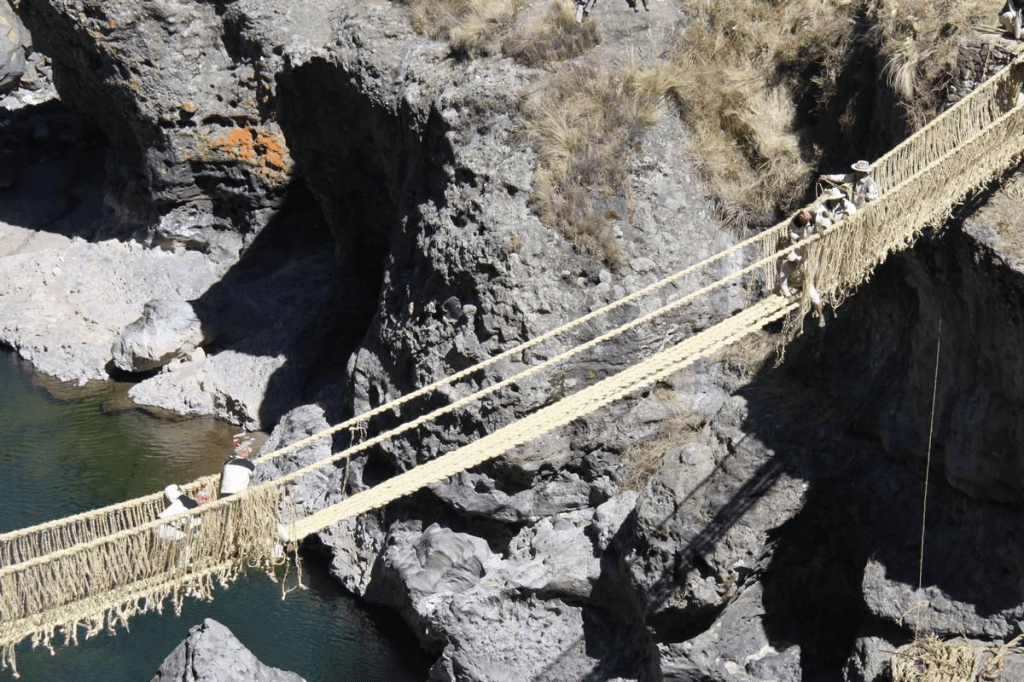
Beyond marriages and debt, infrastructure is a way to keep long-distance connections over generations and across large areas. For example, roads might extend much further than the migration routes a group would typically follow, and information—in the form of basic agreed signs and trade-related language—would travel along these early infrastructures. Once infrastructure is created, it might stabilise a distant connection, though it comes at a cost. Maintenance can be expensive. Bridges must be built and maintained by the people on both sides of a river—or rebuilt repeatedly, like the Q’ichwa Chaka rope bridge rebuilt every year using a species of grass, despite a modern bridge being nearby. One theory posits that this is the future of humanity: the maintenance of an ever-expanding technological sphere—or technosphere (which we will explore further in the future).

Once the boundary of vicinity is broken, using this array of methods, connection might expand unhindered to take over the planet in a universal way. But, as we have seen, maintaining all of this is costly, and motivation may be lacking. Why should I learn seven different languages? Why should I tire myself travelling to another village with different food and unfamiliar people? Why should I marry into another community where none of my loved ones can protect me if things go sour? Why should I be indebted to traditions and infrastructure before I’m even born? Many of these costs may have prevented communication from expanding and stabilising any faster than it has—and it hasn’t happened until relatively recently in part due to major geographic obstacles like oceans, swamps, and mountain ranges, as well as cultural taboos and long, expensive trade networks. But if those obstacles didn’t exist, there would be nothing stopping a valued good or service—existing only in one place—from eventually reaching every other part of the world, along with all the communication needed to sustain that. This was exemplified by species trade and related colonisation— but we’ll talk about that in the next section.

Previous

Next

Exchange and Gift-Giving

An amazing behaviour from non-human animals is way seems present giving to their carers. If you own a cat that roams freely outdoors, or know someone who does, you are likely familiar with the slightly unsettling “presents” they bring home. A variety of dead or half-dead creatures—perhaps a headless sparrow on the bed or a twitching cockroach on the pillow—serve as feline offerings. These gifts are likely given because the cat considers you part of its pack, reciprocating the security, shelter, and food you provide. Alternatively, they may be trying to teach you to hunt, much as wild cats do for their young. This is particularly evident among mother cats raising kittens. Similar behaviour can be observed in lions, where females bring back food for the pride’s alpha male, and mothers present cubs with small, disabled prey—sometimes even scorpions with their stingers removed—as part of the hunting learning process of the kitties. Interestingly, this behaviour is one of the few documented examples of “teaching” outside the human realm, a concept debated by researchers studying how learning takes place in humans and non-human animals.

Other animals also engage in gift-giving, though usually in the context of mating rituals. Some species of flies and spiders, for instance, present food or other items to potential partners. Returning to corvids, they have been observed offering gifts to human carers, often in the form of shiny objects. This is intriguing, considering that research suggests corvids are actually afraid of shiny objects. Despite this, the belief persists that magpies and crows are attracted to glistening objects. While corvids have been documented presenting “gifts” to other individuals in experimental settings, these events are rare and not actively pursued, leaving the true motivations behind this behaviour unclear.

Both corvids and non-human apes share remarkable cognitive abilities in problem-solving, tool-making, social interaction, and environmental manipulation. These parallels suggest that complex cognitive skills have evolved multiple times in distantly related species with vastly different brain structures. For example, corvids and parrots perform cognitively demanding tasks at levels comparable to primates, despite having much smaller brains. This suggests that brain connectivity, rather than sheer size, is key to developing advanced problem-solving skills. This apparent case of convergent evolution may indicate that similar social behaviours and strategies are necessary to tackle shared socio-ecological challenges. Yet, while these species follow different paths in tool-making and social learning, we have not yet identified non-human examples of the kind of collaboration seen in human societies.

One potential comparison lies in large-scale infrastructure projects undertaken by collective animal efforts. Social insects provide the most striking examples, constructing elaborate nests, bridges, and even cultivating fungi. However, such projects appear to function at the colony level, with no evidence of inter-colony collaboration. An exception to this rigid structure exists among Argentine fire ants, which freely exchange individuals between related colonies, blurring the lines between distinct social groups. Beyond insects, some social animals also engage in large-scale collaborative construction. Beavers build extensive dams, and sociable weaver birds in southern Africa construct massive communal nests, accommodating hundreds of nesting pairs. These nests feature interior chambers that retain warmth at night and outer compartments that remain cool during the scorching daytime in the Kalahari. However, such complex communal infrastructure has not been observed in corvids, parrots, or non-human apes, though chimpanzees and orangutans do create nests and rudimentary shelters.

What all these collaborative species share is a sophisticated communication system, mutual benefits from group cooperation, a degree of specialisation, and the development of unique strategies tied to their social and environmental contexts.

Humans, however, have taken this a step further. We extend our networks beyond our immediate group through exchange and gift-giving, forming connections that span vast distances. In these exchanges, context is crucial—where the perceived “usefulness” of an object is shaped by the specific environment in which it is found.

Imagine a prehistoric landscape on the East African coast, where groups of foragers live between the Great Lakes and the sea. It is easy to see how these groups would not have access to the same resources. Coastal communities would have abundant seashells and seafood, while those inland would rely on savannah, jungle, or mountain resources, hunting different game and collecting unique plant species. Lakeside groups would have plentiful fish but limited access to large seashells, which would be abundant on the coast. This variation in resources stretches across just 600 kilometres—from Lake Victoria to the sea. No single forager group would regularly traverse such a distance, but a chain of six or seven groups, each moving within a 50-kilometre radius, could establish a web of exchanges over time. Such interactions lay the foundation for trade, gift-giving, and the vast cultural networks that would come to define human societies.

Tool Making <- Previous Next -> Signalling

Rarity and curiosity

Let us first focus on rarity, which is conceptually easier to grasp. For some reason, we are extremely attracted to rarity. Imagine this thought experiment: there is a room full of white marbles on the floor, with just one or two red marbles, and you are allowed to pick three of them. Which ones would you choose? I can venture to say that you would probably pick the red ones.

Now, consider another room where another person is also allowed to pick just three marbles. However, in this room, the colours are inverted—one or two are white marbles, while the rest are red. Neither of you knows about the inverted arrangement.

Once both of you exit the room, you are allowed to see what the other has picked.

If there were only two red marbles in the room, you would have one or two red marbles and the rest white. Meanwhile, you would see that the other person also has one or two red marbles.

If you were now allowed to exchange marbles, which ones would you pick? The context has changed—both of you have more or less the same number of red and white marbles, but most likely, due to your previous experience, the other person would desire your white marbles while you would desire their red ones.

Other strategies might emerge, though. For example, given the possible rarity and imbalance of colours, you might choose to hold on to one white marble just in case.

This simple thought experiment illustrates how complex rarity becomes. Despite this, we have an innate mechanism that drives us to desire it. Marbles are completely useless in everyday life, and their being white or red makes no actual difference. There is no rational thought behind it—only the impulse to gather the rare.

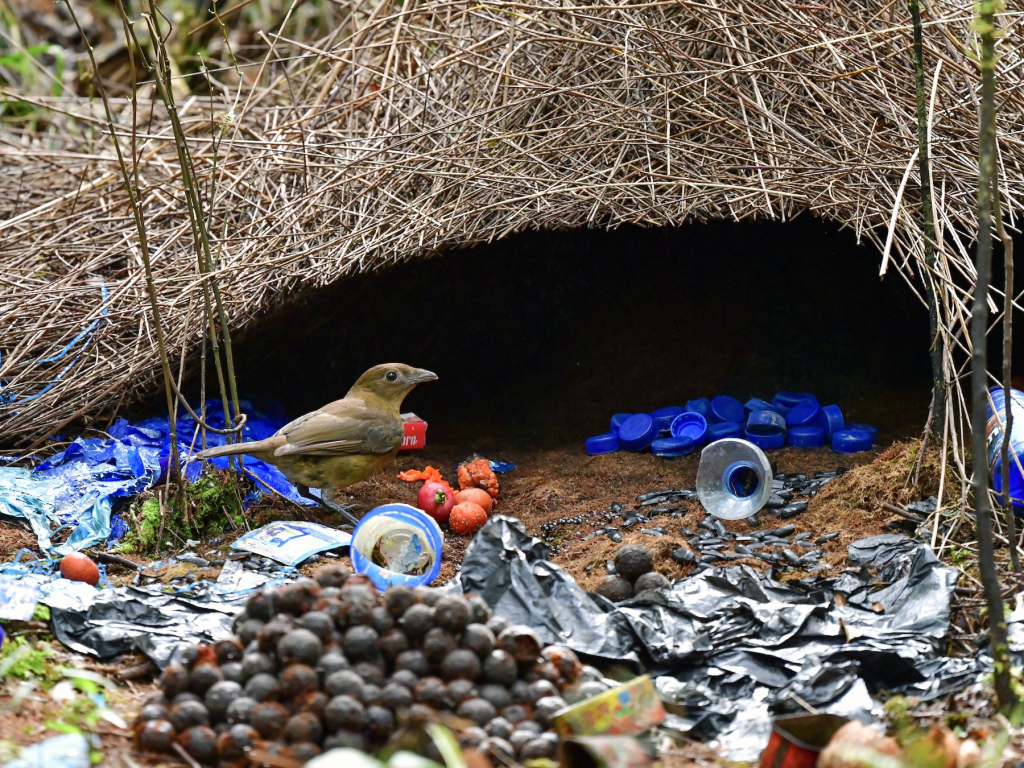
We do not know where the desire for rarity comes from or how exclusive it is to humans. Perhaps the behaviour originates from selecting ripe fruit. However, similar curiosity and rarity-seeking behaviour can be observed in bowerbirds. These birds, native to Papua and Northern Australia, have no natural predators. Like birds of paradise, male bowerbirds have evolved complex courtship strategies. While birds of paradise have developed colourful feathers and elaborate courtship dances over generations, the plain-looking bowerbird has instead developed the ability to construct intricate and colourful structures—so-called “courting nests”—as part of its courtship strategy.

Males take years (four to seven) to learn how to build these structures, which can span several metres. These nests take weeks to construct using sticks, straws, shiny stones, and pebbles. Interestingly, bowerbirds have begun incorporating plastic rubbish into their nests. Each element is carefully arranged in complex structures that even manipulate depth perception, much like a Baroque painting, in order to attract a mate—or several. In many of these structures, a plastic piece—often an especially unattractive one, such as a torn energy bar wrapper or a crushed plastic bottle—occupies a central position. Perhaps this is not due to intrinsic beauty, but rather because of contextual rarity. Curiously, these birds also follow local trends, observing and copying the constructions of others. Young bowerbirds learn by imitating their older relatives, initially building crude and atypically coloured nests. This behaviour is particularly evident in species such as the Satin, Vogelkop (Amblyornis inornatus), MacGregor’s, and Great Bowerbirds.

Perhaps we desire marbles for the same reason—they are shiny, rare objects that can be used to attract potential mates or simply to gain the attention of our social peers. A child, for instance, may wish to show off a rare new toy to their family and friends or flaunt a shiny new pair of shoes.

Regardless of the underlying reasons, what bowerbirds lack is a system of exchange in which they can trade their surplus of blue plastic caps for an impressive white-and-green toothbrush two nests away. Instead, they resort to stealing decorations from their neighbours in an effort to attract mates. However, stealing is time-consuming and inefficient; the thief must wait until the other bird is away, sneak in, and then return to their nest with the prize. During this period, they are neither gathering food nor tending to their nest, and they are also vulnerable to theft themselves. It is far more efficient to exchange ornaments or to give them away in the hope of reciprocity—or, as some anthropologists suggest, to create a debt bond.

Beyond the intriguing fact that modern plastics have entered their courtship rituals, bowerbirds offer insight into a fundamental human desire: the pursuit of beauty taken to an extreme, combined with the imperative to reproduce. This will be analysed further in the texts.

From the small to the global <- Previous Next -> Tool making