Revolutions, Scientific Revolutions

The peoples that embarked and supported the exploration of new trading and colonising routes soon discovered that the free-riding of the technological advantage could be easily perpetuated. Thanks to that, the ones that invested in better and faster understanding of the world, plus the technical innovations that that understanding and implementation represented, contributed to a further control of the world’s connectivity. From that on, there were no major barriers to a hyperconnected world. What they could not control by exchange, they would control by overpowering, as the conquest of Malacca, the Aztecs, the Incas demonstrates. If you kept on expanding your technological and resource allocation dominance over other peoples, your system would be the one to dominate, and that’s exactly what the Western nations did over a period of a few centuries.

New trading routes led to an excess of wealth that could be poured into more navigational sophistication, which in turn would make the trading networks more reliable and affordable, freeing more resources for further improvement. Part of these resources went to the birth of modern science, changing forever the way our understanding of the world was established.

To make a boat sail safely from port to port you would rely less and less on divinity and more on your instruments, navigational skills, the capacity to understand the sky, star positions, read the winds, proper sails, masts, ropes to withstand storms, carrying lemons to stop scurvy, social structures to govern a ship and stop mutinies, etc. Those powers that would put scientific knowledge to good use would have in their hands better control of the high seas and the peoples cruising them. Likewise, those who understood better the fabrication techniques could build better vessels, and equip them with better weapons. On the other hand, the faraway encounters would contribute to the scientific understanding of the world, like sea currents, Volta do mar, steady trade winds, or even catamaran technology from the Pacific and front crawl swimming techniques from North, South America, or South Africa.

In fact, Columbus’s error regarding the radius of the Earth (which he was convinced until he died) was due to the preliminary stages of scientific knowledge attempting to describe the world we lived in. In that case, he was mistaken, but the geographers’ community soon recognised the error and corrected it (or lent more credibility to other estimates circulating at the time). This iterative process helped to better understand the world that was opening up before them as they tried to cartograph the new routes faster than they were explored.

From these explorations and shocks to the perceived worldview, it is not difficult to imagine that the notion of an entire landmass the size of the Americas suddenly appearing on maps (over about 20 years) might have led to the acceptance of rethinking the entire Universe. If the Earth contained a whole part of itself that was unknown to the Old Scriptures, how much more knowledge might be out there—waiting to be found, explored, and understood—not through the lens of the Scriptures, but through the lens of something new? These cartographic shifts might easily have been the seeds for scientific enquiry—the seed of the Scientific Revolution.

In fact, it is interesting to reflect on that word, “revolution.” What does it stand for? It comes from the root “to revolve”, which means to spin around. Why—if an entire continent had been missed, and Jerusalem is not the centre of the Earth—could it not be that the Earth is not the centre of the Universe either? That kind of thought might have helped Copernicus push the heliocentric idea: that the model best suited to describe the Universe is not a geocentric one, with the Earth at the centre, but one with the Sun at the centre of the known cosmos. Copernicus was not the first to propose that idea; the Pythagoreans had already supposed the Earth might move, and Aristarchus of Samos proposed a heliocentric model in the 3rd century BCE. Seleucus of Seleucia said something along the same lines in the 2nd century BCE. About 600 years later, in the 5th century, Martianus Capella, from Roman Carthage, proposed that Mercury and Venus spun around the Sun. At about the same time, Aryabhata in Patna, India, proposed that the Earth spins and that the planets orbit the Sun. In the 12th century, Ibn Rushd (Averroes) and Nur ad-Din al-Bitruji of the Cordoba Caliphate were also critical of the geocentric model and proposed alternatives. Their views spread into European intellectual spheres. However, none of these theories gained much traction at the time they were proposed. One can say that the mindset of the people of those generations was not particularly open to such a shift in worldview, nor was it needed for any practical purpose.

To be open to other worldviews becomes more likely if a sweeping 30% extra landmass is literally put on the map. The same world that the Scriptures plus Classical Philosophy were so certain they understood. Even though the Catholic Church did not pay much attention to the fact that the world was different than said, surely minds would become more open—even if obtuse. Moreover, those same conceptualisations ended up making navigation more precise. And the required navigational observations and technical means (star and planet positions, astrolabes, compasses, telescopes, clocks…) helped to question the worldview in a more rigorous way—with the newly discovered facts holding more face value than old beliefs. In short, cosmological views came to serve a practical purpose.

Therefore, the landscape was set. After Europeans became aware of a New Continent, Copernicus was able to push his idea (initially as a short leaflet in 1514), and later publish, after his death, his De revolutionibus orbium coelestium. His heliocentric model was not the one we know today. Copernicus’s model was not that innovative, nor significantly simpler than the Ptolemaic one, because he still needed the use of epicycles (small circumferences around the circular orbit of the planets) to accurately describe the rotation of the planets around the Sun. It would be Kepler—about 70 years later—who, after throwing out his own Mysterium theory of planetary movement because Tycho Brahe’s observations did not match, solved the motion of objects in the Solar System with simple elliptical orbits and delivered us pretty much the view that we now have.

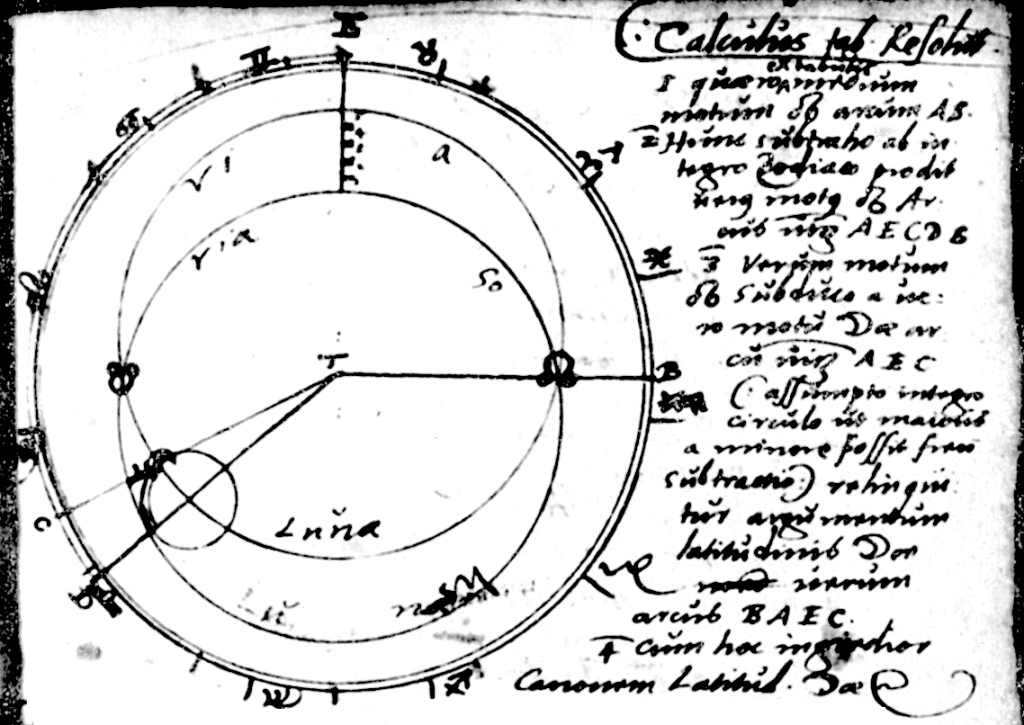
Even after the heliocentric vision of the World was presented, the conviction of perfectly circular orbits was not abandoned, here a drawing trying to explain the elliptic orbit of the moon (Luna) around the Earth (T) with three epicycles. Calculations according to Schöner’s Tabulae resolutae and Reinhold’s Prutenicae Tabulae in lecture notes from 1569

The difference with all the previous scholars—after Copernicus’s posthumous publication—proposing that the Earth was not static, was that the public at the time was much more accepting of the revolution of the Earth thought. A thought that would be revolutionary!

Revolution, at the time, had the meaning that Copernicus used in his title: simply the spinning around of the celestial bodies—how they revolved around the Sun. Revolved, revoluted, revolution. It was a physical description, like that of the revolutions or cycles of an engine, or as one famous revolutions podcaster puts it, “coming full circle”, just to come back to the beginning. Revolution did have, on rare occasions, the meaning of change prior to Copernicus’s work. However, the acceptance of heliocentric theory by the public of the time. It was so disruptive to the mindset of the age, overturning millennia of knowledge and worldview—so Earth-shattering (pun intended)—that the first main word of the work itself, revolutionibus, was adapted less than a century later to mean the overthrow of a political system (the Glorious Revolution in Britain). When transferring the physical meaning to the political one, revolution meant “a circular process under which an old system of values is restored to its original position, with England’s supposed ‘ancient constitution’ being reasserted, rather than formed anew”. At that point the use of the word was far form the meaning that it has now, as a radical new direction, or changing of course of what was before. Soon after, however, the word gained the modern concept of revolution, as used for the French one, which probably someone has heard about. Now revolution is more widely understood as the shattering of a previous political, social, technological—or otherwise—system, and the establishment of a new one: the Glorious Revolution, French Revolution, Industrial Revolution, Agrarian Revolution, Sexual Revolution…

It could be that the people at the time—after the Earth had been kicked aside, given rotation, put in orbit around the Sun, and the stars made still—experienced a mental shift so profound that it allowed for a reshuffling of many pre-existing mentalities. Maybe it can be compared to the shattering effect, almost a rite of passage, that many children in the Western world experience when they realise that Santa Claus is not a real being, but a construct created by society to make them believe that the bringer of presents is this exotic figure from faraway lands, and not their parents or families. For the child, it is already a big impact—and if you experienced that, you probably remember the moment, even if it was decades ago. Then imagine if instead of just one child at a time, it were an entire society realising, more or less simultaneously (within a generation), that the reality they had so strongly believed to be true, no longer was. That is what the so-called Copernican Revolution brought to European thought in the 16th century: a collective, mind-shattering effect. We, as humans, have been toying with these moments ever since. But more about that later.

In fact, the public that was more open to these ideas was also in the midst of another revolutionary movement, which at the time was called a protest, for lack of a better word: Protestantism. If the world, the solar system, the Universe, the Cosmos, was not as the Church claimed—with extra continents unaccounted for, the Earth in motion, and stars being other suns, perhaps with other Earths—then the Church became open to protest and reform. And if protest and reform were possible, then the acceptance of truly exotic ideas—like the Earth revolving—became easier in a society already undergoing profound transitions. In fact, different solar system models were readily adopted by Tycho Brahe and Johannes Kepler, Danish and German astronomers sponsored by Protestant-friendly kings. Meanwhile, Latin astronomers such as Galileo Galilei and Giordano Bruno had major conflicts with the Catholic Church in Northern Italy—Galileo famously tried, Bruno burned at the stake. Bruno’s seven-year trial and sentence to be burned alive was not specifically for his belief that the stars in the sky were other distant suns orbited by other planets, but also because of his rejection of most Catholic doctrines.

The difference between Copernicus in the 16th century and all those who proposed alternative cosmological systems before might be that society was more open to new ideas because of empirical slaps in the face—steadily, repeatedly, forcefully. First, sailors and their investors realised that direct observations could actually shift reality—such as the discovery of a continent, accurate measurement of latitudes and longitudes, and the real size of the Earth’s circumference. Second, astronomers and their sponsors (who were often astrologers for European courts—better predictions meant better horoscopes; the zodiac pays for your smartphone, if you think about it) found that when your health or the outcome of a war depends on the conjunction of Saturn and Jupiter, and your astronomer looks through a telescope and tells you that these planets have rings and moons orbiting them, you might predict better when to wage your next war. Third, traders could more precisely calculate profits or invest in new products—like new dyes and pigments (e.g. scarlet), or learning how to plant species such as pepper, potatoes, tomatoes, tobacco, coconuts, sugar cane, among others, across the world. Actual measurements began to overturn established doctrines one after another; these facts reinforced the critiques of the old system and laid the foundation for an alternative system of establishing knowledge. The Scientific Revolution went hand in hand with the development of better instruments and measurements that define the modern world we experience today.

It was equally important that these new ideas travelled and multiplied faster than ever before. On one hand, naval interconnectivity regularly reached all continents and the major inhabited landmasses of the planet. From there, peoples—willingly or unwillingly—became part of a shared system of exchange, a process that continues today, where nearly every human being is regularly connected to the rest of the world in one form or another. Our present hyperconnected world is extending the reach and frequency of connection to ever more remote places. On the other hand, the printing press allowed for the multiplication of ideas at a rate faster than authorities could suppress them. Even if the works of figures like Copernicus or Bruno were censored, confiscated, destroyed, or burned, it was much more likely that one copy would escape, be read, and be copied again. Before the printing press, Protestant ideas—like those of the Hussites in the 15th century—did not spread far beyond their place of origin (e.g. Bohemia). Later, Prague—with its famous astronomical clock—would host Brahe and Kepler. On the other end of the chain, at the point of reception, Spanish missionaries actively protected indigenous languages (while simultaneously suppressing their cultures) in regions such as Mesoamerica, the Andes, and the Philippines, to prevent indigenous peoples from being exposed to “dangerous” Protestant, Enlightenment, or revolutionary ideas. To this day, these regions preserve some of their linguistic diversity and remain heavily Catholic, with the Philippines being the only nation (alongside the Vatican) that does not permit divorce.

Our hyperconnected and idea-copying world is the one that gave birth to the concept of humanity—a “humanity” that can now begin to ask itself what it wants to do, now that we have the means to communicate with one another, and the resources (or energy levels) to invest a fraction of that energy in specific goals. But before asking that question, we first need to understand the mechanisms by which a hyperconnected people is able to pose it: which networks are activated, in which language communication occurs, with whom that exchange is implemented, and what actions can—or cannot—be taken. What is the agency?

Curiously, one of the early adopters of Copernicus’s thesis was Thomas Digges, who removed the need for the sphere of fixed stars. He proposed the existence of distant stars scattered throughout the Universe. This led him to raise the paradox of the dark sky: in an infinite Universe filled with stars, the sky should look like the surface of the Sun, because in every direction there should be at least one star. Since the sky is black, the Universe cannot be infinite. With that in mind, the Copernican Revolution—which displaced us from the centre of the Universe—is still not complete. It is geographical, but not temporal. Heliocentrism kicked the Earth and its peoples out of the centre of space, but the dark sky placed us in a special time—a time when we can still see the horizon of the visible Universe. Now we are in another special time—the time when humanity is conceptualised. The time to ask: what does humanity want?

Previous

Next

From the neighbours to the oceans

Olía a orines de mico. 'Así huelen todos los europeos, sobre todo en verano', nos dijo mi padre. 'Es el olor de la civilización'.
She smelled as money piss, that the smell of all Europeans, specially in summer" our father told us "that is the smell of civilization"
Gabriel García Márquez, Doce Cuentos Peregrinos


With the previous examples of failed connections, we can see the limits of the system presented earlier—just linking neighbours allows goods to flow only as far as they can be afforded.

The key point we will focus on now—and simplifying immensely complex human relations—is cost versus affordability: who is able to establish and maintain long-distance links that are worth the effort, over long periods of time?

To answer that, we will skip through 320,000 years of history, from the “first hints of exchange” to the onset of globalisation. I will place the beginning of our current globalisation trend at the breakdown of the ocean navigation barrier, accomplished by Western Europeans in the 15th and 16th centuries. In between these two time points—separated by more than 300,000 years—there is the accumulation of regional innovations, the constitution and entrenchment of increasingly diverse networks and hierarchies, which expanded and intensified the use of resources and energy. These “merely” 300,000 years have been widely studied elsewhere, and the reader may be familiar with the traditional “linear” narrative: from hunter-gatherers to agriculturalists, to city-states, to kingdoms, to empires, to nation-states. This image has been widely discredited, as the previous section shows, with many failures and non-linear trends. It has also been demonstrated repeatedly that no group is inherently more “advanced” than another. What people do exceptionally well is adapt to their environments—and the simpler the environment, the more efficient they tend to become. However, across these 300,000 years, there is an unmistakable increase in the scale of connectivity. This reflects episodes of creation and stabilisation of ever more distant networks, as seen in the previous section. These serendipitous mechanisms anchor larger-scale connections and reinforce otherwise fragile or unaffordable links.

So, if you will pardon me for glossing over 300,000 years of history, in the next section I will focus on the integration of all these networks into one worldwide system of connectivity—an unprecedented moment in human history—which leads us to the main question of these writings.

We all know the story of how European societies reached the shores of the Americas, changing the map of the world forever—quite literally, by creating modern mappae mundi and placing Europe at the centre. What you might be less familiar with is why that happened—why did Columbus sail west at that particular time?

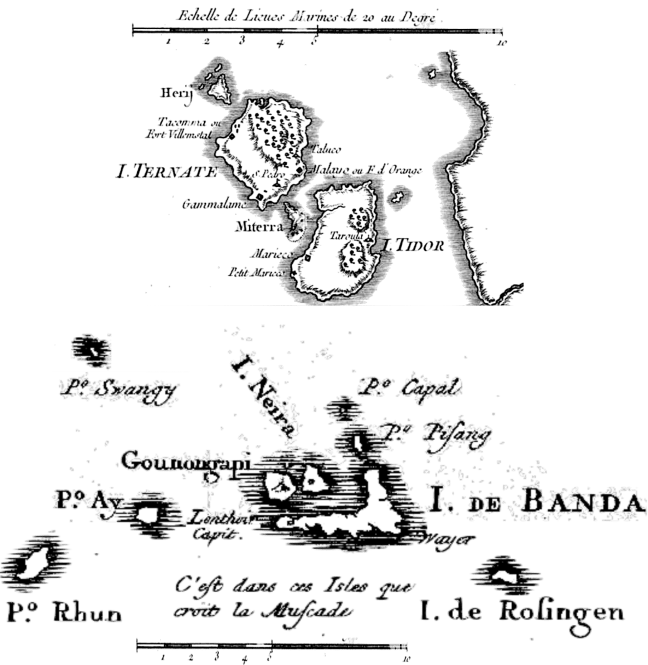
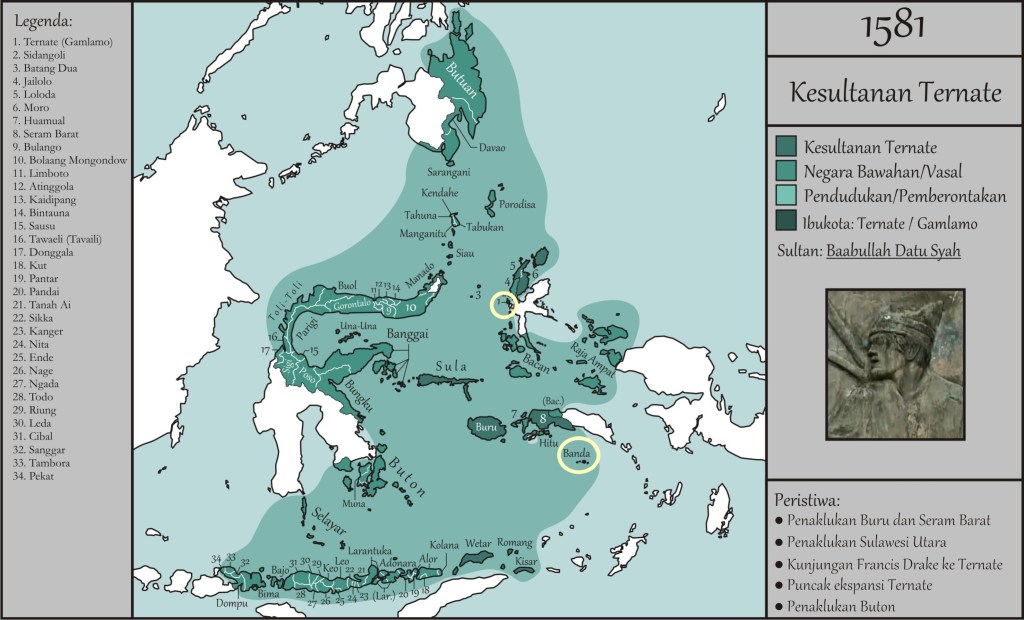
Starting with cost versus affordability, we first needed something of high cost—in this case, we can focus on the spice trade. Specifically, the costliest spices were cloves and nutmeg (plus mace—the red aril of the nutmeg seed). Unlike silk, pepper, cinnamon, and ginger (other highly valued goods that travelled long distances), in the 15th century, nutmeg and cloves could only be found in two very small archipelagos the reader may be unfamiliar with. These are Tidore and Ternate for cloves, and the Banda Islands for nutmeg and mace. Today, they are part of Indonesia, in the Maluku Islands area. These spices were highly aromatic and highly valued in European markets, where they arrived in refined forms such as oleoresins, butter, essential oils, and powders. For Europeans, it was impossible to know the exact origin of these spices—some even thought they were of mineral origin. They did indeed come from faraway lands, often erroneously attributed to India, which was a genuine source of cinnamon and pepper. These species had a high cost relative to their volume and therefore represented a strong incentive to bridge the distance between Western Europe and India. In fact, these very spices were the reason Western Europeans—starting with Portugal and Castile—eventually bridged that 14,000-kilometre gap.

But why were these spices so costly, and why did people at the opposite end of the Eurasian continent want them so badly? Nutmeg and cloves had many uses. You may be familiar with their use in recipes—they did enhance the taste of food—but even today, with their lower price, ever-present in European cuisine, unlike other ingredients like tomatoes or potatoes, not present before the European expansion over the world. Another major use of these species was in perfumes. By the 15th century, European hygienic practices had changed significantly. In the 14th century, public baths were common throughout Europe, as it is quite typical for human beings across cultures to enjoy being clean and having clean people around them. However, the Black Death waves of the 14th century caused many bathhouses to close. Though some reopened, European aristocracy had, by then, begun adopting new fashions—such as undergarments and tight-fitting tailoring—which, in turn, created new ways to “trap the body’s evacuations in a layer above the skin”. At the same time, certain strands of the Catholic Church increasingly viewed bathing, nudity, and hygiene as contrary to chastity.

In the Iberian Peninsula, the Christian aristocracy—especially in the north—was gradually reclaiming land from Muslim rulers. Bathing and hygiene were (and still are) highly valued cultural practices in the Muslim world, and often also served as forms of social interaction. Therefore, part of the Christian Iberian aristocracy cemented its identity by rejecting cultural practices closely associated with their Muslim subjects, neighbours, and slaves. All of this led parts of European and Iberian elites to adopt habits that amplified body odour: less bathing, less washing, and tighter clothing. In warmer climates, this likely made body odours more intense. Consequently, rare, expensive, highly perfumed spices could help mask these natural human emissions—while also signalling wealth and status. This helps explain why the Iberian aristocracy, in particular, was motivated to fund direct expeditions to distant lands.

Ironically, Europeans not only brought diseases to the Americas, but also carried American diseases back to the continent. The most infamous of these was syphilis. Once syphilis began ravaging Europe, bathhouses once again closed—this time because baths were associated with libertine behaviour, and syphilis was primarily sexually transmitted. Additionally, beliefs grew that disease could be carried through water, and that open pores (caused by bathing) allowed sickness to enter the body. Within a few decades, bathing had largely disappeared from European daily life. Few households had running water, so opportunities to bathe were almost non-existent. Coupled with aristocratic customs and religious identity-making, this gave rise to figures like Louis XIV, who famously claimed to have bathed only twice in his life.

This cultural environment turned humble botanical species like nutmeg and cloves into commodities capable of financing multi-year expeditions—risky ventures where many ships and sailors might be lost. In the case of the Magellan expedition, only one of five ships completed the circumnavigation—without Magellan himself—but it returned so full of spices (including pepper) that it paid off the entire venture and paved the way for Spanish colonisation of the Philippines. From the association with perfume and the abandonment of bathing, we derive the enduring stereotype that Europeans don’t smell especially pleasant—particularly in summer. That this has anything to do with “civilisation” is now a running joke used by formerly colonised peoples to poke fun at their colonisers—whose domination was often justified on the basis of “cleanliness”.

Let’s now focus on the affordability of finding an alternative route to the spice lands—ultimately disrupting existing sea and overland trade networks by bypassing dozens of intermediaries. The process of making that circumvention possible was itself the result of 300,000 years of innovation, technological development, and skill acquisition. Crucially, as with the Austronesians and Vikings, it was the development of highly reliable navigational skills that enabled this. By the 15th century, Mediterranean and Atlantic ships were sturdy and autonomous enough, and the Iberian Peninsula had become a melting pot of maritime knowledge, making it affordable to attempt reaching India via new routes that bypassed the Levant.

Columbus believed his own (incorrect) computation of the Earth’s diameter—around a third smaller than it actually is—and convinced the Castilian crown to fund his westward voyage to reach “India”. His proposed route was reckless and misguided. But, as previously mentioned, there were hints that land existed across the Atlantic—not so far away. For instance, the Portuguese were aware of pau-brasil (or firewood) drifting from the west. Columbus, Castile, and luck all converged when they stumbled upon the Americas.

For the Portuguese, finding an alternative route to the spice islands was far less reckless. It took them over a century to circumnavigate Africa, learning gradually and establishing trading posts and outposts along the eastern African coast. Each expedition went a little further. By 1488, they reached the Cape of Storms (later the Cape of Good Hope), and in 1497, Vasco da Gama became the first European to reach India by sea—just five years after Columbus’s voyage.

At that point, for the first time in history, humans had the means to connect all the major landmasses in a way that was both affordable and repeatable. Just 20 years later (1519–1522), the first circumnavigation of the world was completed. For the first time, a human could potentially reach the shores of almost any land within a few years.

In the 15th century, the world changed dramatically due to the technologies and navigational expertise accumulated in the Western world over millennia—coupled with the high cost and demand for spices in Iberia. Within a few decades, the world transitioned from having vast disconnected landmasses to a planet where the first movers—Western Europeans—gained the upper hand. These few kingdoms, and later much of Europe, changed the existing order, wiping out tens of millions of people and cultures in the process, and subjugating nearly every major power on the planet.

That change forever transformed both ends of the lands reached by the Iberians. In the Americas, in less than half a century, a few thousand Europeans—mainly Castilians—overthrew two massive empires ruling tens of millions. In the East, in present-day Malaysia, the Portuguese seized Malacca in 1511 with just 18 ships—then the commercial hub of East Asia. It was the furthest territorial conquest in human history up to that time. To grasp its magnitude: imagine a fleet of advanced vehicles from Malaysia travelling 20,000 km to conquer Rotterdam—Europe’s major transport hub—and controlling it for centuries thereafter. This event had immense geopolitical implications, shifting the balance across Eurasia and reshaping global self-understanding until the present day.

Control of far-flung lands, trade routes, and global connectivity was taken over by small elites from a few North Atlantic coasts. These elites, supported by large home populations, had more resilience than earlier seafarers like the Vikings or Austronesians. Those earlier explorers made equally bold journeys and had the skills and knowledge—but little margin for failure and limited rewards. In contrast, the North Atlantic nations had the means, knowledge, and desire. They could afford the long-distance connection, and more importantly, its coercive and commercial control.

Pandemics, repression, and colonisation enabled long-term European settlement. As Eduardo Galeano famously wrote: “They came with the Bible and we had the land; we blinked, and now we have the Bible and they have the land.”

Previous

Next

Fragile communication

The basic structure described in the previous section allowed inland communities to have access, for example, to seashells, despite the fact they might never have seen the ocean themselves. However, one may ask: how is it that the people of Papua were still trading with stone axes in the 20th century? Even more so if the reader knows that Papua might be the oldest place on the planet where agriculture was developed, with some estimates suggesting that root vegetables were cultivated at least 10,000 years ago—slightly earlier than the domestication of grains in the Fertile Crescent.

That is actually a question Yali, an exceptional politician from Papua, asked Jared Diamond in 1972 when he was conducting fieldwork there to study ornithology, including birds such as the bowerbird. The actual question was: “Why do you white people have so much cargo and bring it to Papua, but we natives have so little of our own cargo?”—summarised as: “Why do your people have so many things compared to us?” For Yali, cargo was the generic term for all the items Westerners had brought to Papua since World War II. He was, in fact, asking about the technological gap between the Westerners travelling there and the local people.

Diamond spent 30 years developing an answer, culminating in his book Guns, Germs and Steel. In it, he presents two main theses:

First, geographically, some populations had more access to natural resources to begin with, such as plants and animals that were easy to domesticate. For instance, in Papua, the largest domesticable animal was the pig, while in Eurasia and Africa, cattle have symbolised wealth and power for generations. Papua also had no access to grain, while civilisations like the Mayas domesticated maize. Despite not having large animals, that was sufficient to develop a thriving and complex civilisation with many types of “cargo”. Additionally, domestic animals made human populations more exposed to germs, which they gradually adapted to. However, when these naturally engineered biological weapons encountered previously isolated populations, they wiped out 90 to 99% of the locals in less than a century. The pigs kept by Papuans may have spared them a similar fate to that of the Americas and the distant Pacific Islands.

The second thesis is that, due to geography, some areas of the world were better connected than others. Again, Diamond argued that it was relatively easy for trade networks to span Eurasia and Africa, with goods, ideas, domesticated foods, technologies, and ideologies spreading far in just a few generations. This was especially true for crops; species domesticated in one location often had suitable growing conditions across the climate zones from the Iberian Peninsula to Japan. This did not occur in other regions, such as the Americas, where many similar technologies had to be independently developed by both the Mesoamerican and Andean peoples. Their centres of domestication were only a few thousand kilometres apart. However, both groups had to independently domesticate crops like maize, cotton, and beans. Moreover, useful animals like the llama and crops like the potato, domesticated in the Andes, never reached the Mayas, while the writing system developed by the Mayas never made it to the Andes. According to Diamond, these gaps are due to difficult and diverse geographies. There is no easy land route connecting these American regions—dense tropical jungles, vast swamps, and rugged mountain ranges with dramatically different climates hinder the spread of domesticated species. Even today, in the 21st century, there is no road connecting these two areas. The Darién region, on the border between Panama and Colombia, remains impassable by vehicle, making it the only place on the continent without a road from north to south.

With these two main theses and strong reasoning, Diamond makes his case to answer Yali’s question. According to him, Papua did not have the species or connections that benefitted Europeans upon arrival. Europeans were simply lucky and thus came to dominate the known world. That left Papuans with a relatively limited set of food sources and restricted access to technologies developed elsewhere.

This view has been widely debated and does not fully account for the timing of major expansionist events. Still, the picture Diamond paints holds reasonably well until the 16th–17th centuries and the largest biological genocide in human history. Afterwards, the situation becomes more nuanced, as the connectivity of the world began to increase exponentially—but we will explore this in another chapter.

The limitation on access to technologies and information for the Papuans is related to our earlier examples of basic trading networks. These can only extend as far as humans can reliably reach each other at a more or less consistent pace. If mountains, oceans, and jungles must be traversed, the task may be too dangerous or uncertain to attempt. In such cases, communities at each end remain isolated. On the other hand, if obstacles are surmountable and there is a desire to connect, these networks can transform the well-being of participants. This is the case with the Eurasian and Indian Ocean trade networks. These spanned over 2,000 years, bringing silk, gunpowder, spices, and paper westward, and silver and wool eastward. Or take the so-called Columbian Exchange, where Europe plundered the immense wealth of the Americas, borrowed some botanical knowledge and cultural inspirations, and in turn colonised and Christianised native populations, erasing or warping their lands, traditions, institutions, and knowledge systems.

Returning to our earlier examples and thought experiments, these scenarios depicted only weakly connected communities. For instance, fragmented travel and exchange networks were the norm in the Papuan highlands. Although goods like axes or shells could travel freely, people could not. Residents of a group traditionally could not travel far beyond their territories or their closest trading partners. Unannounced or long-distance travel posed great risks—aggression, even death—making lone long-distance trade virtually non-existent. Commerce beyond immediate neighbours was carried out by intermediaries. Each of these intermediaries usually took a cut or incurred costs, inflating the final price of the item. This inflation could only go so far—only items of high value or buyers with considerable resources could justify the costs. This effectively limited how far an object could travel and placed natural boundaries on the kind of connection network described in the previous section. This is comparable today to drug or wildlife trafficking, where lightweight, high-value items traverse vast regulatory and law enforcement hurdles over thousands of kilometres.

Conversely, if exchange links are too weak or complex, they may collapse shortly after forming—before significant transfers of goods, ideas, or technologies can occur. This has happened countless times across different regions and eras. Think of a group of friends that never fully bonds, or a business that cannot reach its customers. Let’s consider some more striking historical examples. At least twice before Columbus, people from faraway regions reached the Americas, but failed to establish lasting presence or strong cultural exchange.

You might be thinking of one such example: the Vikings from Scandinavia in the 11th century. They arrived from sparsely populated Greenland, but their colonisation efforts in Vinland (modern-day North America) failed. Without delving too deeply into why, it’s clear they had the means to reach distant shores and found good land, but not much more. The distances were vast, the local resources were not especially valuable, the natives were not always welcoming—possibly becoming infected or hostile—and the Vikings had limited capacity for sustained support. Climate and political factors played a role, but ultimately the venture proved too costly for too little return.

The second example is even more epic and deserves wider recognition: the Polynesian crossing of the Pacific Ocean to reach the coast of South America. Sadly, we lack written records—like the Vinland Sagas—or significant archaeological evidence. But through genetic, linguistic, and species transfer evidence, we know that about 800 years ago, seafarers from the Polynesian islands reached South America. For context, that’s more than twice the distance Columbus travelled—and his crew believed land awaited. It’s also more than three times the longest Viking sea crossing to reach the Americas. The Polynesians had no clear reason to expect a continent ahead, yet they sailed into the unknown.

Imagine being in a boat no more than 30 metres long and about one metre wide, possibly connected to another boat as a catamaran. This platform allowed a few dozen people to bring animals, water, and supplies across the vast ocean. Some examples of these vessels—such as Druas in Fiji—could carry more than 200 people. Now imagine that your only known geography was a scattering of islands, and you did not know where or if more land existed. Countless such expeditions must have failed before one succeeded in making the 6,000 km journey—until finally, they found an enormous continent. Then they had to sail back, locating tiny home islands amid the ocean after weeks at sea. The adventure, mindset, skill, and ultimate success—after who knows how many failures—is one of the most remarkable, untold stories of human exploration.

This is not comparable with the Viking or Iberian voyages across the Atlantic. Those sailors knew something awaited beyond. The Vikings had seen driftwood from the west wash ashore in Greenland. Columbus, though mistaken in his estimation of the world’s size, expected land. The Portuguese, too, found driftwood in the newly colonised Cape Verde islands—Paubrasilia, or “firewood”, due to its red colour—which gave Brazil its name. All these peoples had reasons to expect land in the west.

We know Polynesians completed this journey because they brought coconuts and chickens with them—and brought back sweet potatoes, which later spread across the Pacific islands as a staple crop supporting larger populations. They also had children with local peoples, leaving genes still found today in Mesoamerican and Mapuche populations. There is even evidence of American ancestry in Polynesian populations.

This widespread gene flow shows that Polynesians not only crossed the ocean more than once but established contact across a broad swathe of the Pacific coast of the Americas. Unfortunately, the contact was not maintained over time, and no further instances of intermarriage are evident after 1300 CE. Furthermore, Polynesian navigational technology was not passed on to the local peoples. Native Americans would have greatly benefitted from such skills—especially considering the lack of transport links between North and South America even today.

We can speculate why the contact faded and the technology was not adopted—unlike sweet potatoes. In a simplified view, the connection was likely too distant and involved too few people to become meaningful. Perhaps the Marquesas Islands had only a few hundred inhabitants at the time, while the continent had millions and two sophisticated civilisations that saw little value in these distant seafarers. Whatever the case, the exchange was short-lived and limited.

More complex reasons could also explain the lack of adoption. For instance, Austronesian sailors from Makassar routinely travelled to the northeast coast of present-day Australia—around 3,000 km away—to harvest sea cucumbers for the Chinese market. This trade continued for centuries, ending only in the 20th century due to Australian colonial restrictions. Although contact endured, no lasting colonies were established, and the mixed communities that emerged never thrived. Some wives were exchanged, and a basic trade language developed, but local people only adopted simple technologies such as dugout canoes and shovel-nosed spears. More advanced knowledge may not have been shared—or perhaps locals weren’t interested.

Similar patterns emerged with Austronesian expansion to Madagascar and Taiwan. Though close to the mainland, these regions show little lasting influence on nearby East Africa or Southeast Asia. This suggests that Austronesians successfully expanded to uninhabited or sparsely populated areas (e.g. Pacific islands, Madagascar), but failed to make inroads in already densely populated regions like Asia, Africa, Papua, or the Americas.

In Australia’s case, the issue might have been resource scarcity. Northern Australia may not have offered enough to entice settlers. Local people may not have seen value in adopting agriculture or foreign technologies. Additionally, complex knowledge like seafaring is often guarded. Sailing is more than boat-building—it involves reading stars, winds, currents, and more. Mastery takes time, risk, and community effort. If local life was already sufficient, why go to the trouble?

Moreover, the fact that sea cucumber expeditions were male-dominated may have prevented the creation of Austronesian communities in Australia.

A good related example, but limited to technology and infrastructure, is the first transatlantic telegram cable. It was build in 1856 and it only worked poorly for 3 weeks until it completely failed. It took 15 years to build the successful 2nd cable. In this case a combination of affordability, technological improvement and willingness to communicate more instantly two continents made the 2nd attempt stuck. Now we have tens of thousands of underwater cables connecting all continents to transfer high speed data. But we could imagine many scenarios in which after the first failed transatlantic cable, the trend did not continue.

From the cases outlined here, we can see how many different scenarios could limit cultural and technological exchange, creating a nuanced and often unpredictable picture. Establishing sustained connections across natural and cultural boundaries is a long, fragile process—often with little success on the first attempt.

Previous

Next

Exchange network stabilisation

Transparent Anthropocene. Image Credit: Globaia. https://globaia.org/geophanies. Creative Commons License. The image includes Global Roads, Global Human Impacts on Marine Ecosystems, Global Urban Footprint, Open Flights, Open Street Map, and Submarine Cables.

Going back to your encounter with a stranger in East Africa, the stranger might point to one especially appealing shell garment that you are wearing. You might decide to gift it away to create a bond, and it might not be a high price to pay because, back home, there are plenty more. Therefore, you might give away more spares, as we have seen Columbus did with cloth. To reciprocate, the stranger might give some of the ore. And with that, you might part ways, the only thing remaining from the encounter being an exchange or gifting of goods. The other person will go back to her or his community and show off the newly acquired item. Between curiosity and desire, more members of the same group might crave more of such objects. Then they might go in the general direction where the first object was found. Or, alternatively, the initial individual will go back to gather more. The same can happen with you and your home group returning to the meeting point.

However it is, after your exchange with the stranger, a link has already been established between distant groups. And maybe, after the first initial gift-giving from you or the others, a more constant exchange can be produced. Initially, you do not know where to obtain their shells, nor do they know where to obtain your ore—only that you know how to obtain it from each other. They actually get the shells not from the source but from another group. And these from another, and so on, until getting to the coast. It might be more efficient to continue doing so than to start the long journey, hundreds of kilometres away into the unknown, to get to the sea and obtain the sea shells directly. Same with the ore, food, spices or other objects. It is more valuable to keep good relations with your neighbours, if there is something to gain, than going solo.

With that thought experiment, we see how a basic exchange network and collaboration is established. Such a network, however, does not seem to be sustainable, as once the desire and rarity of an item are gone, the need for the network might erode.

With more useful items beyond rarity, like tools, that network and cooperation might be strengthened. This has often happened with specialised tool-making communities. For example, in the hinterlands of Papua, in the Wahgi Valley, existed the Tuman quarries, with stones of sufficient quality to make high-quality stone axes. These stones were not found in many other places in the highlands of Papua, and the quarries and the axe-making process were solely controlled by the Tungei people. They were excellent stone-axe makers, an activity to which they dedicated most of their time. That produced a high-quality product that they exchanged with people all around the region. The trade was not only in other goods, but also in dedicated rituals, respect, holding them in high esteem, and providing women to the Tungei community. They had access to the stones and the means to extract them in an efficient communal way. Every few years, they quarried as a whole community in expeditions that lasted for months. They also had access to the main source, so they had a higher number of people with the knowledge and skills on how to prepare them—both giving shape to the blade and hafting the T-shaped handle. With that knowledge, they were able to trade for goods far beyond their immediate neighbourhood.

However, the main exchange of the stone axes was for marriage. In their area, most marriages were arranged through a complex exchange of goods between the original community of the women and the receiving one. Sea shells, ropes, pigs, feathers of the birds of paradise, and salt were used in the exchange. But in the case of the Tungei, the stone axes were used profusely to buy wives, which allowed them to be relatively wealthy, because they were the source of the stones. They would be the petrol producers of the highlands! More than two-thirds of the marriages of the Tungei were with women from external communities with whom they traded. Interestingly, they did not trade with faraway groups like the coastal ones, but they did receive, through many intermediaries, the shells coming from there.

This dominion of the trading network of the Tuman quarries collapsed when patrols from the colonial era, and later the Papua New Guinea state, routinely accessed the area and brought with them steel axes and plenty of seashells, which they gifted to the locals or traded in large quantities. Needless to say, steel axes were much more appreciated. They were more efficient—cutting one tree in a day instead of several days with the stone ones—lasted longer, and were sharper, allowing them to be used for more refined work. With the European arrival of trade goods, the marriage pattern of the Tungei swiftly changed, with only half of brides being from exogenous communities. This reflects economic changes resulting from the loss of the axe trade.

On the other hand, other Papuan communities like the Goroka still traded axes well after the steel axes and pearl shells had saturated their communities. That is because they had a specialised workforce that was in charge of mining and crafting the Dom Gaima “bride axes”—large ceremonial stone axes so big and elaborate that they were crafted in a non-functional way. They were used for bride price and display purposes, and so were a sign of prestige.

In conclusion, the thought experiments and examples show how trade, commerce, needs, rarity, crafting, prestige, and aesthetically attractive items, plus basic communication, allow the establishment of rudimentary networks that extended much further than the basic interactions a community would have with its neighbours. The basic desire, need, and curiosity for what lies beyond might have created the roots for collaborative action.

But beyond the seeds of networks, there is the establishment of strong bonds. There are many ways in which these can be maintained, with one basic mechanism being intergroup marriages. Once the network and the trust between neighbouring groups are created, exogenous marriages can follow. In fact, this is quite common in nature, where many social animals have one group member who, after reaching maturity, travels, mingles, and often reproduces in a new group. Curiously, in the case of our closest relatives—the chimpanzees—females tend to migrate to a new group as teenagers. For bonobos, it is also usually the case that females migrate, though it is not rare for males to do so, while females from high-ranking matriarchs remain in their natal group. This exogenous mating and breeding is quite common in humans. The difference lies in the diversity of strategies. Exogenous reproduction is not always the case, and many human groups display a whole spectrum of migration patterns: from only females, to only males, to a mix, or exclusively endogamous systems. On top of that, there are complex kinship strategies regarding whom one can marry, from clan systems spanning hundreds of kilometres to, on the contrary, first-cousin marriages. Contrary to popular belief, first-cousin marriages are among the most genetically fertile unions. So keep in mind: if you want to have many children, have a lot of unprotected intercourse with one of your first cousins—like Darwin did.

Another way of strengthening networks is that of debt or gift exchanges. Many academics point out that one way to keep social relations alive, strong, and reciprocal is to build them upon accountability in the form of an unpaid debt or the need to return gifts. That happens continuously in our daily lives—when friends or family do us a favour, we “feel indebted” to them. The debt is not precisely measured (i.e., there is no numerical value assigned) and might never be returned in the same exact form—it might even be rejected by the giver—but it can be given to somebody else, like when someone pays for your dinner and you later do the same for someone else to keep the balance of the world. A good example of this is the Toraja, in central Sulawesi. Their current culture invests massively in the funerals of their people. When a family member dies, the body is kept at home for years and considered still a member of the family, even being served meals daily. It is kept until the extended family can secure enough funds to hold a massive funeral—one anecdote told to me was of a family that kept the body for 20 years before finally holding the funeral. Once the body is placed in a permanent tomb—which can be a sarcophagus in the rock, hanging on cliffs, in caves, or in a grain storage-like structure—the person is considered to be truly dead. Despite that, they parade many of the mummies every year over Christmas, dressing them in new clothes, jewellery, even sunglasses. At the funerals, guests are given large gifts. However, these are not “debt-free” gifts. Each gift is recorded, along with which family it was given to, with the expectation that when invited to a funeral by that family, the gift-givers will be given something of equal or similar value—or they will lose face. One young person I spoke with there told me that “Torajas are indebted from the womb of their mothers”. Debt is inherited if you belong to a specific family and culture.

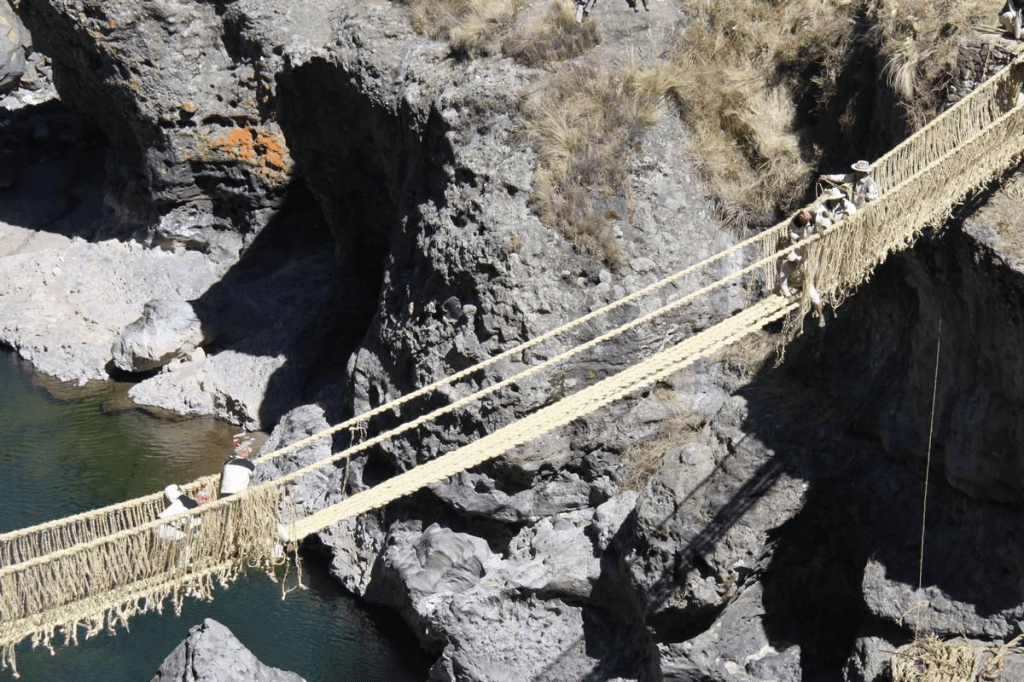
Beyond marriages and debt, infrastructure is a way to keep long-distance connections over generations and across large areas. For example, roads might extend much further than the migration routes a group would typically follow, and information—in the form of basic agreed signs and trade-related language—would travel along these early infrastructures. Once infrastructure is created, it might stabilise a distant connection, though it comes at a cost. Maintenance can be expensive. Bridges must be built and maintained by the people on both sides of a river—or rebuilt repeatedly, like the Q’ichwa Chaka rope bridge rebuilt every year using a species of grass, despite a modern bridge being nearby. One theory posits that this is the future of humanity: the maintenance of an ever-expanding technological sphere—or technosphere (which we will explore further in the future).

Once the boundary of vicinity is broken, using this array of methods, connection might expand unhindered to take over the planet in a universal way. But, as we have seen, maintaining all of this is costly, and motivation may be lacking. Why should I learn seven different languages? Why should I tire myself travelling to another village with different food and unfamiliar people? Why should I marry into another community where none of my loved ones can protect me if things go sour? Why should I be indebted to traditions and infrastructure before I’m even born? Many of these costs may have prevented communication from expanding and stabilising any faster than it has—and it hasn’t happened until relatively recently in part due to major geographic obstacles like oceans, swamps, and mountain ranges, as well as cultural taboos and long, expensive trade networks. But if those obstacles didn’t exist, there would be nothing stopping a valued good or service—existing only in one place—from eventually reaching every other part of the world, along with all the communication needed to sustain that. This was exemplified by species trade and related colonisation— but we’ll talk about that in the next section.

Previous

Next

Foreword

In this work, you will not find the answer to this question. However, you should come to appreciate the beauty and uniqueness of the time in which we can ask it at all.

This work is not unlike the age-old philosophical questions: “Where do we come from?”, “Where are we going?”, and “Why are we here?” These questions have been asked countless times over generations, and you will not find their answers here. Instead, I aim to frame these timeless questions in the context of “humanity” as a new, emergent concept—one that, on the light I will be describing it, has never existed before in the history of our species at a Global scale.

I approach this inquiry from my particular background. I was raised in a Mediterranean, European cultural context, deeply influenced by Greco-Roman philosophy and state-building traditions, as well as by the values and narratives of the Abrahamic religions.

On top of that, my education has shaped my worldview and the sources of information I draw upon. I hold a bachelor’s degree in Physics and a PhD in Cosmology. My academic and professional pursuits have included projects in neuroscience, astrophysics, dynamical systems, perturbations, information theory, causality, human evolution, and the cultural dynamics of loss and survival. These areas of study form the framework on which the ideas in this text are based.

Moreover, within this “Western” perspective, I come from València, born into a Catalan-speaking family. Both of my grandfathers hailed from the same town in which I was born, Sagunt, and were Catalan-speaking. My grandmothers, however, emigrated to Sagunt in the 1940s, during the post-Civil War period, from the interior of València. They came from a region that had historically spoken Aragonese but had since transitioned to Castilian. Like many mixed families, my linguistic landscape is varied. My maternal grandmother did not adopt Catalan in the family environment, while my paternal grandmother did.

Economically, my grandparents’ livelihoods were tied to the land: farming, orange orchards and related industries, baking, and later neighborhood retail shops. Their social standing ranged from lower to upper-middle class.

Although I grew up in a predominantly Catholic society, my parents raised me as a free thinker. They were agnostic, and my natural inclination toward skepticism, empiricism, and atheism was both allowed and encouraged in my family and educational circles. Even my paternal grandmother, the most religious and spiritual person in my family, supported my questioning nature. Despite being a Christian believer, she was skeptical of the Catholic Church as an institution, often remarking, “Do what the Church says, not what the Church does.” My interactions with the Catholic Church were minimal, limited mostly to festivities and a brief period of religious education when I was six or seven years old to prepare for my first communion. Even then, my early atheism led me to openly express my doubts—sometimes at the cost of being made to face the wall for extended periods.

Politically, my parents aligned with left-leaning Catalan/Valencian nationalism, which advocates for self-determination within the historical boundaries of the former Kingdom of València. They moved away from the land and family businesses, pursued higher education, and worked in government positions—one in city hall taxation and the other as a school counselor and head teacher.

València itself is a land of historical significance, renowned for its fertile, irrigated grounds that date back centuries. It has supported industrial-level agricultural production, particularly of fruits like grapes and oranges.

Culturally, Valencian and Catalan traditions are distinct within the Iberian Peninsula. The peninsula is home to three states (Andorra, Spain, Portugal) and part of the United Kingdom (Gibraltar). Spain itself is a multilingual nation with four main languages—Euskara (Basque), Catalan/Valencian, Castilian (Spanish), and Galician/Portuguese—as well as several smaller, rapidly disappearing Romance languages like Aragonese and Asturian.

The history of València is one of successive cultural layers: Iberians, Celts, Phoenicians, Carthaginians, Greeks, Romans, Germanic tribes, Arabs, and Berbers. Catalans were the last colonisers, arriving in the 13th century to a land that had been predominantly Arab in culture. For centuries, the region was home to the three main Abrahamic religions: Judaism, Christianity, and Islam. However, under the Spanish monarchy, the Jewish and Muslim populations were expelled—the Jews in 1492 and the Muslims in 1609. In my hometown, Sagunt, it is estimated that Jews once constituted 20% of the population and Muslims 20-30%. Within three or four generations, nearly half of the town’s inhabitants were forced to leave their ancestral lands.

Those who remained faced strict scrutiny, forced conversion to Catholicism, and severe punishment for any violations of its practices. This era gave rise to the infamous Spanish Inquisition. My homeland, therefore, is one depleted of its historical religious and cultural diversity, with a language brought by colonisers and later persecuted. Despite centuries of suppression, our language endures, albeit in decline.

València is also known for its vibrant cultural traditions, such as the Falles de València, Fogueres d’Alacant, and Moros i Cristians d’Alcoi, correfocs, among many others. These festivities highlight the resilience and creativity of our people.

This framing is intended to underscore that, in a different sociocultural context, with different formative experiences and interests, the themes of this text could be entirely different. Humans are the only animals (as far as we know) capable of sitting under the stars and pondering the universe’s future—imagining what it might look like in 100, 1,000, or even a trillion years—and questioning whether “humans” will exist at all in such distant times. Remarkably, these thoughts inspire actions in the present.

Beyond these star-gazing, future-oriented humans, we have created something entirely new: the concept of “humanity.”

This text encourages the question of “humanity” to be explored by as many diverse perspectives as possible. Willingly or not, we are living in the age of “humanity”, the Anthropocene. We are no longer merely individuals or groups; we are now “humanity,” understood as a collective that seeks to include every individual of our species on equal terms under universal rules. These rules, of course, arise largely from the cultural context in which I was raised. Still, we must critically examine the limits and implications of this universal view.

This work is not about humans but about “humanity”: how it came to be, how it can “think,” and whether it, too, can look to the stars, recognise the beauty of this question, and act now in light of it.

Disclaimer <- Previous Next -> Preface

Disclaimer

In these texts, I attempt to answer the question: “What does humanity want?” I approach this from the perspective that, for the first time in human history, we have the means to ask ourselves this question and set aside a fraction of our resources to act upon an answer. However, I wish to emphasise that the ability to ask this question is neither inherently good nor bad—it simply is—and to be able to ask it represents a new phenomenon on our Planet.

I want to stress that asking it is not a sign of grandeur or having achieved something superior. It is not as though this represents a greater good we should aspire to, nor is it the only possible outcome for humanity, as if dictated by some kind of divine providence. There are countless other paths in which humans might never have arrived at this point. It is not a “manifest destiny”; it is simply the reality we find ourselves in at the moment.

For now I want to preemptively suspend moral judgement in order to assess the question itself and the possibilities it presents. From that moral suspension, we may be able to ask ourselves what we want to do, and with that awareness and consciousness, we can build upon this knowledge—both critically and appreciatively—of the state of the world in which we find ourselves.

That said, it is important to highlight that there are moral considerations attached to the decisions we make regarding what to do with the awareness of the question.

A significant part of the book is dedicated to analysing and investigating the routes that brought us to the point where we can ask this question. Some of these routes involve the destruction of many cultures; the extinction of global eco-cultural diversity; the growth of administrations and institutions that impose restrictive measures on their populations and others around the Globe; wars of conquest; the deaths, killings, and murders of millions of people, genocides; all the spectrum of suffering experienced by human beings, individually and collectively; the imposition of world-views in the ongoing ethnocide, the destruction of ways of life and world-views, languages, and traditions; the overwhelming dominance of a cultural might; abuse of power; the use of technology to subjugate other peoples, among others.

I want to make it unequivocally clear that I am not at all justifying or condoning these events, nor am I grateful for their occurrence because they allow us to ask the question posed in here. On the contrary, I strongly condemn the list above, and I would much prefer they had never happened. I would be happier if humanity did not possess these qualities and did not take these actions in the past. Nevertheless, we must acknowledge that these past acts are part of our path to the present, part of our ancestry and legacy, of our shadows. As the saying goes, those who fail to learn from history are condemned to repeat it. If the question behind these writings serves any purpose, it is to make us aware of that dark side and to help us decide whether it is acceptable in the present and in a possible future. I have stated my moral position here, but I recognise that it may not be shared by all.

On the other hand, if we indulge in “what if” scenarios of alternative histories, our World might look very different, and this question might not even arise. However, that is not the point. What matters is recognising that the items on the list of shadows are, by most accounts, considered terrible events, and yet they are also part of who we are and how we came to be. The lesson here is to learn how to act with this knowledge and awareness, much like young children learning to redirect and control their anger. We cannot deny our childhood and the ways it has shaped us, but we can learn to behave in a manner we consider appropriate for the times in which we live—with the extra resources, responsibilities, and nuances of adulthood.

Our current era presents a unique opportunity to explore the ways we can take action to avoid repeating the dark past—or, at the very least, to determine whether such an endeavour is possible or merely a pipe dream.

Overview <- Previous Next -> Foreword

Overview

What does humanity want?

In this work you will not find the answer to this question, but you should find realise of the beauty and unique time when we can ask it at all.

This work is no different than the old philosophical questions of “where we come form?” where are we going?” “And why are we here?”. These have been asked countless times over generations and you would not find the answer to them here. But I would just put these questions in the context of “humanity” as a new emergent concept that has never existed before in the history of our species.

I also do this questioning from my particular background. I have been raised in a Mediterranean, European cultural context, deeply immersed in Greco-roman philosophy and state building plus the influence of the Book or Aramaic religions.

On top of that my studies shape my information sources and world view. I studied a Bachelor in Physics, a PhD in cosmology, did projects in neuroscience, astrophysics, dynamical systems, perturbations, information theory, causality, human evolution and cultural loss and cultural survival. These lines of research are the framework in which I am basing the texts presented here.

Moreover, in that particular “western” view, I come from València, from a catalan speaking family where both of my grandfathers are from the same town I was born (Sagunt), both being Catalan speaking. Both of my grandmothers emigrated to my town in the 40s (in the psot civil-war period) with their families, coming from the interior of València, from a region that was previously Aragonese speaking and switched to Castilian. As with many other mixed families, my linguistic landscape is mixed. My maternal grandmother did not switch to Catalan in the family environment, while my paternal grandmother did. The main economical sources of my grandparents where linked to the land, as farmers, orange orchards and orange industry, bakery and later on neighbourhood retail shops. In general terms they where from lower to upper middle class range in their society at the time.

Although inside of a mainly Catholic society, I have been raised a free thinker, with agnostic parents. Since childhood I always have felt a natural inclination to skepticism, empiricist and atheism. All these inclinations where allowed or encouraged in my educational and family circles, even by my paternal grandmother, who is the most religious and spiritual person in my connections. Although a christian believer, she is not a devout practitioner and is quite skeptical of the institution of the Catholic Church. One of her sayings being “do what the church says, not what the church does”. I have had little interaction with the Catholic church structure, other than the festivities, and enforced learning program at 6-7 years old that was required to do a first “communion”. Even in these classes I have been able to express my early atheism, at the little price of being put to face the wall for extended periods of time.

My parents move within the left-leaning Catalan/Valencian nationalism, which pursues auto-determination by our people in particular, within the historical boundaries of the pervious Kingdom of València, and by historical cultural groups in general My parents shifted away from the land and businesses, got university education and worked mostly at government jobs (city hall taxes and school- high school counselor and head teacher). The land itself in Valencia is of high significance, is one of the most fertile irrigated grounds in the planet, with extensive irrigation channels dating back centuries and developing a industrial level production of fruits, mostly grapes and then oranges.

To expand a bit on my unique cultural background, Valencian and Catalan cultures are quite special inside the Iberian and Spanish context. There are 3 states in the peninsula (Andorra, Spain, Portugal), plus a small part of the United Kingdom (Gibraltar). As Spaniard passport holder, I have unrestricted access to the colonial lands outside the peninsula: the Canary Islands and Ceuta and Melilla.

There are still 4 main languages in the peninsula (Euskara/Bask, Catalan/Valencian, Castilian/Spanish, Galician/Portuguese) and at least 3 other latin languages that are rapidly disappearing or are quite in the minority (Aragonese, Bable/Asturanu, Occitan/Aranés).

Historically, we have layers of culture that most of us can trace to Iberians, Celtics, Phoenicians, Carthaginians, Greeks, Romans, Germans, Arabs and Berbers/Amazigh. And in particular catalans are the last colonisers of the Valencian land, which was predominately dominated by Arab culture by the time of the Catalan colonisation in the XIIIc.

For few centuries my land was the home of the three main Abrahamaic religions, Judaism, Christianism, and Islam. But, within the Spanish monarchy in the Iberian context, they outlawed the other two religions and expelled every family that was associated with the practices or ancestry of the Jewish or Islamic religions. The Jewish heritage peoples where expelled in 1492 and the muslim heritage peoples in 1609.

In particular, in the town I was born, it is estimated that jewish population peaked at about 20% of the town population before being expelled, and muslims where about 20-30% before being expelled. So within 3-4 generations almost half of the population of my town was kicked away from their ancestral lands. This could be seen archeologically in empty houses in the old Jewish quarters that where scarcely inhabited until the XX century.

The peoples remaining from these other religious and/or ethnic groups were under strict scrutiny. They were forced to adopt Christian Catholicism and they were heavily punished if they were found to violate the practices. That is where the infamous “Spanish Inquisition” comes from.

Therefore, I am from a land depleted form its historical religious and cultural diversity, from a cultural group who’s main language comes from colonisers to the north, and our language itself has been prosecuted in a more or less stringent way for the last few centuries. Yet, we still widely use it, even if it is in decline.

Valencia is also the home to a staggering number of highly visual and impactful cultural traditions and festivities along the territory, or at specific towns that are involved in a grandeur public display. Among others these are: Falles de Valencia; Fogueres d’Alacant; Tomantina de Bunyol; Moros i Cristians d’Alcoi; Correfocs (shared with Catalunya and Balearic islands); la Cordà de Paterna; Muxarangues d’Algemesí; Bous al carrer i Bous Embolats; Bous a la Mar de Dènia; el Misteri d’Elx; la Foguera de Canals; Gegants (Giants and big heads, also shared in many other places of the Iberian peninsula and Europe, especially France and Belgium); Carnivals, shared with most of the Catholic world; and the Holy Week parades (shared with most of Spain and Latin America), which in the case of Sagunt’s Holy Week, it seems to be among the oldest ones, with its origins placed in 1492 and associated with the converted Jews and textile workers.

This framing is intended to raise conscientiousness that in a different socio-cultural background, with different interests, worldviews, formative years, the topic of this text could take a completely different perspective. Humans are the only animal (that we know of) that can sit at night looking at the stars and start wondering how would be the universe in 100 years, 1000 years, 10.000 years, 100.000 years, 1.000.000 years, 1 billion years, 1 trillion years, and where we will be in that time, even there will be such a thing as “humans” then. Moreover, these thoughts would make these humans act NOW in certain ways. To illustrate this point, there is an exercise that is passed to philology students to communicate to people living tens of thousands years in the future to not enter radioactive waste dumpsters. Under this simple exercise there is the deep thought about caring about the future so far removed from us cultural that current communication would be mostly gone.

But beyond these thinking, star-dreaming, “nuclear waste” worried humans, we created something new, the concept of “humanity”.

Therefore, I encourage the question itself to be shared and explored by many other different people, because, willingly or not, we are “forced” to live in the age of “humanity”.

We are no longer simply humans, that time has passed, we are now “humanity”. “Humanity” understood as a willingness to include every single individual on this planet that we can catalogue as a biological “hominid species” in a kind of tabla rasa where we are all equal and there are universal rules applied to all. These rules emerge, in big part, from the cultural background where I have been raised and nourished. Nevertheless, we will see the limits of this universal view, where they are and why.

This writing is about “humanity”, not humans. How “humanity” came to be, how “humanity” can “think”, and if “humanity” can also look at the stars, realise the beauty of the question, and the unique time “humanity” is living, and see what these thoughts, if they exist at all, would make “humanity” act NOW.

Next-> Disclaimer