Rarity and curiosity

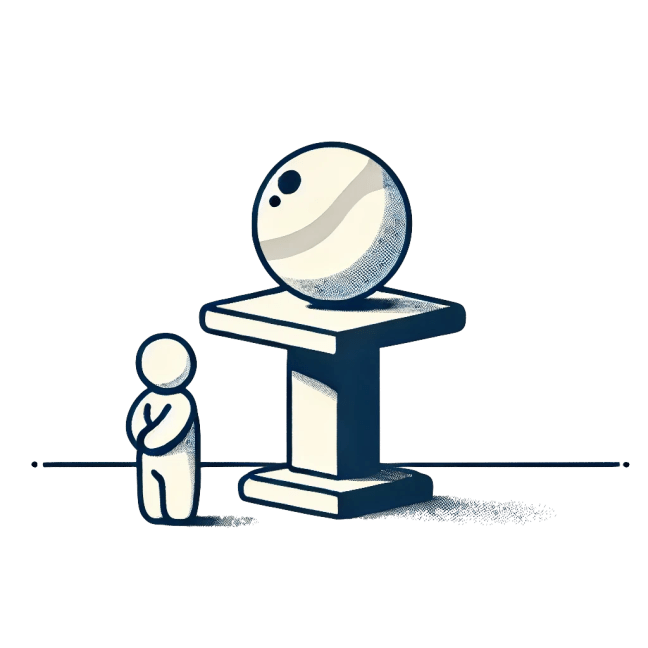
Let us first focus on rarity, which is conceptually easier to grasp. For some reason, we are extremely attracted to rarity. Imagine this thought experiment: there is a room full of white marbles on the floor, with just one or two red marbles, and you are allowed to pick three of them. Which ones would you choose? I can venture to say that you would probably pick the red ones.

Now, consider another room where another person is also allowed to pick just three marbles. However, in this room, the colours are inverted—one or two are white marbles, while the rest are red. Neither of you knows about the inverted arrangement.

Once both of you exit the room, you are allowed to see what the other has picked.

If there were only two red marbles in the room, you would have one or two red marbles and the rest white. Meanwhile, you would see that the other person also has one or two red marbles.

If you were now allowed to exchange marbles, which ones would you pick? The context has changed—both of you have more or less the same number of red and white marbles, but most likely, due to your previous experience, the other person would desire your white marbles while you would desire their red ones.

Other strategies might emerge, though. For example, given the possible rarity and imbalance of colours, you might choose to hold on to one white marble just in case.

This simple thought experiment illustrates how complex rarity becomes. Despite this, we have an innate mechanism that drives us to desire it. Marbles are completely useless in everyday life, and their being white or red makes no actual difference. There is no rational thought behind it—only the impulse to gather the rare.

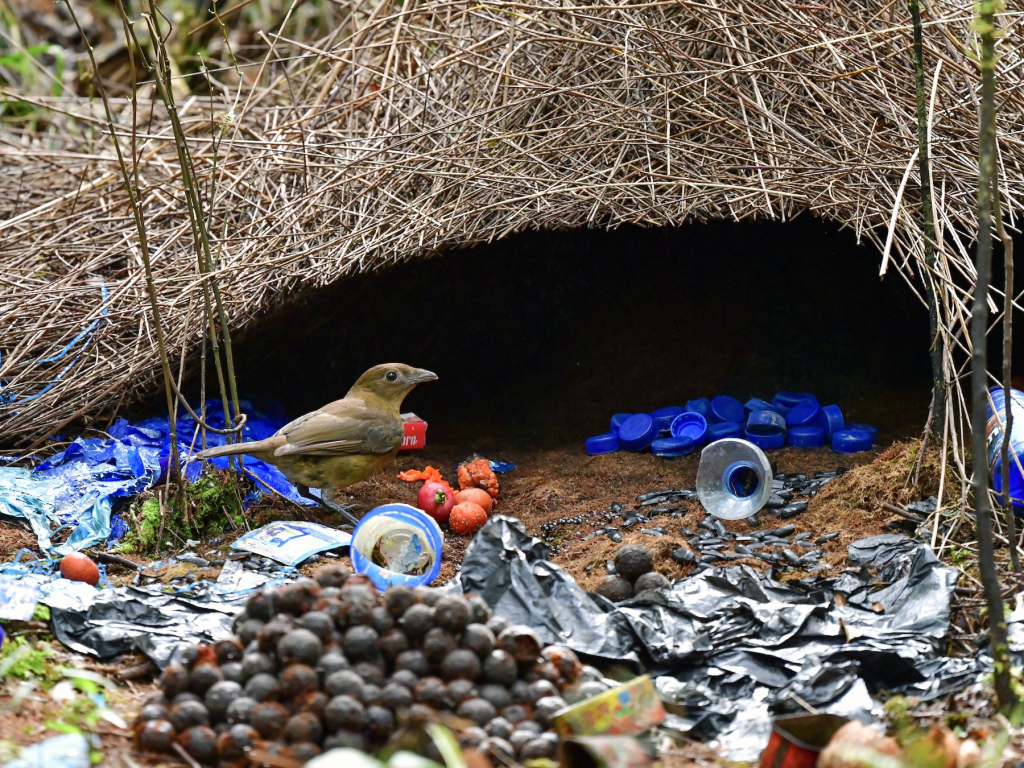
We do not know where the desire for rarity comes from or how exclusive it is to humans. Perhaps the behaviour originates from selecting ripe fruit. However, similar curiosity and rarity-seeking behaviour can be observed in bowerbirds. These birds, native to Papua and Northern Australia, have no natural predators. Like birds of paradise, male bowerbirds have evolved complex courtship strategies. While birds of paradise have developed colourful feathers and elaborate courtship dances over generations, the plain-looking bowerbird has instead developed the ability to construct intricate and colourful structures—so-called “courting nests”—as part of its courtship strategy.

Males take years (four to seven) to learn how to build these structures, which can span several metres. These nests take weeks to construct using sticks, straws, shiny stones, and pebbles. Interestingly, bowerbirds have begun incorporating plastic rubbish into their nests. Each element is carefully arranged in complex structures that even manipulate depth perception, much like a Baroque painting, in order to attract a mate—or several. In many of these structures, a plastic piece—often an especially unattractive one, such as a torn energy bar wrapper or a crushed plastic bottle—occupies a central position. Perhaps this is not due to intrinsic beauty, but rather because of contextual rarity. Curiously, these birds also follow local trends, observing and copying the constructions of others. Young bowerbirds learn by imitating their older relatives, initially building crude and atypically coloured nests. This behaviour is particularly evident in species such as the Satin, Vogelkop (Amblyornis inornatus), MacGregor’s, and Great Bowerbirds.

Perhaps we desire marbles for the same reason—they are shiny, rare objects that can be used to attract potential mates or simply to gain the attention of our social peers. A child, for instance, may wish to show off a rare new toy to their family and friends or flaunt a shiny new pair of shoes.

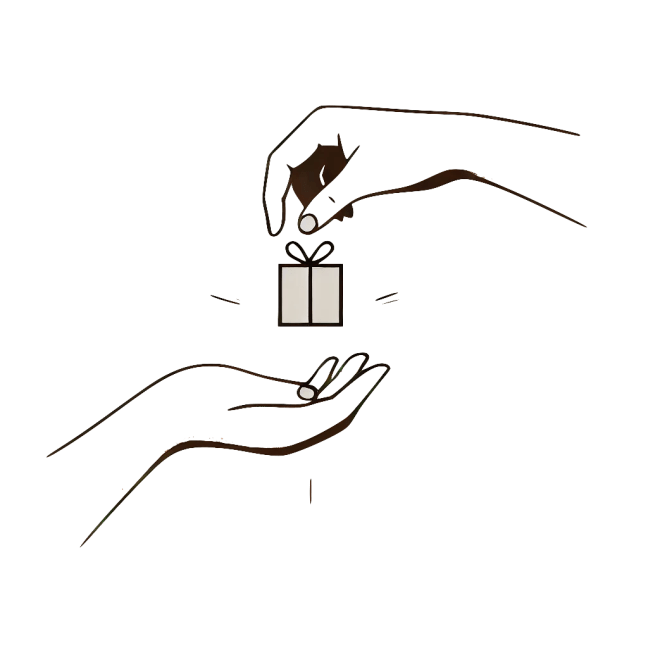
Regardless of the underlying reasons, what bowerbirds lack is a system of exchange in which they can trade their surplus of blue plastic caps for an impressive white-and-green toothbrush two nests away. Instead, they resort to stealing decorations from their neighbours in an effort to attract mates. However, stealing is time-consuming and inefficient; the thief must wait until the other bird is away, sneak in, and then return to their nest with the prize. During this period, they are neither gathering food nor tending to their nest, and they are also vulnerable to theft themselves. It is far more efficient to exchange ornaments or to give them away in the hope of reciprocity—or, as some anthropologists suggest, to create a debt bond.

Beyond the intriguing fact that modern plastics have entered their courtship rituals, bowerbirds offer insight into a fundamental human desire: the pursuit of beauty taken to an extreme, combined with the imperative to reproduce. This will be analysed further in the texts.

From the small to the global <- Previous Next -> Tool making

Previous

Next

Curiosity and rarity, from the small to the global

In the previous chapter, we established that humans are remarkable communicators, with the roots of language deeply wired into our brains and our methods of processing information. We share aspects of this nature with other animals, such as songbirds. There are also limitations within human communities, where individuals or groups have difficulty creating communication channels at a deep level due to differences in processing information—whether because of the brain’s wiring or due to cultural or professional distance. However, what makes us clearly distinct in the realm of communication from anything else that we know is that we seek to communicate as much as possible with our surroundings—even with our dogs, plants, and everyday objects. Children talk to their toys, and I have even seen my flatmate talk to his kombucha jar. Communication appears to be a universal need for humans, to the extent that it seems boundless within human communities. As mentioned, one human community would not only converse internally but would most likely also engage with its neighbours, with multiculturalism inbuilt in who we are.

The history of humanity is not plagued by conflict but by collaboration. As we have seen with the Palaeolithic trading networks—which spanned hundreds of kilometres—rare minerals, tools, shells or bones (what remains in the archaeological record) were found far away from their natural sources. These remains are much further afield and more widespread across the territory than what a human community would likely have been able to travel and carry with them.

The most likely explanation for that archaeological record is that exchange networks emerged through trading, whereby some communities exchanged goods with their neighbours. This exchange would have involved the same goods passing from hand to hand repeatedly until they reached distant places, across tens of pairs of hands.

This trading is not a minor matter; it involves a series of complex cognitive abilities, as well as the will and means to exchange information with neighbours who may have almost no connection to the community where the goods originated. First, one must understand the value and rarity of the materials to be exchanged. Their value might arise primarily from their rarity or usefulness. These are not simple concepts in themselves—rarity and usefulness are deeply contextual. One might combine these concepts under the term “desirability”, but that is an even more complex notion.

In the following texts, we will see how, from these small seeds, it is possible to reach Global communication and it is almost inevitable as proficiency in mutual understanding emerges, consolidates and improves over time.

Forms of communication <- Previous Next -> Rarity and curiosity

Previous

Next

Forms of communication

Let us briefly explore the main forms of communication that humans tend to use before examining global communication.

Visual/Symbolic Communication

One of the most basic and almost universal forms of communication is visual communication. At some point between 30,000 and 50,000 years ago, humans across the lands they occupied began extensively using pictorial representations to depict the world around them. Even if we cannot understand the language or all the characteristics of the cultures that lived during the Ice Age in the Altamira caves, when we look at the drawings there, we can easily identify what they were trying to represent—impressive buffaloes, as well as various other animals like horses and deer, along with dancing human figures.

It remains a mystery why figurative art in the Homo lineage became dominant worldwide at that time and not earlier. Anatomically modern humans—the term palaeontologists use to describe human remains that resemble us, i.e., Homo sapiens—have existed for approximately 200,000 to 300,000 years. This increase in the use of visual communication may be the result of a gradual accumulation of increasingly complex cultural traits that allowed for more sophisticated pictorial art. Alternatively, our perception may be biased due to a limited sample size and poor preservation of earlier examples of figurative painting. Regardless of the reason, figurative art now appears to be a universal human trait, present in almost all individuals from an early age.

Human infants can identify familiar objects such as a house, a horse, a person, or even smiling and sad faces from a very young age. Moreover, children begin creating geometric figures by the age of two and produce rough paintings of figures by the age of three. By the age of five, their drawings evolve into more standardised and symbolic images.

This symbolic representation in images also appears to be a universal mode of communication among humans. Simple pictorial forms can be used to identify common animals and objects found all over the world. However, some people in cultures unfamiliar with photography struggle to recognise an animal from a picture and require a specific body part to make the identification.

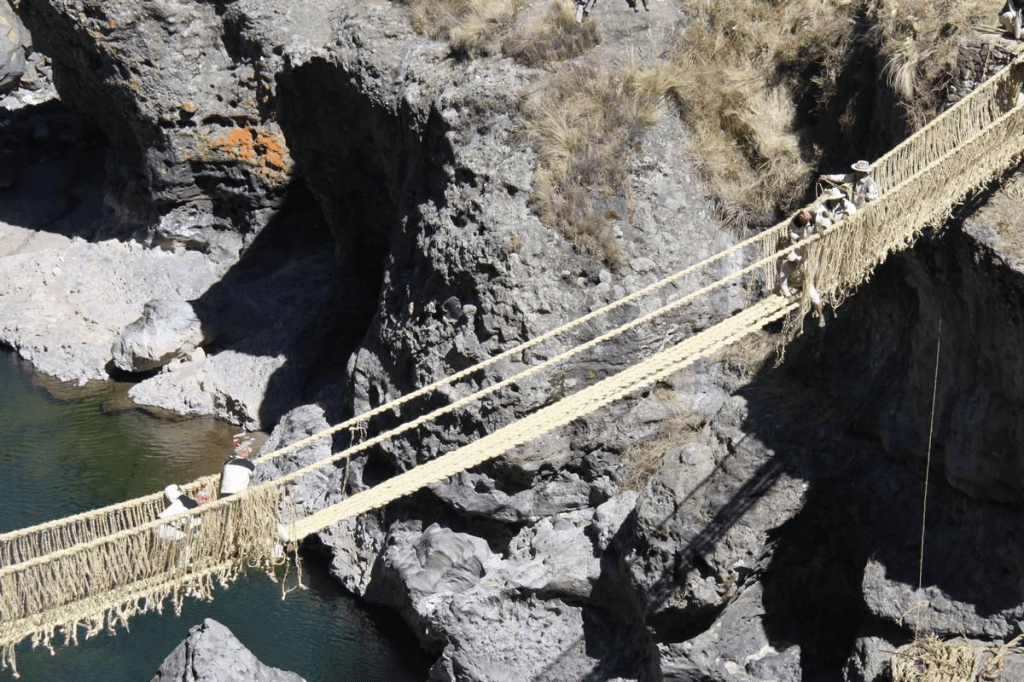
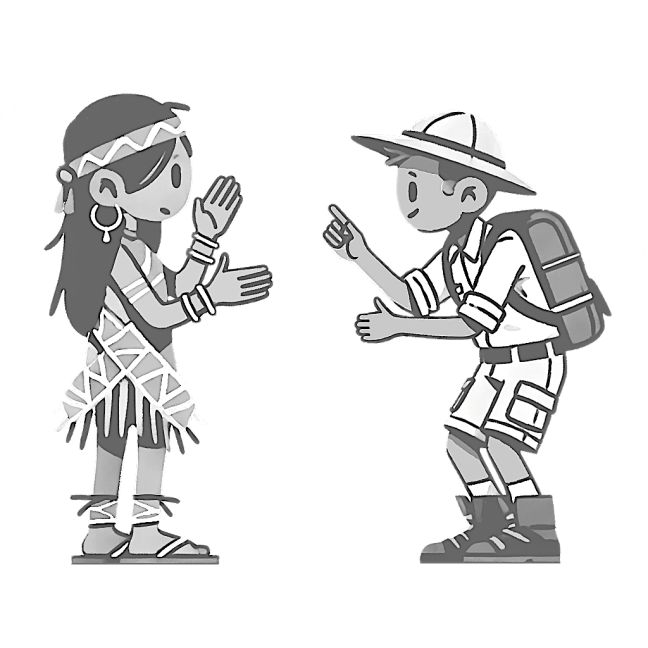
You may have relied on visual communication yourself when travelling to a foreign land where you could not speak the language. In such situations, you might have used gestures to figuratively describe an action or object or even resorted to crude drawings to communicate your needs. However, this form of cross-cultural visual communication has its limitations. I encountered these limitations when I wanted to cross a river in Papua but could not find a bridge. I asked the locals for directions, but despite my best efforts, they could not understand me. Using my hands and gestures, I tried to depict a river and a bridge over it. I then resorted to drawing it in the sand with a stick, using mimics and pointing towards the river, which was not far away. Finally, a combination of all these methods did the trick. I was swiftly guided to a path through the jungle that I would not have found on my own, even if I had searched for days. At the end of the path—after crossing several streams via wooden logs used as makeshift, slippery bridges—I reached the other side of a hanging bridge, with the river rushing 50 metres below me.

Acoustic Communication

Another form of communication that appears to be universal among humans—and likely many non-human animals—is auditory signalling. For example, a high-pitched, loud scream would generally startle you and make you wary of its source. Moreover, if the sound persists—such as the crying of an infant mammal—you might instinctively try to stop it by feeding, warming, or comforting the creature in any way possible. It is not difficult to imagine that we have an inbuilt genetic predisposition to associate certain sounds with specific actions or emotional reactions.

Another largely human—but possibly primate—auditory signal is laughter. All human cultures seem to associate enjoyment and fun with laughter and its characteristic sounds.

Additionally, the intensity and duration of sounds tend to convey universal messages. Loud sounds generally indicate aggression, whereas quieter ones suggest closeness and attentiveness. Similarly, short, abrupt sounds are used to grab attention, while long, howling sounds are often associated with connection and emotional expression.

Language <- Previous Next -> Curiosity and rarity, fromthe small to the global

Previous

Next

Language

The most critical basis for communication is language. It is difficult to define what a language is and what it entails. At its core, language is something that can capture deeply complex concepts—both external and internal—and transform them into words with specific meanings that can be shared with others. Therefore, it entails both an internal component, in which the brain must link specific concepts to words and structures of the language, and an external component, in which these words and concepts must be translated into structures that can be broadcast to other individuals. These broadcasts can primarily be via sound, visuals, or touch, but in principle, any channel capable of encoding information should work in order to create structured signals in the form of a language.

There is no clear agreement on how old human languages are. Some argue that they started emerging about 100,000 years ago, while others argue for an even earlier origin. Nevertheless, however they came to be, languages are an integral part of being human, shaping both how our brains function and how we understand and influence the world and ourselves.

Some examples illustrate how wired we are to shape our brains for learning a language. The clearest natural experiment demonstrating the spontaneous learning and generation of languages is that of Nicaraguan Sign Language.

In the 1980s, for the first time in Nicaragua, a school for deaf children was created, bringing together children from all over the country to live and learn in one place. Before this initiative, there was no institutionalised system to teach deaf children how to communicate. As a result, at the time of their arrival, these children’s vocabulary was limited to a few hand gestures used within their families or communities of origin, often in the form of idiolects or cryptophasia (“private languages” usually spoken by one person or between twins).

Compounding this initial lack of complex communication, the teachers at the new school aimed to teach the children lip-reading and Spanish through that method. They discouraged the use of any sign language, believing that the children would put less effort into learning to lip-read. However, lip-reading had very limited success—the children were unable to communicate with their teachers.

Despite this, communication flourished outside the classroom among the children themselves. In the courtyard and throughout their daily activities, they combined the hand gestures and signs from their respective communities and created new ones. This process of creation, sharing, and accumulation spontaneously generated a new language, which rapidly evolved into more complex structures, giving rise to grammar and a more elaborate vocabulary. This increase in complexity and fluency was particularly evident among younger generations of students, who picked up the signs from older peers and refined them with intricate flourishes and added layers of meaning.

This entire process was documented by sign language experts, who were called by the teachers after noticing that the children could communicate fluently with one another but remained incomprehensible to the teachers. Initially, these experts also struggled to understand the children, but by filming them, analysing the footage, and interacting with them using the learned hand gestures, they gradually acquired the language. Most interestingly, over the years, they recorded the cumulative process of increasing complexity, allowing us to witness how the language evolved and standardised rapidly.

Notably, the children were already familiar with a small subset of home signs. However, this is not so different from the basic signs shared by social animals or those we can teach our pets. For example, when I was living in Mallorca, I was responsible for a dog named Gordon. I could tell him “sit,” and he would sit; “down,” and he would lie down; “up,” and he would stand on his hind legs; “la pateta,” and he would sit and give me his left paw. Even more complex instructions, like “We are going for a walk, but first, we need to go to the basement,” were followed correctly—Gordon would go straight to the basement instead of heading directly outside. Not only that, but he also communicated with me: for instance, he would touch his water bowl to indicate it was empty or stand patiently by the courtyard door when he wanted me to open it. Through these examples, one might say that he and I shared basic communication and understanding, but no one would, in their wildest dreams, call that a language. Nor would a language ever emerge from these exchanges. This became especially clear when I said more complex things, like “Could you go to the cupboard, open the door, and bring me a kilogram of rice, please?” or “Do not bark at the neighbour’s dogs!” Gordon could open doors, so that part wasn’t a problem, but the rest was beyond his capabilities.

The case of Nicaraguan Sign Language is particularly important because it demonstrates the evolutionary nature of language within a short time frame and its ability to keep expanding—something that does not occur in any other non-human animal. To be fair, dogs can be trained in more complex ways than my simple set of commands (and one particular, named Chaser, learned can more than 1000 words!), and other animals, such as dolphins, elephants, circus animals, horses, buffaloes, parrots, pigeons, and crows, can learn to respond to basic commands from their human carers. Bonobos, in particular, can learn up to hundreds of hand gestures to communicate basic information with their trainers, and similarly, dolphins can understand basic sentence order. However, this is the maximum extent of their communication; it does not go any further. Nor do animals copy human language to communicate among themselves in more complex ways—not even parrots, which can mimic hundreds of human sounds, spontaneously start using them to communicate with each other. Humans, on the other hand, have the unique capacity to transform simple signals into an elaborate and constantly evolving set of communication codifications.

The connection between language and the brain is deeply rooted in humans, with both being intricately linked, as seen in the Sapir-Whorf hypothesis. Language shapes the brain, and the brain, in turn, shapes language. The latter is evidenced by the fact that certain sounds seem to be more naturally associated with certain concepts—for instance, sharp objects are commonly linked to words with sharper sounds, while round objects tend to be described using softer pronunciations across multiple languages. Language is integral to memory, abstract thinking, and, fascinatingly, self-awareness. Language has been shown to drive much of the brain’s core “hardware”. Languages shape brains to such an extent that, most of the time, we think in a language—or in multiple languages if we are multilingual.

For those who are born deaf, rather than relying on an “inner voice” as spoken-language users do, their thought processes are shaped by visual sign thinking or the sensation of body gestures. Interestingly, deafness has a significantly greater impact on the brain than blindness. People born completely deaf and who never learn sign language fare only slightly better than the rare individuals who grow up without any language exposure. Without language, they fail to develop an “inner voice”, which is crucial for the brain’s ability to process information. This is especially significant in early childhood. Those who are not taught sign language until later in life often have learning problems throughout their lives. It seems that the brain processes sign language exactly as it does spoken language, using the exact same regions.

Communication - Culture <- Previous Next -> Forms of communication

Previous

Next

Growth of communication- Culture

All of the previous examples I have highlighted until now, show living beings collaborating and cooperating require a basic feature: communication. Communication involves shared channels in which the individuals that form a group or interaction have cues and signals that can be understood by other members and entities. These are mainly visual, chemical, acoustical, and vibrational cues. With these cues, the basic structure of formations larger than the individual exists, allowing for the generation of other ways of interacting with the environment that individuals alone cannot achieve.

Out of the three bases of global reach (intelligence, collaboration, and communication), I will focus on communication as the most critical for our understanding of how we got here—that is, the capacity to communicate at many and diverse levels and across a wide range of scales. From really superficial to deeply technical ones, from proximity to global.

At some point in this arrangement, a complex cognitive structure emerged in the form of language. This sophisticated communication would encompass most forms of categorising the external and internal world of individuals in any group united by communication. Many debates concerning the limits of knowledge originate from analysing where our knowledge of the world around us is constrained by language. These debates span back centuries, for example G. Berkeley’s, A Treatise on Principles of Human Knowledge (1710) or J. Locke’s Essay Concerning Human Understanding (1690), or take really interesting forms, like the Sapir-Whorf effect, where language might shape the essence of how we see our world. For example, many languages do not have words for numbers larger than 3 or 4, but might have hundreds of words for different scents, which we lack.

In any case, at some point language was used not only for the communication between members of in-groups, but also with external groups, becoming a federation of groups, as anthropological research shows. That is where everything really changed, where “Culture” emerged in the sophisticated form that we know and where information, collaboration, exchange, reduction of conflict and complex networks would extend the wealth of possibilities of how interact and shape our environment. This level of inter-group communication is something that has not been achieved successfully by any other living thing on this planet —maybe with the exception of the Fire Ants, and they are a only doing it for the last 100 years or so. As humans, we achieved the creation of a structure —culture— which allows detailed communication between virtually all the members of our species.

Once communication between groups emerges, everything changes. This accumulative communication allows for the complexity of the tools we use to be open-ended, as the evolution of technology and tools like large particle accelerators or space satellite constellations shows.

Communication is also open-ended, meaning that it can potentially keep increasing indefinitely, probably linked to the complexity of tools. In nature, communication channels tend to be very limited and do not show growth or evolution by themselves, while human languages are always in continuous evolution—incorporating new concepts and terms, combining existing ones, losing or forgetting others, and actually forging what is needed. This applies not only to language but also to symbols, signs, experiences, training, repetitions, etc. This indefinite addition of communication elements adapts to achieve the desired level of communication, understanding, and sharing of the initial information. To put it simply, to pass on a specific message. This depth of communication also requires boundless collaboration to construct the complex concepts needed for sophisticated knowledge.

All in all, this open-ended way of sharing messages has created what we have come to know as culture and cultural evolution—the body of messaging and knowledge that is passed from one generation to another, with the capacity to add new pieces to that pool or lose them. Moreover, we have, in principle, the limitless capacity to transmit accumulated knowledge and messages to other human beings, as long as there is a shared communication channel.

Collaboration <- Previous Next -> Language

Previous

Next

Collaboration

Another important behaviour that humans share with many animals is socialisation and collaborative action. This is observed across a wide range of species, including not just animals but also organisms from other biological kingdoms. There are many examples of this collaborative behaviour.

Cetaceans (whales, killer whales, porpoises, and dolphins) engage in social collaboration to achieve common goals, such as developing feeding strategies and defending against aggressors. A species that is particularly close to us in terms of social behaviour is the wolf. Wolves form small packs of up to forty individuals, working together for survival. Their domesticated relatives, dogs, are also highly social animals capable of interacting with many other species, especially humans, to a remarkably sophisticated degree. This is exemplified by cases where humans have been effectively adopted by dogs, such as in the myth of Romulus and Remus—the legendary founders of Rome—or in more recent historical accounts like that of Marcos Rodríguez Pantoja. Marcos lived among wolves for 11 years after his father sold him to a landowner who entrusted him to a goat-keeper, who later died. Marcos recounted:

“One day I went into a wolf den to play with some puppies that lived there and fell asleep. When I woke up, the wolf mother was cutting deer meat for her puppies. I tried to take a piece from her because I was also hungry, and she swiped at me. When she finished feeding her puppies, she looked at me and threw me a piece of meat. I didn’t want to touch it because I thought she was going to attack me, but she kept bringing it closer with her snout. I picked it up, ate it, and then she came up to me. I thought she was going to bite me, but instead, she stuck out her tongue and started licking me. After that, I was already part of the family. We went everywhere together.”

Marcos also recalled that after reuniting with his father, his father simply asked him for the old jacket he had left behind.

If we extend the concept of collaboration further to include infrastructure, we see that insects and arachnids also exhibit highly cooperative behavior, forming vast colonies. However, these types of social structures are not exclusive to invertebrates; similar cooperative infrastructure-building can be observed in birds, beavers, and many mammals that create dens. In the case of insects, some colonies function almost as single superorganisms, with specialized individuals performing specific tasks or switching between roles as needed. Other social animals, such as meerkats, also have fluctuating specialized roles within their groups, such as caring for the young or standing guard to raise alarms against predators.

For social arachnids, as well as some bird species and most den-dwelling animals, collaboration seems to be primarily focused on building communal nesting or feeding structures. However, outside of these specific activities, they tend to act as individuals.

On the looser end of social structures, we find schools of fish and herds of various land animals. These groups function as dynamic, collective entities where decisions about feeding, protection, and movement are made communally.

Expanding the concept of socialization even further, we can consider co-dependent ecosystems. In such ecosystems, plants and animals—or even plants with other plants, bacteria, and fungi—are so interdependent that they cannot be considered separate entities. Biologists refer to these relationships as symbiotic or, in cases where one organism is significantly larger than the others, as holobionts. A common example of a holobiont is the relationship between a human and their gut bacteria, whereas an example of symbiosis is lichen, which is formed by the mutualistic association between fungi and algae.

The scale of communication and collaboration in most living organisms is usually limited. For example, some ant species form supercolonies containing trillions of individuals, such as the Argentinian fire ant supercolony (Linepithema humile). These supercolonies cooperate with genetically related colonies while competing with unrelated ones, allowing them to dominate newly colonized lands by leveraging globalization. However, despite their vast numbers, their communication networks remain limited to neighboring colonies and do not extend much further.

In contrast, human collaboration is, in principle, boundless. Even in the Palaeolithic era, commercial networks facilitated the exchange of materials over vast distances—hundreds or even thousands of kilometers— with materials transported almost 200kms at least as early as 45,000 years ago. This scale of mobility far exceeded that of individual bands and their immediate neighbours. No other species exhibits such an extensive range of cooperative behaviour.

Even among our closest extinct relatives, there is uncertainty regarding the extent of their social networks. Recent genetic research has shown that a group of Neanderthals remained genetically isolated from neighboring groups—less than a ten-day walk away—for more than 50,000 years. However, this genetic isolation is not unique to Neanderthals. Studies suggest that modern humans, too, have lived in genetic isolation from neighboring communities for tens of thousands of years. For instance, the ancestors of African Pygmy foragers are believed to have diverged from other human populations around 60,000 years ago, though they intermixed more recently in several occasions.

Intelligence <- Previous Next -> Communication

Previous

Next

Intelligence

Starting with behavior that can be understood as intelligent, we can focus on tools. These were already present in the Homo lineage and are also shared with many other species on this planet. We can understand tools as macroscopic external elements of an animal’s body that are used to gain access to more resources, security, and reproductive success. More conceptually, tools can also be strategies to achieve the same objectives without the use of any specific external object, other than perhaps geography.

The use of tools can be both learned and innate and is abundant in the animal kingdom. Examples of tool use range from primates using stones and branches to crack nuts or open coconuts, to birds creating complex fishing utensils with their beaks and claws, especially in the family of Corvidae (ravens and crows) and psittacines (parrots). Dolphins, for instance, use the shore or each other to trap their prey.

But tool use can extend far beyond what we would usually consider “intelligence.” For example, creating nests and structures to attract females (as seen in bowerbirds), ants using sticks to build bridges or using fungus to ferment food, chickens eating rocks to aid digestion, hermit crabs using shells and plastic cups, caterpillars using leaves to make cocoons, foxes building dens, and beavers building dams. One could consider these behaviors as simply “innate” tool uses. However, there is ample literature arguing that the “social learning” of animals, whether innate or learned, is difficult to define and differentiateAlthough instances of problem-solving behavior spreading have been observed, such as parrots opening trash bins in Australia.

Interestingly, the spontaneous use of tools—using environmental elements for one’s own benefit—is probably widespread in the animal world. Individuals of many species use tools in controlled lab environments, where they can solve complex puzzles using elements of the system. For example, pigs can play video games, rats solve mazes, and squirrels solve puzzles.

However, despite the shared use of tools among many animal species, we are fundamentally different. This shows that “intelligence,” in the case of humans, might be necessary but not sufficient to explain why we are the way we are. The key difference is culture. Many of the previous examples of animal innovation do not constitute culture. This is because the discoveries of one individual are often not explained or described to fellow individuals of the same species. In the case of puzzle-solving and tool-making, each individual must solve the problem themselves initially, which is an inefficient way of obtaining resources. Not all individuals of the same species show the same dexterity in solving the same puzzles, as we will see in more detail with the case of Mango the crow.

There are examples, though, of chimpanzees who learn from imitating fellow chimps or human instructors on how to open a complex box to obtain food or learn sign language. However, when imitation experiments have been conducted with both chimps and humans, it has been observed that humans tend to repeat every step of the process, even futile ones that do not contribute to obtaining the reward, this seems to be in the contest of our brains being wired for costly rituals, even at a young age. On the other hand, chimps, once they learn which steps are necessary, tend to avoid the unnecessary steps. This indicates that chimps are actually more efficient in problem-solving than humans, avoiding unnecessary steps. However, it also points to the fact that humans are better at copying than our closest relatives, to the point that, even understanding the mechanics of something, we keep extra steps for the sake of reproducibility. Although some dispute these conclusions.

Opening <- Previous Next -> Collaboration

Previous

Next

Opening

Three bases to establish global reach: intelligence, collaboration and communication


We ask the question of this texts, what humanity does want, from the depth of the historical perspective. From the dominant view and research, with the little that we know about our deep past, we imagine that Humanity started out as a species where kin-groups and bands cooperated with each-other, and combated others to obtain resources, stability, and to control or share resources and territory. These dynamics stem from millions of years of evolution until the present.

Regardless if the actual picture was like that, or with some significant differences, for the outlined behaviours we have three main components that allow humans to have global reach: intelligence (as problem/puzzle solving with tools external to the body), collaboration (between individuals of the same species and between others), communication (in many forms and ways).

However, these characteristics common to humans are also shared by many other living things in this planet. Therefore, in the following, we will explore in detail what is similar and different and what allows us to be fundamentally different than all the rest of species that share these three bases.

This will form the basis of how we got there, to ask this question about where to go as a collective species. Investigating the natural growth of these three characteristics might shed some light into our unique times.

No other species on this planet has gone far beyond the genetic boundaries that make us. As we will see, the breaking of the boundaries happens thanks to the creation of a superstructure that is, to a degree, independent of the genetic code. This structure is what we call culture.

Preface <- Previous Next -> Intelligence

Preface

¿What does Humanity Want? seems like a simple, obvious question to ask. However, what is most striking is that we ask this question at all. The fact that we can even pose such a question reveals a complex set of circumstances that have emerged for the first time in human history. The question is a product of the unique times we live in—shaped by global interconnectedness, globalisation, conceptual homogenisation, and the dominance of a single philosophical and legalistic strain over the rest of the world. These circumstances establish a minimal set of elements that are either shared or imposed on virtually all creatures we call “humans.” By asking this question, we are exploring what defines us, what makes these times special, and what historical and temporal currents have allowed us to even contemplate what humanity wants.

If we break the question down, it revolves around two key terms: humanity and want. The concept of “humanity” is relatively recent, although it has deep historical roots. On one hand, the idea of what it means to be human is, while intuitive, not perfectly defined. In this text, we will examine how the concept of “humanity” came into being, what it represents, who created it, and what status “humanity” holds in the modern world. We will explore who is included within this term, who might not be, who defends it, who opposes it, who speaks “in the name of humanity,” and what that entails.

On the other hand, there is the term want. If defining “humanity” is challenging, “want” is infinitely more complex. Determining what the aggregation of these “humans” living on this planet (or orbiting it) “want” is nearly impossible. We will focus on who within humanity has the agency to “want” something, what is meant by “wanting,” how these wants are determined, and how resources are allocated—or not allocated—to fulfil them. By “want,” we refer to all actions related to a shared consciousness. These actions are taken by individuals, groups, or institutions who claim to represent humanity. We will explore what they “want” to do with this concept of humanity—or whether they can do anything at all. Along the way, we will discuss the limits and capacities of these groups to decide on humanity’s wants, the resources available to them, and the obstacles they face. Finally, we will consider a few possible paths forward, alongside the difficulties inherent in pursuing any of them—or none at all.

Before addressing the core question, this text will first tackle another fundamental one: Why? Why are we even able to ask this question at all? To answer this, we will embark on a journey through time and space. We will begin with humanity’s deep roots in biology and evolution, examining what we share—and do not share—with our fellow living beings. Our journey will navigate geography, science, philosophy, linguistics, academia, history, politics, economics, narratives, and fictions to situate us within this unique moment in time. The aim is to inspire both reflection and action. So, buckle up and enjoy the ride!

We live in extraordinary times. When viewed through the long lens of history, it becomes clear how exceptional this moment is. We are riding the upward curve of exponential growth in all attributes that define humanity. This growth brings with it unprecedented opportunities and challenges, forcing us to rethink how we honour the past, live in the present, and plan for the future. For the first time, these considerations can occur at the level of a collective imagination. Planetary-scale decision-making—a concept only recently conceivable, such as Psychohistory from Asimov—is now part of our reality.

This unique awareness allows us to ask the question central to this text, which compels us to consider what it means to exist in this state of affairs.

This is not an entirely new idea. In 1933, George Orwell observed in Down and Out in Paris and London that humanity was already living in a time where technological development could ensure that the global population was adequately fed, with resources to spare. For Orwell, the fact that this was not happening was a crime. While Orwell may not have explicitly framed his argument in terms of “humanity,” he recognised that resources were being misallocated due to misplaced priorities—especially by those who controlled production and logistics.

In the following essays, we will unwrap how we arrived at the point of asking this unique question: Who can ask it? How? Why? We will explore potential answers, possible solutions, and whether there are any viable alternatives to this trajectory of planetary, collective resource allocation.

Foreword <- Previous Next -> Opening

Foreword

In this work, you will not find the answer to this question. However, you should come to appreciate the beauty and uniqueness of the time in which we can ask it at all.

This work is not unlike the age-old philosophical questions: “Where do we come from?”, “Where are we going?”, and “Why are we here?” These questions have been asked countless times over generations, and you will not find their answers here. Instead, I aim to frame these timeless questions in the context of “humanity” as a new, emergent concept—one that, on the light I will be describing it, has never existed before in the history of our species at a Global scale.

I approach this inquiry from my particular background. I was raised in a Mediterranean, European cultural context, deeply influenced by Greco-Roman philosophy and state-building traditions, as well as by the values and narratives of the Abrahamic religions.

On top of that, my education has shaped my worldview and the sources of information I draw upon. I hold a bachelor’s degree in Physics and a PhD in Cosmology. My academic and professional pursuits have included projects in neuroscience, astrophysics, dynamical systems, perturbations, information theory, causality, human evolution, and the cultural dynamics of loss and survival. These areas of study form the framework on which the ideas in this text are based.

Moreover, within this “Western” perspective, I come from València, born into a Catalan-speaking family. Both of my grandfathers hailed from the same town in which I was born, Sagunt, and were Catalan-speaking. My grandmothers, however, emigrated to Sagunt in the 1940s, during the post-Civil War period, from the interior of València. They came from a region that had historically spoken Aragonese but had since transitioned to Castilian. Like many mixed families, my linguistic landscape is varied. My maternal grandmother did not adopt Catalan in the family environment, while my paternal grandmother did.

Economically, my grandparents’ livelihoods were tied to the land: farming, orange orchards and related industries, baking, and later neighborhood retail shops. Their social standing ranged from lower to upper-middle class.

Although I grew up in a predominantly Catholic society, my parents raised me as a free thinker. They were agnostic, and my natural inclination toward skepticism, empiricism, and atheism was both allowed and encouraged in my family and educational circles. Even my paternal grandmother, the most religious and spiritual person in my family, supported my questioning nature. Despite being a Christian believer, she was skeptical of the Catholic Church as an institution, often remarking, “Do what the Church says, not what the Church does.” My interactions with the Catholic Church were minimal, limited mostly to festivities and a brief period of religious education when I was six or seven years old to prepare for my first communion. Even then, my early atheism led me to openly express my doubts—sometimes at the cost of being made to face the wall for extended periods.

Politically, my parents aligned with left-leaning Catalan/Valencian nationalism, which advocates for self-determination within the historical boundaries of the former Kingdom of València. They moved away from the land and family businesses, pursued higher education, and worked in government positions—one in city hall taxation and the other as a school counselor and head teacher.

València itself is a land of historical significance, renowned for its fertile, irrigated grounds that date back centuries. It has supported industrial-level agricultural production, particularly of fruits like grapes and oranges.

Culturally, Valencian and Catalan traditions are distinct within the Iberian Peninsula. The peninsula is home to three states (Andorra, Spain, Portugal) and part of the United Kingdom (Gibraltar). Spain itself is a multilingual nation with four main languages—Euskara (Basque), Catalan/Valencian, Castilian (Spanish), and Galician/Portuguese—as well as several smaller, rapidly disappearing Romance languages like Aragonese and Asturian.

The history of València is one of successive cultural layers: Iberians, Celts, Phoenicians, Carthaginians, Greeks, Romans, Germanic tribes, Arabs, and Berbers. Catalans were the last colonisers, arriving in the 13th century to a land that had been predominantly Arab in culture. For centuries, the region was home to the three main Abrahamic religions: Judaism, Christianity, and Islam. However, under the Spanish monarchy, the Jewish and Muslim populations were expelled—the Jews in 1492 and the Muslims in 1609. In my hometown, Sagunt, it is estimated that Jews once constituted 20% of the population and Muslims 20-30%. Within three or four generations, nearly half of the town’s inhabitants were forced to leave their ancestral lands.

Those who remained faced strict scrutiny, forced conversion to Catholicism, and severe punishment for any violations of its practices. This era gave rise to the infamous Spanish Inquisition. My homeland, therefore, is one depleted of its historical religious and cultural diversity, with a language brought by colonisers and later persecuted. Despite centuries of suppression, our language endures, albeit in decline.

València is also known for its vibrant cultural traditions, such as the Falles de València, Fogueres d’Alacant, and Moros i Cristians d’Alcoi, correfocs, among many others. These festivities highlight the resilience and creativity of our people.

This framing is intended to underscore that, in a different sociocultural context, with different formative experiences and interests, the themes of this text could be entirely different. Humans are the only animals (as far as we know) capable of sitting under the stars and pondering the universe’s future—imagining what it might look like in 100, 1,000, or even a trillion years—and questioning whether “humans” will exist at all in such distant times. Remarkably, these thoughts inspire actions in the present.

Beyond these star-gazing, future-oriented humans, we have created something entirely new: the concept of “humanity.”

This text encourages the question of “humanity” to be explored by as many diverse perspectives as possible. Willingly or not, we are living in the age of “humanity”, the Anthropocene. We are no longer merely individuals or groups; we are now “humanity,” understood as a collective that seeks to include every individual of our species on equal terms under universal rules. These rules, of course, arise largely from the cultural context in which I was raised. Still, we must critically examine the limits and implications of this universal view.

This work is not about humans but about “humanity”: how it came to be, how it can “think,” and whether it, too, can look to the stars, recognise the beauty of this question, and act now in light of it.

Disclaimer <- Previous Next -> Preface