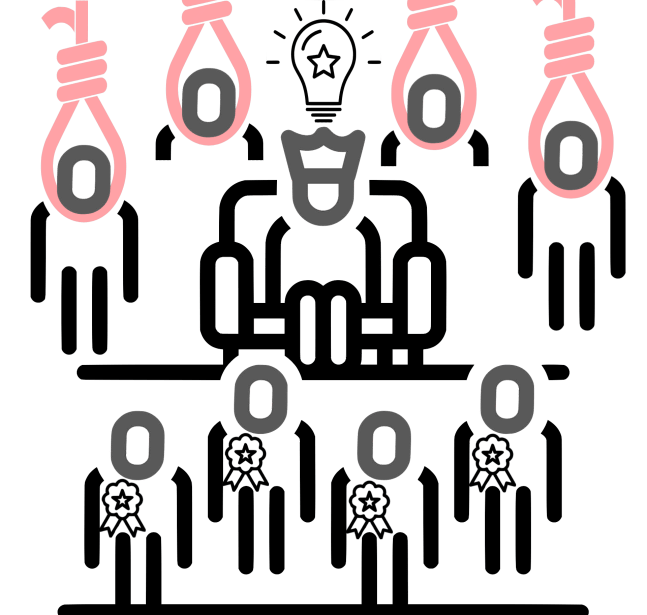
Through my studies of cultural loss, I came across a powerful concept from political sciences, the political ends. This is proposed by Morton Gorden within a process of conflict resolution as the “process by which a government sets limits on what enters the political process”(Gorden 1972:vii).
In an evolutionary perspective, governments come after politics, politics comes after public, and public comes after culture. Since my objective is to focus on humans and humanity, for now, I want to abstract that basic schema beyond governments, to a dynamic that captures most of human behaviour.
For that, I reinterpret the first step of the process “goals”, or “political goals” as pursuing a specific “cultural ideal”. In other words, political goals are culturally generated representations of desired final states.
In that framing, I claim that we can see the political process as the path towards the fulfilment of representations of cultural ideals. Even without a government or collective decision-making, as long as there is an individual who wants to freely express its cultural ideal in a social environment, that can be seen as “politics”.
Simply put, every action to pursue a specific cultural end defines politics.
Goals in a political system reflect patterns in culture. The setting of specific goals represent a choice of objectives from a larger range of possibilities residing within the accessible cultural landscape.
Evolutionarely, my argument is that a cultural ideal, while abstractly shared by a “public”, resides in each of the individuals of that public. While growing up in a public a.k.a. a society, we slowly form a diffuse, ever-changing idea of a cultural ideal.
This sequence: cultural ideal formation – action – politics – ends , is not exclusive to humans, or humanity for that matter.
Let us trace possible evolutionary roots for the pursuit of a “cultural ideal”.
Remember Lekker, the vervet monkey who took over as alpha male, and could eat the popcorn of his preferred colour?
If we accept that the choice in colour of popcorn can be called “cultural”, then Lekker imported his “cultural ideal” when he went to a new group that had a different cultural preference of popcorn colour.
With the alpha-male power and influence Lekker kept eating the colour of popcorn that he was used to eating. By that time (six months later) both colours were equally sweet, so there was no real fitness difference other than the colour. In the case of Lekker, he was able to keep his rather simple “cultural ideal”.
We humans do this conscious and unconscious process all the time while sticking to a cultural ideal. For whatever reason, a “cultural ideal” of how things ought to be is created, and then individuals take constant actions to approach that ideal. In the case of Lekker, he achieved his “ideal” through power. Paraphrasing my earlier definition, these actions were Lekker’s politics.
Again, I call all the actions that one takes towards achieving a cultural ideal, “politics”.
As I’ve written before, Joan Fuster, one famous Valencian intellectual, has the aphorism that “politics is done by you or is done onto you”.
In other words, we are constantly doing politics by expressing or protecting our preferences, and even when not doing so, others will press their preferences and ideals to you. This might be because some humans have a tendency to press their preferences and ideals to others, unlike the vervet monkeys–there is no evidence that Lekker forced his preference of popcorn colour on others.
That’s where conflict arises, our constant cultural dynamics are smelted and we can apply Gorden’s framework.
Another interesting intellectual to summon here is Christofer Boehm. He was a primatologist and anthropologist who developed much of his career characterising egalitarianism and equality in human and non-human primate societies.
One of Boehm’s theses is that primates, us included, show two opposing tendencies, one is to oppress and the other is to fight oppression.
To oppress is what Lekker did when he took over the alpha position. That position allowed him to keep his ways in the new group who ate a different colour of popcorn.
What the difference is between other primates and humans, according to Boehm’s observations, is that in human small scale societies these groups are significantly more egalitarian than other primate groups and large scale societies–despite being a spectrum of social inequality and oppression in these small scale human societies.
This egalitarianism is not because humans have a significantly reduced tendency to oppress others, when compared to other primates, but because the small-scale societies have developed and sustained a set of strategies that effectively manage the emergence of oppressive tendencies and weeds it out before oppressive regimes, like Lekker’s taking over the group.
Interestingly, in many human small scale societies there is no such thing as a permanent “leader” like a Lekker. There is a prestige hierarchy, but leadership roles tend to be emergent and evanescent–situational, task-specific, non-centralised, and often temporary leadership rather than institutionalised or hereditary. In many cases, these roles are shared by a council, the decisions are made in a communal fashion or different leaderships emerge to deal with a specific problem or situation. When the problem is solved, or the situation changes, their particular leadership role can disappear with it like in the case of the axe-makers of the Wahgi.
Going back to cultural ideals, a cultural ideal can pop up, like popcorn, as well as being susceptible to constant change.
The rest of the macaques who, unlike Lekker, adapted to the local popcorn colour had to pay the small price of giving up the privilege of eating their preferred coloured popcorn from six months prior.
In that case, a change in “cultural ideal” had little repercussion other than maybe a reticence to try something they remembered as bitter.
The fact that we have a sense of stability and continuity is even more surprising. Take my grandfather, who had just turned 100 at the time of writing. His World has undergone immense revolutions in worldviews, technological advances, scientific breakthroughs, information and human connectivity, exploration, material wealth, services, ways of living, the concept of family, social bonds, entertainment options… Yet, his life, despite his experience of a civil war and an acrimonious post-war period, has been relatively stable, with a level of continuity and relative comfort unheard of for most of human history on this planet. One hundred rounds around the Sun provide so much and so little at the same time, encompassing the extremes of human existence in one lifetime.
My grandfather, in particular, had no problem adopting the “cultural ideal” of going to school, being removed from it because of warfare, working as a labourer to provide for his family when his father passed away after the war, living in a fascist autarkic economy and then a Catholic capitalist dictatorship, finding a wife – late by the standards of his time – owning a vehicle, benefiting from an incipient welfare state in terms of social security, healthcare and public education for his children, supporting his wife in opening a business, integrating into the European market and benefiting from an influx of wealth because of the valorisation of oranges, experiencing a transition to democracy, public nudity in the media and on the beaches, gifting a home to his children, taking early retirement, receiving a pension, travelling, and even accepting something as strange as homosexuals constituting a legal family and having the right to adopt children.
Throughout these continuous transitions, my grandfather’s “cultural ideal” reconstituted itself one way or another. Other aspects of that ideal have held strong, such as how an orange field should properly be tended, how my haircut should look, or how youngsters should care for elders.
Continuously, change was pushing against his “cultural ideals”, and those of his fellow elders, through technology, conflicts, discoveries, interconnection, integration, exposure and innovation. In the process, their individual “cultural ideals” changed without much push or pull, as if Lekke had adopted the local popcorn colour instead of his preferred one.
Most likely, most, if not all, “cultural ideals” hold little to no intrinsic value as long as holding them does not take one too far from the demands of reality. Reality, then, is just a selective pressure that constantly reshapes individual “cultural ideals”, while the Sunrise Paradox allows societies to be reshaped in the intervening periods.
In a sense, variation in “cultural ideals” is neutral as long as there is no selective pressure, as in the case of the preferred popcorn colour when both colours were equally sweet. The main difference is that cultural ideals might be reshaped constantly and, potentially, at striking speed throughout a human lifetime, though limits might exist on these changes.
The existence of the concept of “humanity” itself, and how it has expanded across human populations around the planet, represents a change in “cultural ideals” for hundreds or thousands of societies.
For most societies, what constitutes a person, or a human, is deeply intertwined with membership of that society, as we have seen in the case of ethnic categories.
Many small-scale societies call themselves “people”, “persons” or “humans” and, by implication, consider others to be “non-humans”. Moreover, across the continents, many groups call those who speak different languages “mutes” or “deaf”. It always makes me smile that Slavic languages use a word meaning “mute” to refer to Germans. For example, in Czech, Germans are Němci, which translates as something like “mute” or “silent”. Surely, German must sound to them, and many others, as if one wishes its speakers did not know how to speak German – apologies to German speakers here.
For most of human history, who speaks the language, or wears the same kind of tattoos and body markers, is WHO a person is. Others are just that: others. Interestingly, others can be a mixture of mythological creatures, animals and other beings that interact with real people but are not themselves considered people. Of course, there are ample exceptions to that in-group/out-group division, and cases of individuals from other ethnicities being adopted into groups that see themselves as the only people do exist. We even practise that kind of adoption with animals or inanimate objects like rivers, which acquire personhood through a system of beliefs, or even legal systems.
The fact that “humanity” exists as a global, all-encompassing term that includes every individual of the Homo sapiens species is something that has had to be built on top of the systematic destruction of “cultural ideals” that had clear definitions of what a “person” is.
What a “human” is fascinates us constantly, across all areas of existence, even when we look to the past. Through my research, I have had the opportunity to work with Neanderthal experts. Despite being considered a different hominin species, we now know that Homo sapiens repeatedly reproduced with Neanderthals, and that all humans outside sub-Saharan Africa are descended from Neanderthals.
The biological definition of “species” becomes blurred here, as Homo sapiens and Neanderthals could reproduce. My colleagues would have no problem referring to Neanderthals as “humans”. To this day, there is a profound debate about how “human” Neanderthals were. To engage in that debate, academics usually base their hypotheses on perceptions of their cognitive capacities and the cultural artefacts that can be found in archaeological contexts. In a way, this means outsourcing what it means to be human to what a given population, tens of thousands of years ago, could leave in the sediments of its settlements.
Again, our artificial classifications based on physical characteristics and cultural or ethnic ones get mixed and blurred, and we extend our newly minted concepts to tens of thousands of years ago. In the case of Neanderthals, this is mostly an academic or philosophical exercise. But who, or what, constitutes humanity has had, and will continue to have, repercussions for generations to come.
The deep fall, from privilege to mass evil
Changing the cultural ideal, like in the case of my grandparent 100 years, or what it means to be human, or the popcorn colour, sometimes seems to be quite neutral, and easy to transition from one state to the other.
However, other changes seem to be torturing for the ones experiencing them and happen at a high cost in terms of well-being for all the ones being involved.
For primates, losing other privileges, like the spot as the alpha male can be much more emotionally gruelling. No more choosing of the best food, being cuddled and deparasitised more than the others, abundant sex… Losing all of that when one is used to it sucks. So it makes sense that evolutionarily we have inherited this strong emotional attachment to privilege.
When I was at a top research institute, the head of the department took a liking to me, so we started organising weekly meetings. I really appreciated that privilege because the guy was hyper-busy and difficult to reach. I also was invited to be a “permanent visitor” to the department, meaning that my access to the institution would be prolonged for as long as the director wanted. I really liked the atmosphere there, beyond the director himself. My colleagues were gorgeous, I made many meaningful friends, the intellectual landscape and seminars were enriching and engaging, and a lot of scientific effervescence and advances were happening there in real time. Also I had access to a climbing wall and free sauna. I love both of these.
I left the institute and went travelling. I had an online meeting with the director and I forgot to cancel it because my mind was somewhere else. He did not take it kindly. I kept joining to the weekly online group meetings, but the interaction felt colder than before. A few months after I wanted to come back for a few weeks visit, and I was told through the administrators that I no longer had not that privilege. I did visit for one day, but I was told by the administrators that I was not being welcomed. I kept appearing at the online meetings still. But after a couple of appearances I was notified that I was begin cut off from access to the digital infrastructure. There were other details, but the important thing is that it felt bad, really bad, terrible, awful. The emotional upheaval, even though it was a slow-motion train crash, felt like one of the worst emotions of my life. I felt guilty over my own actions, but also a sense of powerlessness and injustice.
Luckily, I have this coping mechanism of doing cold dips. Losing the heat of your body quickly reminds you that there are other things in life.
After the final notification of being removed from the online groups, I went for a cold dip on the Baltic Sea in February, and it hit me. The emotional disturbance that I was feeling was the aggregation of losing privileges.
I could understand how that emotion, over thousands of generations of evolution, could potentially build this impressive force of needing to have power to oppress others, to keep the privileges in place. This is my speculation, of course, but the emotional upheaval hints at deep origins.
At that time I probably would have sold my soul if I had the option to gain the kind of power to reverse the perceived injustice and bring back my privileges.
Thankfully, I did not have that option to sell my soul. Plus a cold head, and body, helps to relativize things. Also, the understanding I gained through that upheaval is another coping mechanism for me. Gaining that insight at the price of that privilege felt like a comfort price. And life continues.
My personal experience of losing paradise, losing privilege, combined with the concept of “cultural ideals” politics and oppression allows me to connect with the concept of evil.
I will frame “evil” as understood by the interview with Ben Ferencz, one of the prosecutors of the Nuremberg trials (who was 98 at the time of the interview). In his view, the evil he has studied all his life after the Nuremberg trials was when humans rationally, and cold-mindedly, pursue the oppression and extermination of others at a massive scale.
As he put it:
people in very high places, people of good education and high rank are quite competent at becoming mass murderers against any group that they think threatens either their nationality or their religion or their economic circumstances. I have seen that. These are not crimes committed by devils with horns. These are committed by educated, well intentioned, patriotic people.
Ben was the chief prosecutor, he was 27 years old at the time of the trials. He only had space to prosecute 22 people out of more than 3000. Here is how he selected the ones to persecute:
I had at least 3000 people on detention. All of whom were complicit in mass murder. I selected who to prosecuted based on several factors. First of all, we have them in captivity. [...] I picked those of the highest rank and then checked out their background, from the Nazi party records which we captured in Berlin. Those who had Doctor degrees, and had... Or generals, they got priorities. I picked out 21 or 28, it was we only had 22 seats in the dock. Is that absurd? Of course it is absurd. There were only 22 seats in the dock for the Hermann Goering trial, so we have a selection.
From then on he studied all the cases of genocide, mass murder, war crimes, organised slavery and heinous crimes done at a massive scale across cultures across the planet. He wanted to understand of how people who were so well trained, spoke many languages, had multiple degrees and PhDs were able to do what they did in the final solution and setting up the extermination camps.
His conclusion on what motivated humans to engage in such dark, evil, cold-minded initiatives is that humans do such massive “evils” to others under three motivations: religion, ideology or keeping of privileges.
The third one resonated with me. It was the first time I heard that privilege could be a fundamental part of human nature.
Moreover, the other two motivations–religion and ideology, or patriotism–could be easily seen as cultural mechanisms to regulate privilege through the exercising of power, or its removal (like in revolutions). If Ben’s observations hold true, this might suggest a possible evolutionary mechanism linking the evils of mass murder and privilege.
As with the opening of this texts, understanding the dark side of humanity from a non-judgmental way would be part of our effort.
Understanding that many of our dark dynamics might come from a strong, evolutionarily build, and shaping an emotional package. Often, parts of ideology and religions build on that emotional package to redirect the emotional dynamism of losing privilege, or the fear of losing it. These dynamics are important in shaping what humanity wants.
If we do not develop the cultural infrastructure to regulate the dynamics of privilege we, in societies where oppression can reach industrial scale, and the lack of effective mechanisms to fight it–as the small-scale societies that the likes of Christopher Bohem and James Woodburn described– we are poised to repeat these monstrous acts.
Then, it will be important to understand how, when and in which ways cultural ideals are created, sustained and shaped, because in cultural ideals many privileges are often stored.
Interestingly, with Lekker I have been writing about his individual “cultural ideal” and his actions can be called politics as “the actions taken towards a political ideal”. Both of these are concepts, “cultural ideal” and “politics” here are seen from an individual perspective.
However, what we want to focus on are shared cultural ideals. These, after all, are the ones that truly drive the kind of oppression that genocides and slavery imply. Yes, we humans have that in us, do we want that?
Previous



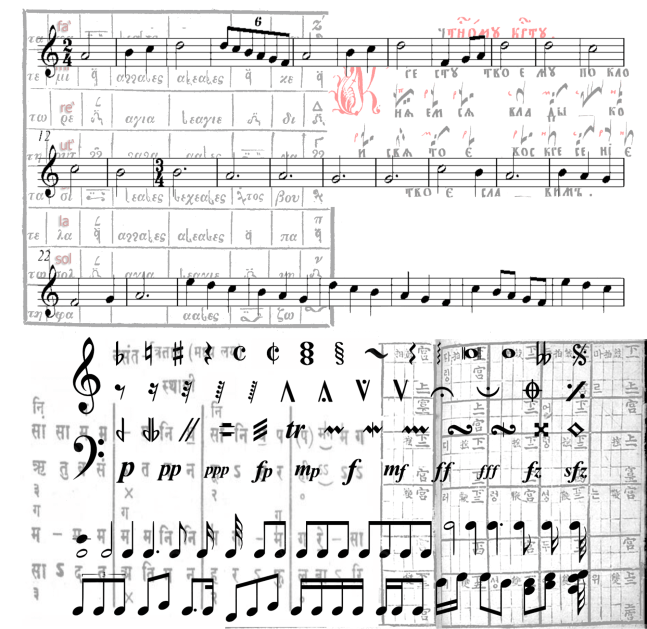
 ], ‘black’, and ‘round’ musical notes. These symbols, known as ‘neumes’, took longer to standardise; there was still variety until around 1700, but by then most European notation had settled into the familiar form — even recognisable to a musically challenged person like me. Five thin lines, a ‘clef’ symbol at the beginning, and the pleasant ant-like procession of pitch along them. But like mathematics,
